


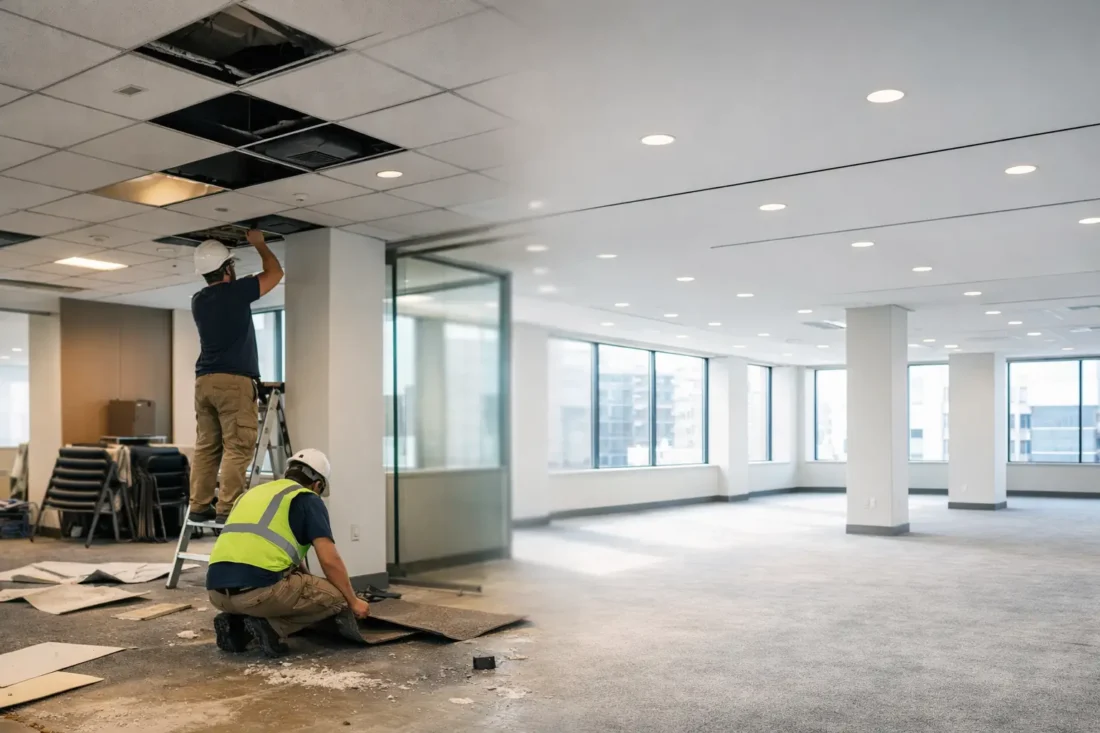
End of Lease Reinstatement Explained
A lease is easy to sign and surprisingly easy to forget – right up until the landlord asks for the unit back in original condition. That is where end of lease reinstatement becomes a live issue for office managers, retailers, facilities teams and business owners. If the scope is misunderstood or left too late, what looked like a routine move-out can quickly turn into delay costs, management issues, deposit deductions and an unpleasant final inspection.
For commercial tenants, reinstatement is not simply about removing furniture and giving the space a clean. It usually means reversing fit-out works, removing additions, restoring base building conditions and handing the premises back in line with tenancy terms and landlord expectations. The detail matters, because most disputes happen in the gap between what a tenant assumes is acceptable and what the handover actually requires.
What end of lease reinstatement actually covers
The exact scope depends on your lease, the condition schedule, landlord correspondence and what was installed during your occupancy. In practical terms, end of lease reinstatement often includes dismantling partitions, removing floor finishes, restoring ceilings, taking out built-in carpentry, disconnecting and removing added electrical points, reinstating plumbing, removing signage, patching and painting walls, disposing of debris and carrying out final cleaning.
For some premises, the reinstatement work is straightforward. A lightly fitted office may only need partition removal, carpet replacement or floor hacking, touch-up painting and electrical make-good works. For other units, especially restaurants, clinics, gyms, retail shops or industrial spaces, the scope can become much broader. Mechanical and electrical services, grease lines, exhaust systems, water points, raised flooring, server room installations and custom frontage works may all need to be removed or restored.
This is why reinstatement should never be treated as a generic renovation job. It is a compliance-driven handback exercise. The objective is not to create a new space. It is to return the premises to the condition required under the lease.
Why lease clauses are only the starting point
Tenants often assume the tenancy agreement tells them everything they need to know. It helps, but it is rarely the whole picture. Building management rules, fit-out approvals, fire safety requirements, after-hours work restrictions, lift booking procedures and landlord inspection comments all affect the actual reinstatement process.
A common example is ceiling work. The lease may state that alterations must be removed, but the building may also require specific methods for access, debris handling and protective measures in common areas. Another example is air-conditioning. A tenant may have installed supplementary units or altered ducting, and removal may involve both reinstatement work and separate coordination with building management or specialist trades.
That is why experienced planning matters. A proper review should look at the original unit condition, approved drawings if available, later alterations, current defects and handover requirements. If any of that is guessed rather than checked, the risk usually appears at final inspection.
The biggest risks when end of lease reinstatement is delayed
Most lease-end problems are not caused by the works themselves. They are caused by timing. Reinstatement tends to sit behind operational priorities until the final weeks, especially when the business is busy planning relocation, stock movement, IT migration and staff transition.
The first risk is compressed scheduling. When too many trades are pushed into a short window, quality falls and coordination becomes reactive. Ceiling closure may happen before electrical rectification is complete. Painting may be done before hacking dust is fully contained. Waste removal may be delayed because building access was not arranged in time.
The second risk is cost escalation. Urgent projects often require night work, weekend access, additional manpower or repeated attendance by different trades. The cheapest quote on paper can become expensive once omissions and variation works appear.
The third risk is failed handover. If the landlord rejects the unit because the reinstatement is incomplete or below standard, you may face further work, extra rent exposure, deposit deductions or claims for rectification. In commercial premises, the cost of one missed requirement can be higher than the cost of doing the job properly from the start.
A practical way to manage the reinstatement process
The most reliable approach is to work backwards from the lease expiry date and final handover target. That sounds obvious, but many projects still begin with quotations before the scope is properly verified. A better sequence starts with a site review, lease and requirement check, scope confirmation, programme planning and then execution.
Start with a proper site assessment
A site assessment should identify what was added to the unit, what must be removed, what can remain subject to landlord approval and what defects need repair. It should also account for hidden elements such as capped services, ceiling void works and floor finishes beneath existing coverings.
This stage is where technical experience saves time. An office partition is easy to see. The damage left behind after removal, the ceiling patching needed above it and the electrical rerouting connected to it are less obvious until the work starts.
Confirm the landlord and management requirements early
Do not wait for the last week to ask about permits, deposits, access times or disposal procedures. Many commercial buildings in Singapore have strict rules on noisy works, loading bay usage, protective hoarding, lift reservations and contractor submissions. These administrative points are not side issues. They affect whether the job can proceed smoothly or stall midway.
Build one coordinated scope
Multi-trade reinstatement should be managed as one project rather than split across separate contractors wherever possible. Partition dismantling affects ceiling make-good works. Electrical reinstatement affects wall patching. Plumbing removal may affect floor restoration. A single, coordinated scope reduces the usual finger-pointing when something is missed.
Leave time for inspection and rectification
Even a well-run project may need touch-ups after internal review or landlord inspection. That is normal. What matters is allowing enough time before lease expiry to address comments without panic pricing or rushed workmanship.
What a complete contractor should be able to handle
A commercial reinstatement contractor should not only demolish and clear the space. They should be able to manage the full chain of works required to return the unit to handover condition. That usually includes removal works, builder works, mechanical and electrical reinstatement, plumbing, painting, floor and ceiling restoration, disposal, cleaning and final rectification support.
Just as important is documentation and coordination. The contractor should understand how to align the works with tenancy obligations and site restrictions, communicate realistic timelines and identify likely compliance issues before they become claims.
This is where end-to-end support has practical value. Businesses moving out of a unit already have enough to manage. Coordinating separate hacking, electrical, air-conditioning, plumbing and painting teams creates extra risk, especially when no single party owns the handover outcome.
Cost, speed and quality – the trade-off is real
Every tenant wants reinstatement completed quickly, properly and at a competitive price. Those goals can align, but not always equally. If the unit has extensive alterations and the timeline is short, speed may require more manpower and higher cost. If the budget is tight, the programme may need more time. If the landlord is particularly strict, quality control needs to take priority over the fastest possible completion.
A sensible quotation should reflect actual scope rather than optimistic assumptions. Low pricing can look attractive until exclusions appear for disposal, after-hours work, permit submissions, patching, ceiling closure, testing or final touch-ups. A dependable contractor is usually clear about what is included, what may vary and what approvals are still needed.
When specialist experience matters most
Not every commercial unit should be treated the same way. Offices are generally more straightforward, although server rooms, raised floors, glass partitions and supplementary cooling systems can complicate matters. Retail spaces often involve shopfront works, signage removal and landlord design controls. Food and beverage outlets can require intensive removal of exhaust, grease, plumbing and fire-related systems. Medical and wellness premises may have bespoke services and room configurations that need careful dismantling.
In these cases, experience is not just about doing the work. It is about anticipating the scope before demolition exposes it. That reduces variation risk and helps tenants plan their move-out with fewer surprises.
Office Reinstatement Singapore focuses on this practical end of the process – taking a leased commercial space from occupied condition back to a handover-ready unit with the trades, coordination and inspection support required to close the file properly.
Choosing a contractor for end of lease reinstatement
The right question is not only whether a contractor can do the physical works. It is whether they can get the premises accepted. Ask how they assess scope, how they manage building submissions, what trades they cover directly, how they handle defects raised at inspection and how they protect programme deadlines.
It also helps to look for commercial awareness. A contractor working in occupied business environments should understand access constraints, noise restrictions, debris handling, safety controls and the cost of delay. Technical skill matters, but accountability matters just as much at lease end.
The handover date has a way of arriving faster than expected. If your lease is approaching expiry, the safest move is to define the scope early, align it with landlord requirements and treat reinstatement as a managed project rather than a last-minute clearance job. That is usually the difference between a controlled exit and a costly one.