


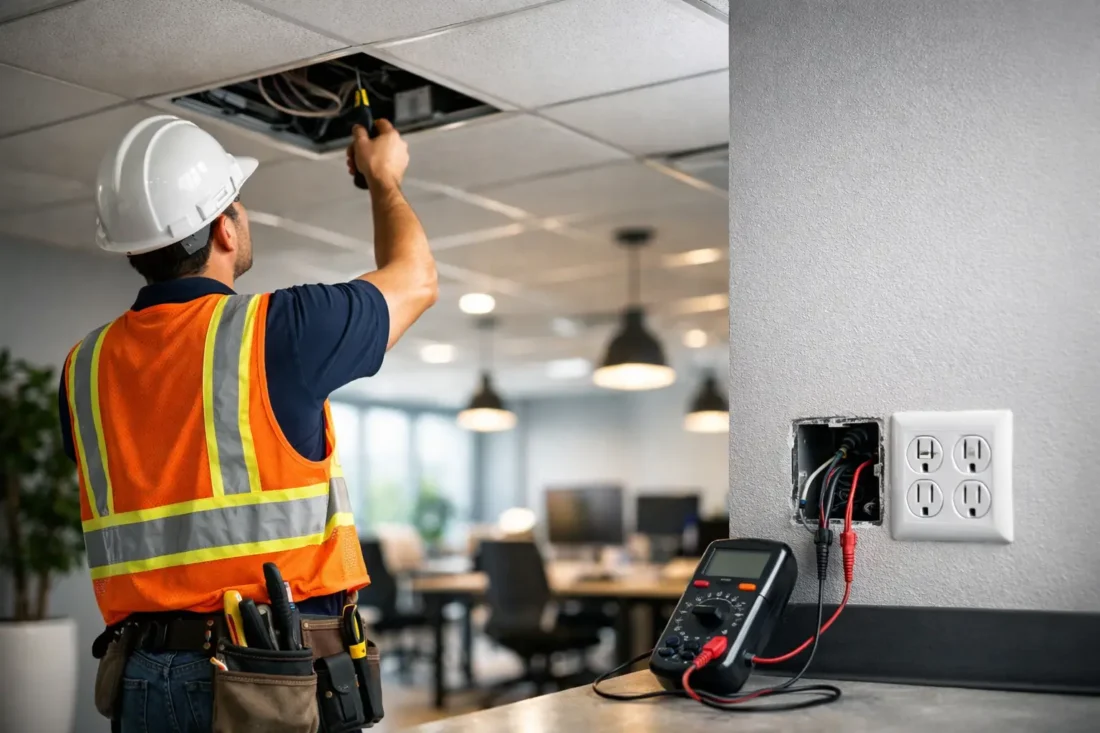
Electrical Reinstatement for Office Space
When an office lease is ending, electrical works are one of the areas most likely to cause delays, disputes, and last-minute rectification. Electrical reinstatement for office space is not just about removing a few light fittings. It usually involves tracing altered circuits, disconnecting added power points, restoring lighting layouts, making safe any exposed cabling, and leaving the unit in a condition that satisfies both the tenancy agreement and building management.
That matters because most office fit-outs change the original electrical setup more than tenants realise. Extra workstations need more sockets. Meeting rooms get added with separate lighting and data routes. Pantry equipment, feature lighting, signage, access control, and dedicated air-conditioning isolators all leave a footprint. By lease end, the question is not simply what to remove, but what the landlord expects to be restored.
What electrical reinstatement for office work usually includes
The exact scope depends on the original unit condition, the current fit-out, and the landlord’s handover requirements. In practical terms, electrical reinstatement usually starts with identifying all tenant-added electrical items and separating them from the base building supply.
This may include removing added power points, light fittings, switches, isolators, distribution board modifications, surface trunking, conduit runs, underfloor cabling, and electrical connections serving partitioned rooms. If a previous fit-out introduced reception lighting, branded signage power feeds, server room circuits, or pantry wiring, those elements often need to be dismantled as part of the reinstatement works.
In some offices, the landlord requires the unit to be returned to bare condition. In others, selected services must remain if they were part of the original handover. That distinction is important. Removing too much can be as problematic as removing too little, especially where fire alarm interfaces, emergency lighting, or shared building services are involved.
Why this part of reinstatement often becomes complicated
Electrical reinstatement is rarely difficult because of one major item. It becomes complicated because office alterations tend to happen in layers over time. A tenant may have inherited parts of a previous occupier’s fit-out, then added its own modifications during expansion, refurbishment, or departmental changes.
By the time the lease ends, drawings may be incomplete, labels may be inaccurate, and circuits may not correspond neatly with the visible layout. A switch near the entrance might control lights in a meeting room that no longer exists. A power spur above the ceiling may feed equipment already removed. Trunking hidden behind partitions can surface only after dismantling starts.
This is why a proper site assessment matters. Without one, there is a real risk of incomplete removal, accidental disruption to retained services, or unplanned variation costs once concealed electrical works are exposed.
The main risks of getting office electrical reinstatement wrong
The first risk is non-compliance with lease obligations. If the tenancy agreement requires reinstatement to original condition and the electrical setup still shows tenant alterations, the landlord may reject the handover or require additional works under time pressure.
The second risk is safety. Electrical dismantling must leave circuits terminated properly, boards correctly labelled where required, and all removed points made safe. Leaving loose ends above ceilings, hidden live feeds, or poorly capped wiring is not a minor defect. It can become a safety issue and a liability issue.
The third risk is disruption to the overall reinstatement programme. Electrical works are linked to partitions, ceilings, flooring, painting, and final cleaning. If electrical removal happens out of sequence, ceilings may need reopening, patching may be delayed, and final inspection dates can slip.
The fourth risk is cost escalation. A low initial quotation that only covers visible fittings often misses isolation, testing, permit coordination, haulage, ceiling making good, and attendance for landlord inspection. That can make an apparently cheap job more expensive by the end.
How a proper reinstatement process should be handled
A dependable office reinstatement contractor will begin by reviewing the lease requirements, any fit-out approvals, and the actual site condition. This is where the practical gap often appears. The tenancy clause may say reinstate to original condition, but the site may contain legacy works from more than one fit-out cycle. The right approach is to verify what must stay, what must go, and what needs restoration after removal.
Once the electrical scope is confirmed, dismantling should be coordinated with other trades. Power feeds serving partitions, ceiling-mounted fittings, access control points, pantry equipment, and signage should be isolated and removed in the correct order. This avoids damage to retained services and reduces rework during making-good.
After removal, reinstatement is not finished until the affected areas are restored properly. Ceiling closures, wall patching, repainting, and surface finishing need to match the required handover standard. In office reinstatement, electrical work and making-good are part of the same practical outcome.
Testing is also part of the office reinstatement process where applicable. If circuits are altered, retained systems may need checks to confirm they remain safe and functional. Landlords and building managers may also require documentation, method statements, work permits, or inspection attendance before accepting the unit.
What commercial tenants should check before reinstatement works begin
Before approving electrical reinstatement for office premises, it is worth checking a few points early rather than during dismantling. First, confirm the reinstatement basis. Are you returning the unit to bare shell, original landlord handover, or an agreed alternative condition? Assumptions here create most disputes.
Second, ask whether the make-good contractor has reviewed both visible and concealed electrical modifications. Office units often contain ceiling void cabling, partition-fed circuits, and isolated points that are easy to miss during a quick walk-through.
Third, check whether making-good is included after electrical removal. If light fittings, conduits, or trunking are taken out, there will usually be patching and finishing works to complete. A contractor handling only disconnection without restoration leaves you coordinating other trades at the last minute.
Fourth, confirm the programme. Electrical reinstatement may need after-hours work depending on the building, and access rules in commercial developments can affect removal timing, loading bay use, noise restrictions, and permit approvals.
Why one contractor is usually better than multiple trade teams
For lease-end projects, coordination is often a bigger problem than the work itself. If one party removes partitions, another handles electrical disconnections, and a third comes in for ceilings and paint, responsibility can become blurred very quickly. Each trade may blame the previous one for defects, delays, or gaps in scope.
A single contractor managing the full reinstatement programme is usually the safer option because the electrical works can be planned around dismantling, making-good, debris disposal, and final inspection requirements. That gives the tenant one point of contact, one site programme, and clearer accountability for the handover condition.
This is particularly useful in Singapore offices where building management procedures, permit submissions, and landlord inspections can be tightly controlled. A contractor that understands reinstatement as an end-to-end delivery exercise, not just a removal job, is better placed to keep the programme on track.
Cost, timing, and what affects both
There is no single rate for office electrical reinstatement because the scope can vary sharply between units of similar size. A small office with a simple open-plan fit-out may require only limited removal and making-good. A larger workplace with meeting rooms, feature lighting, server connections, pantry provisions, and altered distribution can involve much more labour.
Timing depends on the same factors. The amount of concealed wiring, after-hours restrictions, access conditions, and landlord requirements all affect the schedule. If the office has to be restored while business operations are still winding down, phasing may also be needed.
The practical way to control both cost and timing is to inspect early, define the reinstatement standard clearly, and align all trades under one scope. That reduces surprises and gives more room to address landlord comments before the lease expiry date.
Office Reinstatement Singapore approaches these reinstatement projects with that end goal in mind – a safe, compliant, handover-ready unit without unnecessary back-and-forth.
If your lease is nearing its end, the best time to clarify the electrical scope is before dismantling starts, not after the ceiling opens up and the deadlines get tighter.