


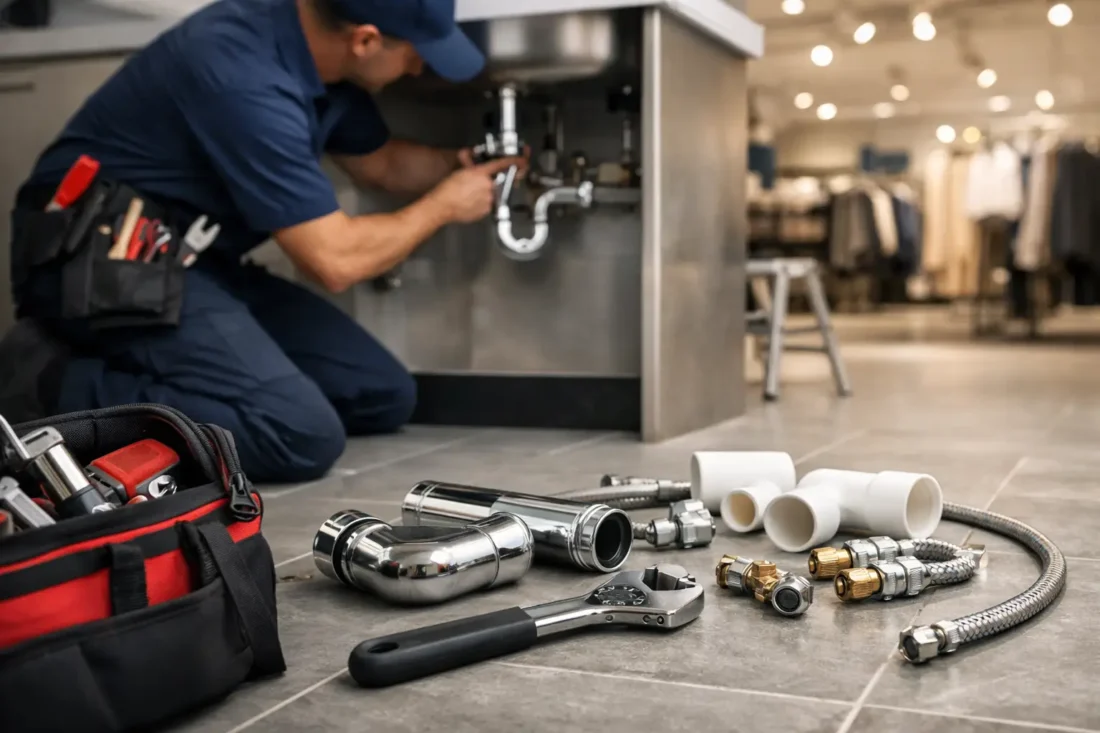
Plumbing Reinstatement for Shop Premises
A shop can look cleared out and still fail handover because of what sits behind the walls, below the floor, or under the sink. Plumbing reinstatement for shop premises is often where lease-end disputes begin – capped points in the wrong place, unauthorised additions left behind, floor traps not restored properly, or water supply lines removed without making good the surrounding finishes.
For retail tenants, the issue is not just removing fittings. It is returning the unit to the condition required under the tenancy agreement, landlord guidelines, and building management rules. That means the plumbing scope has to be planned alongside dismantling, finishing repairs, waste disposal, inspection preparation, and final acceptance.
What plumbing reinstatement for shop work usually covers
The exact scope depends on what was installed during fit-out and what the landlord expects to remain. In some shops, plumbing reinstatement is relatively simple – disconnecting a pantry sink, removing a small water heater, and capping supply and discharge points neatly. In others, it involves more extensive work, such as dismantling wash areas, grease-related piping, storage water systems, floor trap connections, or concealed pipe runs added to suit the tenant’s operation.
A proper reinstatement scope usually starts with identifying all added plumbing services. That can include water supply pipes, sanitary discharge pipes, basin and sink connections, taps, stopcocks, flexible hoses, water filtration units, instant heaters, floor traps, grease traps where applicable, and boxing-up or partitions built around these services. If the shop had specialist use – such as a salon, clinic, F&B unit, or beauty outlet – the plumbing layout is often more complex than a standard retail unit.
The goal is not to strip everything blindly. The goal is to remove tenant-installed plumbing works that are not meant to stay, retain approved base building services where required, and restore the affected areas so there is no compliance issue at handover.
Why shop plumbing reinstatement is rarely a stand-alone job
Plumbing works affect more than pipes. Once fittings are removed, there is usually patching to walls, floor making good, ceiling touch-up, access panel closure, and debris removal. If pipework runs through custom carpentry, counters, raised platforms, or partition walls, those elements have to be dismantled in the right order.
This is one reason single-trade coordination often causes delays. A plumber may disconnect and cap services correctly, but if the floor opening is left exposed or wall finishes are not restored, the unit is not handover-ready. On the other hand, if hacking begins before the plumbing layout is checked, there is a higher risk of damaging landlord-owned services or creating extra rectification work.
For lease-end projects, reinstatement has to be managed as one coordinated scope. That keeps the plumbing works aligned with demolition, finishing restoration, building management submissions, and inspection timelines.
Common issues landlords flag during inspection
Landlords and managing agents usually focus on whether the unit has been returned to an approved baseline condition. With plumbing, the most common problems are fairly predictable.
One is incomplete removal. A tenant may remove visible fittings but leave concealed branch lines, abandoned pipe sleeves, unused valves, or non-compliant discharge points. Another is poor termination. If water points are capped without proper positioning, labelling, protection, or finishing, the work can be rejected even if the pipe itself is no longer in use.
There is also the issue of making good. Broken tiles, patched screed in a mismatched finish, wall openings around removed pipes, and stains from dismantling work can all trigger comments. In some cases, the plumbing work is technically acceptable, but the surrounding reinstatement is not. From the landlord’s point of view, that still means the shop has not been fully reinstated.
Documentation can matter as well. Some buildings require permits, method statements, work schedules, water shutdown coordination, or proof that disposal and dismantling were carried out properly. Missing paperwork can hold up access or final acceptance even when the physical work is complete.
How the scope changes by shop type
A fashion boutique and a beverage outlet do not carry the same reinstatement risk. The plumbing reinstatement for shop units has to reflect actual operational use, not just floor area.
For standard retail shops, the scope may be limited to a pantry point, cleaner’s sink, or a simple wash basin. These jobs are usually straightforward, but they still need careful finishing because even small exposed service points can become a handover issue.
For salons and beauty businesses, there may be multiple wash stations, concealed hot and cold water lines, additional discharge points, and built-in cabinetry linked to plumbing services. Reinstatement often includes dismantling fixtures without damaging shared services or adjacent finishes.
For clinics and treatment spaces, the concern is often compliance and neat service termination. Any added basins, treatment room plumbing, or storage heater connections need to be removed and restored in a controlled manner.
For F&B or food-related retail, the complexity rises further. There may be grease-related pipework, floor traps, sink banks, preparation area plumbing, or special approvals that governed the original installation. These units require more careful review before work starts because the cost of getting the reinstatement wrong is usually higher.
The importance of checking the tenancy agreement first
Many disputes happen because tenants assume reinstatement means removing everything they installed. In practice, lease obligations can be more specific. Some landlords want the unit returned to bare condition. Others require reinstatement to a prior fit-out baseline, especially in malls or managed commercial developments. Some building owners may permit selected services to remain if they were approved and are still serviceable.
That is why the tenancy agreement, fit-out drawings, landlord circulars, and any reinstatement conditions should be checked before dismantling begins. This avoids unnecessary removal and prevents the opposite problem – leaving behind works that should have been removed.
A commercially practical contractor will review the required end state first, then define the plumbing scope around that requirement. That approach saves time and reduces costly rework.
What a proper reinstatement process should look like
The first step is a site review. This identifies visible fixtures, concealed runs, access constraints, operating hours, water shutdown needs, and interfaces with other trades. If the shop is in a managed building, access rules and permit requirements should be confirmed early.
The next step is scope confirmation. This should set out what will be removed, what will be retained, where services will be capped or terminated, and what making-good works are included. Clear scope definition matters because plumbing reinstatement can easily become disputed if assumptions are left unaddressed.
Execution should then follow a controlled sequence. Isolation and disconnection come first. Dismantling follows, together with safe removal of fixtures and associated elements. Once plumbing services are properly capped or restored, surrounding finishes can be repaired. Waste must be cleared promptly so the unit remains safe and inspection-ready.
The final stage is pre-handover checking. This means reviewing the completed plumbing reinstatement against lease requirements and the physical condition of the unit before the landlord inspection takes place. Small defects caught at this stage are usually much easier to rectify than after formal comments are issued.
Cost, timing and the trade-offs to expect
There is no single price for plumbing reinstatement because the scope can vary widely. The number of fixtures, accessibility of pipework, type of shop, building restrictions, and finish restoration requirements all affect cost. Concealed services usually take more time than exposed ones, and work in malls or occupied commercial buildings may involve tighter scheduling or permit controls.
The cheapest quote is not always the most economical option. If plumbing removal is priced without making good, disposal, coordination, or inspection support, the final cost often rises later through variation works and delay. A fuller scope can appear higher at the start but reduce overall handover risk.
Timing also depends on coordination. A simple shop may need only a short programme. A unit with extensive built-ins, multiple service points, or restricted working hours will need more careful planning. If lease expiry is near, speed matters, but speed without scope control usually creates defects.
Why businesses prefer one contractor for the full reinstatement
For most tenants, the problem is not understanding that plumbing has to be removed. The problem is managing everything around it. Different trades affect each other, and a delayed or incomplete plumbing package can push back flooring repairs, painting, cleaning, and inspection dates.
That is why many businesses prefer a single contractor to manage the full reinstatement scope. It reduces coordination gaps, gives one point of accountability, and helps keep the unit aligned with landlord expectations from start to finish. For lease-end projects in Singapore, that level of control is often what prevents avoidable penalties and extended occupation costs.
Office Reinstatement Singapore approaches these projects as complete handover exercises rather than isolated trade jobs. That matters when the objective is not just to remove plumbing works, but to return the shop in a condition the landlord can accept without unnecessary delay.
If your shop is approaching lease expiry, the sensible move is to review the plumbing scope early, before dismantling starts and before assumptions turn into rectification costs. A clean handover usually begins with the services nobody sees at first glance.