


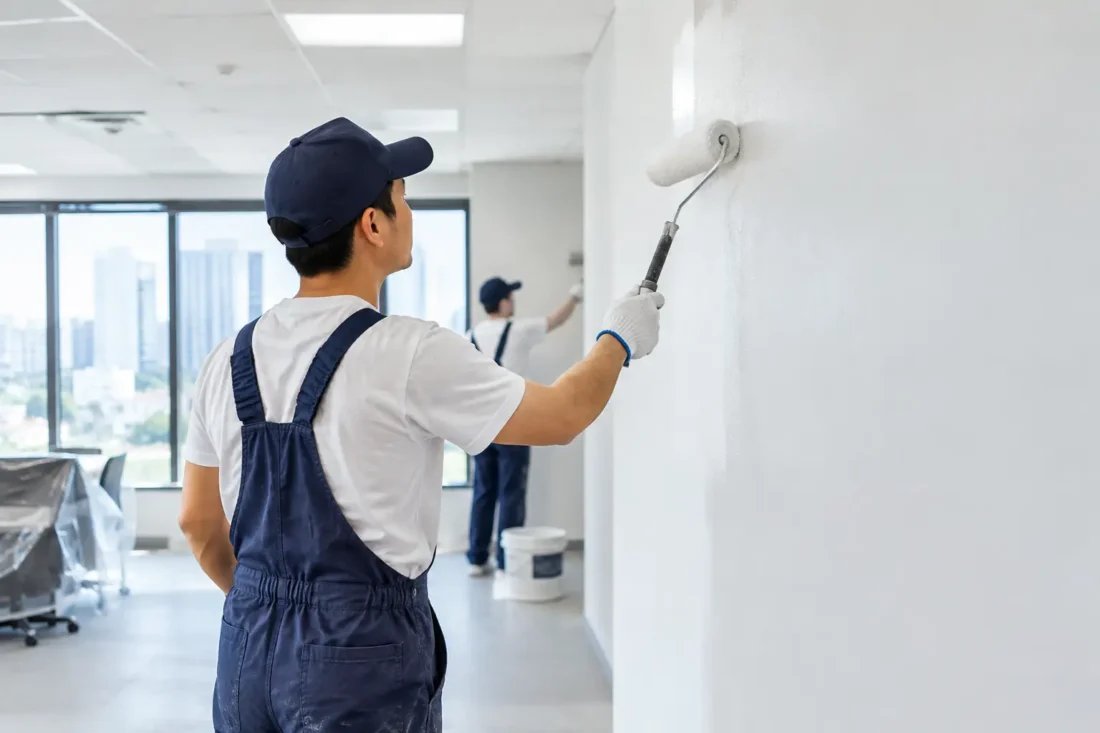
Painting Contractor for Office Reinstatement
Fresh paint can make a vacated office look handover-ready, but it will not resolve unpatched partition lines, exposed cable routes, ceiling staining or an incorrect finish specification. A painting contractor for commercial reinstatement must do more than apply a new coat of paint. They need to restore surfaces to the landlord’s required condition, coordinate with other trades and complete the work within the narrow window before inspection.
For tenants in Singapore, painting is often one of the last visible items completed before lease handover. It is also one of the first areas a landlord or building manager will inspect. Uneven coverage, poor colour matching, paint on skirting or fittings, and unrectified wall damage can all lead to a rejected handover or a deduction from the security deposit.
What a Painting Contractor Must Deliver at Lease End
Commercial painting for reinstatement is not the same as a cosmetic refresh during occupancy. The objective is to return the premises to its required original condition, subject to the tenancy agreement, approved reinstatement scope and landlord requirements. This may mean restoring walls to the original neutral colour, repainting affected ceilings, making good surfaces after fixtures are removed, or treating stains caused by previous fit-out works.
The scope should begin with a proper site assessment. The contractor needs to identify every surface affected by your occupation, including partition walls, columns, bulkheads, ceilings, door frames, skirting, service risers and areas behind dismantled furniture or signage. A room can appear acceptable while occupied but reveal substantial patching requirements once workstations, display units and wall-mounted equipment are removed.
Surface preparation is where many handovers succeed or fail. Before painting begins, holes from brackets and mounted equipment should be filled, cracks repaired, rough patches sanded and old adhesive removed. Where partitions have been dismantled, the exposed floor, ceiling and wall interfaces must be made good first. Painting over uneven repairs will not conceal them under inspection lighting.
The correct paint system also matters. A landlord may specify a particular colour, sheen level or product standard. If there is no written specification, the contractor should verify the existing finish and provide a practical recommendation that matches the surrounding areas. Matte paint may hide minor wall imperfections better, while washable finishes may be required in some retail, healthcare or food-related spaces. The right choice depends on the building requirements and the condition of the substrate.
How to Appoint a Painting Contractor for Reinstatement
The lowest quotation is not always the lowest project cost. A quote that covers only painting, without repairs, protection works, touch-ups and cleaning, can quickly grow once defects are uncovered. For lease-end works, appoint a contractor that can define the full scope before work starts and take responsibility for the finished condition rather than just the paint application.
Confirm the reinstatement specification first
Read the reinstatement clause in your tenancy agreement before requesting quotations. Check whether the landlord requires a specific paint colour, the removal of all tenant-installed finishes, restoration of original wall conditions or submission of work plans. If the unit has undergone several fit-outs, photographs from the original handover and previous landlord correspondence can help establish what needs to be restored.
A capable contractor will use this information to distinguish between areas that need complete repainting and areas that only require making good. This is important for cost control. Repainting an entire unit may provide a more consistent result, but selective repairs can be appropriate where the lease requirements allow it and the existing finishes are still in sound condition.
Ask what preparation work is included
A commercial quotation should state whether it includes patching of screw holes, removal of decals and adhesive residue, crack repairs, sanding, primer application, stain blocking and final touch-ups. It should also specify whether ceilings, exposed services, door frames and skirting are included or excluded.
This level of detail prevents disputes later. For example, removing an acrylic company logo may leave ghost marks or discolouration that standard paint cannot fully cover without priming. Water stains on ceilings may similarly require treatment before repainting. If preparation is omitted from the initial scope, it may delay completion while variations are approved.
Check coordination with other trades
Painting should usually take place after demolition, electrical disconnection, signage removal and major repair work, but before final cleaning and formal handover. Poor sequencing creates rework. Electricians may need to remove trunking or wall plates before patching can be completed, while flooring contractors may need painted walls protected during carpet or vinyl replacement.
A single contractor managing multiple reinstatement trades reduces these gaps. Office Reinstatement Singapore coordinates painting alongside partition dismantling, ceiling and flooring restoration, electrical reinstatement, debris disposal and final cleaning so that the unit is prepared for inspection as one complete project.
Clarify protection, access and working hours
Commercial buildings may impose rules on lift bookings, loading bay access, protection of common areas, work permits and permitted working hours. Paint materials, ladders, tools and debris must be moved without damaging lifts, corridors or neighbouring units. If work is performed after hours, the contractor must also plan sufficient drying time before subsequent trades enter the space.
Ask who will arrange site access, submit required documentation and protect retained finishes. These operational details may seem minor, yet missed building management requirements can stop works on the day they are due to start.
Common Painting Issues That Delay Handover
The most frequent issue is incomplete making good after fit-out removal. Walls behind built-in cabinets, television screens, shelving and signage commonly have unfilled anchors, uneven paint edges and adhesive marks. Another concern is colour mismatch. Even where the original colour is known, aged paint can fade or discolour, making a small patch more visible than expected.
Ceilings require particular attention. Removed light fittings, air-conditioning grilles or suspended elements can leave cut-outs, stains and inconsistent surfaces. A painting contractor should assess whether local repairs will blend satisfactorily or whether a full ceiling coat is the more reliable option. The answer depends on the extent of damage, ceiling material, existing paint condition and inspection standard.
Poor containment is another avoidable problem. Overspray, paint splashes and dust from sanding can affect glass panels, flooring, electrical fittings and retained furniture. Proper masking, floor protection and daily housekeeping are essential, especially in buildings where surrounding tenants remain in operation.
A Practical Reinstatement Painting Process
A controlled process keeps painting works predictable. It starts with a site survey and review of lease-end requirements. The contractor should then issue a written scope that identifies the areas to be repaired, paint system to be used, exclusions, schedule and any assumptions requiring confirmation.
Once approvals and building access are arranged, dismantling and rectification works are completed before surfaces are prepared. This includes removing loose material, filling holes, repairing cracks, sanding uneven areas and applying primer where needed. Paint is then applied in the specified colour and finish, with sufficient drying time between coats.
Before final cleaning, the project team should carry out a visual quality check under normal lighting. Look for roller marks, missed edges, uneven sheen, visible patches, drips and paint on fixtures. Any defects should be rectified before the landlord inspection, not explained during it. Final touch-ups are normal, but they should be planned into the programme rather than rushed at the last minute.
Choosing Value Over a Cheap Quote
A competitively priced painting package can be good value when its scope is clear and its completion standard is defined. Be cautious when a quotation gives only a lump sum with no indication of preparation, number of coats, paint type, protection or disposal. It can be difficult to compare contractors when one price includes full reinstatement support and another covers only basic labour and materials.
The better question is whether the contractor can help you achieve acceptance without repeated visits, unplanned variation costs or a delayed move-out. This is particularly relevant where the lease expiry date is close and your business is simultaneously managing relocation, IT shutdown, furniture removal and operational continuity.
Before booking works, confirm the inspection date, leave adequate time for rectification and keep the landlord’s requirements in writing. A properly planned painting scope is not simply the final cosmetic step. It is part of delivering a clean, compliant commercial space that is ready to be handed back with confidence.