


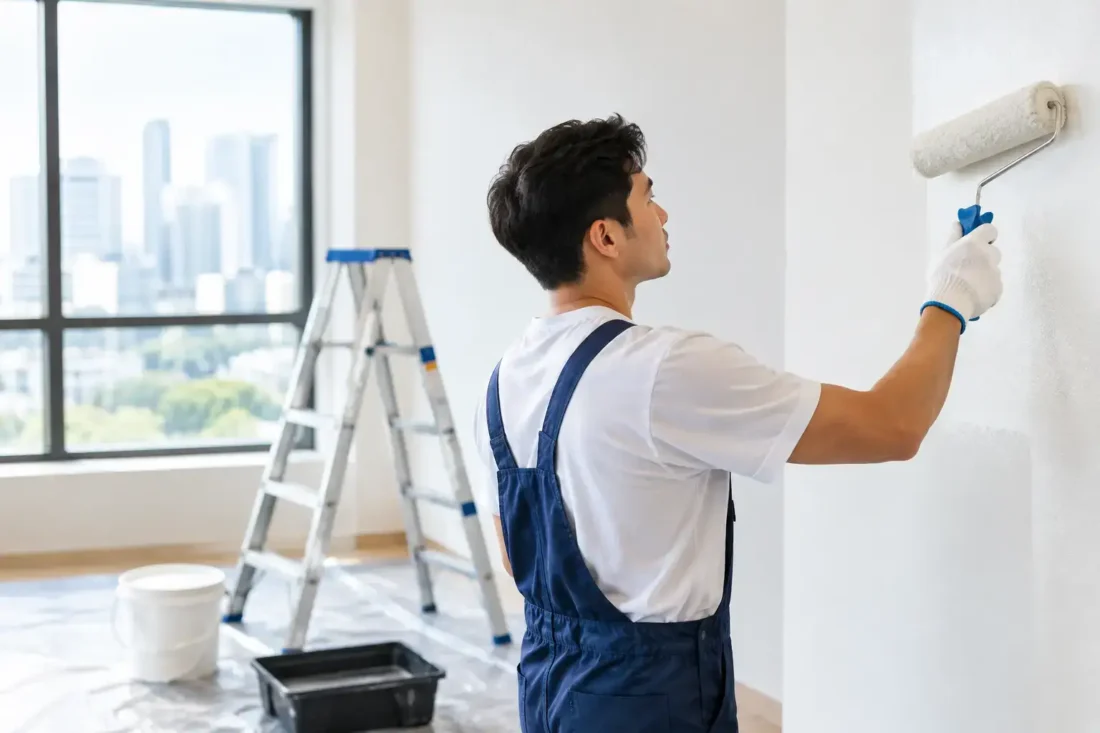
Painting Works for a Smooth Lease Handover
A fresh coat of paint can look straightforward, but painting works at the end of a commercial lease are rarely just a cosmetic task. Landlords and building management teams assess whether walls, ceilings, doors and exposed surfaces have been returned to the required condition. Missed patching, the wrong colour tone, visible roller marks or paint damage around removed fittings can delay acceptance and create avoidable rectification costs.
For office managers, tenants and facilities teams, the practical objective is clear: complete painting as part of a coordinated reinstatement scope, meet the tenancy requirements and hand back a unit that is ready for inspection.
What Painting Works Cover in Commercial Reinstatement
Commercial painting work begins with the condition of the premises, not simply the choice of paint. A vacated office may have removed partitions, dismantled signage, shifted workstations, relocated electrical points and stripped out data cabling. Each activity can leave holes, stains, exposed surfaces and uneven finishes that need proper treatment before final painting begins.
A typical scope may include surface preparation, crack and hole repairs, skim coating where required, sealing affected areas, primer application and repainting of walls and ceilings. Depending on the lease and original condition, the scope can also cover doors, frames, skirting, service riser doors, columns, feature walls and other painted surfaces.
The correct scope depends on the landlord’s reinstatement clause and the condition survey. Some units only require localised touch-ups after minor removal works. Others require full repainting because the tenant installed corporate colours, dark feature walls, murals, decals or substantial fit-out works. It is not always cheaper to choose the smallest visible scope. Patch repairs can stand out under strong office lighting, especially on aged paintwork, and may be rejected during inspection.
Start With the Lease, Not the Paint Colour
Before works are scheduled, review the tenancy agreement, any reinstatement guide issued by the landlord and building management submission requirements. These documents commonly specify whether the premises must be restored to its original condition, returned in a clean neutral finish or handed over according to an agreed reinstatement plan.
Colour matching deserves particular attention. A white wall is not necessarily one standard white. Differences in shade, sheen and paint age can make a newly painted patch appear obvious against an existing surface. Where a full repaint is necessary, the contractor should confirm the approved colour and finish before materials are ordered. If the landlord has no stated colour requirement, neutral tones are often appropriate, but this should be verified rather than assumed.
For premises in Singapore, building management may also set rules for working hours, lift usage, protective covering, disposal routes and permits. These operational matters affect the programme. Painting cannot be treated as an isolated trade if access restrictions or other reinstatement activities are still ongoing.
The Preparation That Determines the Final Result
Most handover issues are caused by preparation failures rather than the final coat itself. Painting over unfilled holes, dusty walls or water-stained surfaces may create a quick visual improvement, but defects often become apparent once the paint dries or the unit is inspected closely.
A proper preparation process should address damage left by day-to-day occupation and removal works. This includes filling screw holes from shelving and wall-mounted equipment, repairing anchor-point damage, treating peeling areas, removing adhesive residue and making good openings left by redundant switches, conduits or signage.
Coordinate Painting With Other Trades
The sequence of work is critical. If painters complete walls before electricians remove trunking, air-conditioning contractors dismantle equipment or partition crews take down panels, fresh finishes may be damaged and need to be redone. The usual approach is to complete noisy and destructive removal works first, carry out making-good repairs, then paint once major trade activities are finished.
Some work may continue in parallel where areas are clearly separated. For example, painting an enclosed room may proceed while flooring removal is underway in another section. However, the contractor must protect finished surfaces and manage dust. Rushing the sequence can result in duplicated labour, longer site occupation and a poorer handover standard.
Address Moisture and Stain Issues Properly
Water marks, mould growth, ceiling staining and bubbling paint should not be hidden without identifying the cause. A leaking fan coil unit, plumbing defect or façade issue can cause the stain to return shortly after painting. Where the source is outside the tenant’s scope, document the condition and raise it early with building management or the landlord.
Stains may require cleaning, drying, treatment and a suitable sealer before repainting. The right solution depends on the substrate and source of damage. A clean-looking ceiling that later shows through with brown water marks can lead to an inspection dispute that could have been avoided.
Choosing the Right Paint System for the Premises
Commercial interiors need finishes suited to their use. Reception areas, corridors and pantry approaches experience more contact and may benefit from a durable, washable finish. Standard office walls may require a conventional matt or low-sheen system, while ceilings often need a flat finish that reduces glare and helps conceal minor surface variation.
The paint system should also match the existing substrate. Plasterboard partitions, concrete walls, previously painted masonry and metal surfaces do not all require the same preparation or primer. Where coating failure is visible, applying another coat without correcting the underlying issue is a false economy.
Low-odour, low-VOC products may be preferable when work is taking place near occupied units or when the reinstatement programme is tight. Even then, drying and curing times must be allowed for. A unit should not be packed with furniture, cleaning equipment or follow-on trades immediately after painting if that will mark the finished surfaces.
Inspection Checks Before Landlord Handover
Do not wait for the landlord’s inspection to identify obvious defects. A contractor-led quality check should take place after painting and again after final cleaning, as cleaning crews or movers can cause accidental scuffs.
The inspection should cover the following areas:
- Walls and ceilings for inconsistent colour, roller marks, drips, pinholes, patchiness and visible repairs.
- Corners, skirting, door frames and window edges for clean paint lines and unpainted gaps.
- Areas around removed signs, cabinets, displays, switches and cable routes for properly filled and blended surfaces.
- Ceiling surfaces for unresolved stains, cracks, damaged tiles or marks from removed fittings.
- High-contact points such as doors and frames for chips, scratches and paint transfer.
Lighting matters during this check. Defects can be missed in a dim, empty unit but become visible when lights are fully switched on or daylight reaches the space. Viewing walls from different angles is a practical way to spot uneven sheen and poor blending.
Photographs of the completed condition can also support the handover record. They are not a substitute for meeting the required standard, but they provide useful evidence of the unit’s condition before keys are returned.
Avoiding Delays and Repeat Painting
The fastest route is not necessarily the shortest painting schedule. A programme that leaves no time for drying, inspection and defect rectification often creates more delay at the end. Allow sufficient time after completion for any touch-ups identified by the project team, landlord or managing agent.
Clear responsibility also prevents gaps between trades. If one contractor removes signage, another repairs walls and a third paints, defects can be passed from one party to another. A full-scope reinstatement contractor coordinates the sequence, confirms who makes good each affected area and keeps the handover target in view.
Budget should be assessed on the same basis. A low quotation may exclude surface repair, primer, protection, after-hours work, disposal or return visits for defects. Ask for the painting scope to state the areas covered, preparation included, paint specification, number of coats and exclusions. This makes quotations easier to compare and reduces the risk of variation claims once work has started.
Plan Painting as Part of the Full Reinstatement Scope
Painting is normally one final stage in a wider process involving dismantling, electrical reinstatement, air-conditioning removal, flooring restoration, ceiling repairs, cleaning and debris disposal. It should be programmed around those tasks, not added at the last minute after the premises has already been damaged by other works.
For a reliable handover, assess the lease requirements early, inspect all painted surfaces before work begins and coordinate the painting scope with every trade that will alter the unit. A properly prepared and inspected finish does more than improve appearance – it helps show that the premises has been returned responsibly, ready for landlord acceptance.