


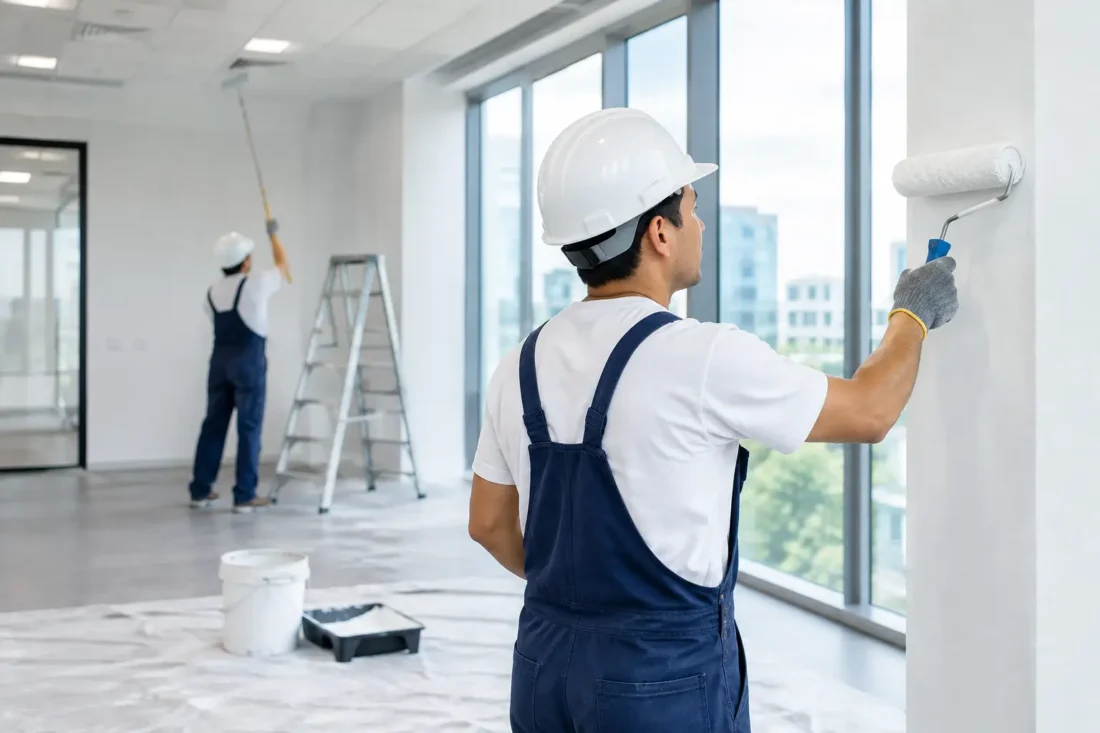
Commercial Painting Contractors for Lease Handover
A freshly painted unit can still fail a landlord inspection if the wrong surfaces were painted, original colours were not matched, or defects behind loose finishes were simply covered up. Commercial painting contractors play a critical role in lease-end reinstatement because painting is often the final visible standard by which a vacated office, shop or commercial unit is judged.
For tenants approaching a handover date, the priority is not merely making the premises look presentable. The work must return the space to the condition required by the tenancy agreement, building management and landlord. That requires proper site assessment, coordinated trade work and an inspection-ready finish.
Why painting matters in commercial reinstatement
Painting is frequently treated as a simple finishing task. In a commercial reinstatement project, it is usually connected to several earlier works. Partitions may have been removed, display fixtures dismantled, cabling taken down and ceilings or flooring restored. Each activity can leave behind patches, screw holes, stains, adhesive marks, uneven surfaces or colour variations that need proper repair before painting begins.
A landlord will normally assess the overall condition of the returned unit, not just whether paint has been applied. Poor patching, visible roller marks, paint splashes on skirting, mismatched touch-ups and unpainted areas behind removed furniture can all lead to comments at inspection. If rectification is required after the moving date, the tenant may face extra costs, delayed deposit release or an extension of site access arrangements.
The right painting scope depends on the lease condition and the state of the unit. Some premises only require targeted repairs and repainting of affected walls. Others require full internal repainting, including ceilings, doors, frames, skirting and service areas. A reliable contractor should advise on the scope based on actual reinstatement obligations rather than recommending a blanket solution that adds cost without improving acceptance prospects.
What commercial painting contractors should assess first
Before any quotation is confirmed, the contractor should inspect the unit and identify what must be reinstated. This is especially important when a space has undergone several fit-out changes over the lease period. An office that appears straightforward may contain hidden wall damage behind built-in cabinets, faded paint around signage, or uneven sections where partitions once stood.
A proper assessment should cover the existing paint condition, required colour and finish, wall and ceiling defects, access restrictions, working hours and the sequence of other trades. It should also consider whether the landlord has issued a reinstatement guide, approved colour schedule or inspection checklist. These documents take priority over assumptions.
Colour matching and finish requirements
Commercial landlords may require tenants to return walls in their original colour or in a specified neutral shade. Colour matching should not be based on guesswork alone. Paint can fade over time due to sunlight, air-conditioning use and cleaning, meaning a new coat may look different beside an old one even when the same nominal colour is used.
Where only part of a wall is being repaired, the contractor should advise whether feathering and touch-up work will be acceptable or whether repainting the full wall is necessary for a consistent result. This is a practical cost decision. Localised work may be sufficient in a low-visibility storage area, while a full wall repaint is often the safer option for reception spaces, corridors and retail frontages.
The finish also matters. Matte, eggshell and gloss finishes reflect light differently and can make repaired areas stand out. Doors, metal frames and timber elements may require different preparation and coatings from plasterboard walls or concrete ceilings.
Surface repair before paint application
Paint will not correct a damaged substrate. Holes from mounted screens, cable trunking, shelves, signage and partition tracks should be filled, levelled and sanded. Cracks, water marks and peeling coatings need investigation before they are painted over. If the cause is not resolved, the defect can reappear before handover.
Good preparation takes time, but it protects the final result. The sequence normally involves removing loose material, repairing damaged areas, sanding surfaces, applying primer where needed, and then applying the required coats. Rushing this process may save a day on site but can create visible defects that cost more to rectify later.
Choosing commercial painting contractors for a lease-end project
The lowest painting quotation is not always the lowest reinstatement cost. A contractor that prices only for wall painting may exclude patching, ceiling work, protection, post-work cleaning or access coordination. Those omissions can become variation charges when the project is already under time pressure.
For lease-end works, choose a contractor that can explain exactly what is included and how painting will be coordinated with dismantling, electrical removal, flooring repairs and final cleaning. A single project coordinator is particularly useful when multiple trades are working in a compact programme. Painting too early can lead to damage from later works; painting too late can leave insufficient time for drying, inspection and touch-ups.
When comparing proposals, check that the scope addresses the following:
- Surface preparation, including filling, sanding and primer application where required.
- The areas to be painted, such as walls, ceilings, doors, frames, skirting and exposed services.
- The specified paint type, colour and number of coats.
- Protection of floors, furniture, glass, fittings and retained building finishes.
- Site access arrangements, working hours, debris disposal and post-paint cleaning.
- Defect rectification and support during the landlord’s final inspection.
A detailed scope makes it easier to compare quotations fairly. It also gives the tenant a clear record of what the contractor is accountable for delivering.
Coordination with the wider reinstatement scope
Painting should be planned as part of the complete return-to-original-condition process. In an office, for example, the contractor may first remove loose furniture and signage, dismantle partitions and built-in joinery, make good the affected walls, restore ceiling sections, remove electrical points no longer required, repair flooring, paint, clean and prepare the unit for inspection.
This order can vary depending on the premises. A retail unit may have façade repairs, shopfront signage removal or feature-wall finishes that need separate treatment. A restaurant, salon or clinic may also have specialist wall coatings, grease staining, plumbing penetrations or hygiene-related finishes to address. Industrial and warehouse spaces often require attention to high ceilings, loading-area walls, safety markings and more demanding access requirements.
The key issue is accountability. If different contractors are appointed separately, tenants must coordinate the handover between each trade and resolve disputes over damage or incomplete work. A full-scope reinstatement contractor can manage the sequence, reduce gaps between trades and present one coordinated programme for the handover date.
Common painting issues that affect landlord acceptance
Many inspection comments are avoidable when the work is checked properly before the landlord visit. The most common issues include inconsistent colour between repaired and existing sections, rough filler marks, stains bleeding through new paint, missed areas behind doors or cabinets, and paint splashes on flooring, glazing or electrical accessories.
Other problems stem from incomplete reinstatement rather than poor paintwork. A painted-over cable hole, for instance, may still be rejected if the trunking has not been removed or the wall profile has not been restored. Similarly, repainting a ceiling will not satisfy the landlord if unused light fittings, ceiling grilles or fire alarm components remain from the tenant’s fit-out.
A pre-handover walkthrough is therefore essential. The contractor should inspect the unit under normal lighting, check corners and high-touch areas, confirm that no items have been overlooked, and rectify visible defects before the formal inspection. This is far more efficient than arranging a return visit after a landlord has issued a defect list.
Managing time, access and cost
Painting programmes must account for building rules. Commercial properties may limit noisy preparation work, lift usage, wet works, disposal hours and weekend access. Some sites require work permits, insurance documents, renovation deposits or supervision by building management. These requirements should be established before mobilisation, not when the painters arrive on site.
Tenants should also avoid leaving painting until the final days of the lease. Drying times, unexpected wall repairs and inspection comments can all affect the programme. Early site assessment gives the contractor time to order the correct paint, arrange access equipment and coordinate with other reinstatement activities.
Cost is best controlled through a clear scope and early decision-making. If a landlord requires a particular colour, finish or full-area repaint, obtain confirmation before work starts. If requirements are unclear, document the site condition and seek written direction where possible. This reduces the risk of repainting completed areas after a late instruction.
For Singapore businesses, a handover-ready result means more than clean walls. It means the painted surfaces, repairs and related reinstatement works meet the condition expected under the lease. Appointing a contractor that plans painting as part of the whole reinstatement process gives your team more time to focus on relocation, operations and the next premises.