


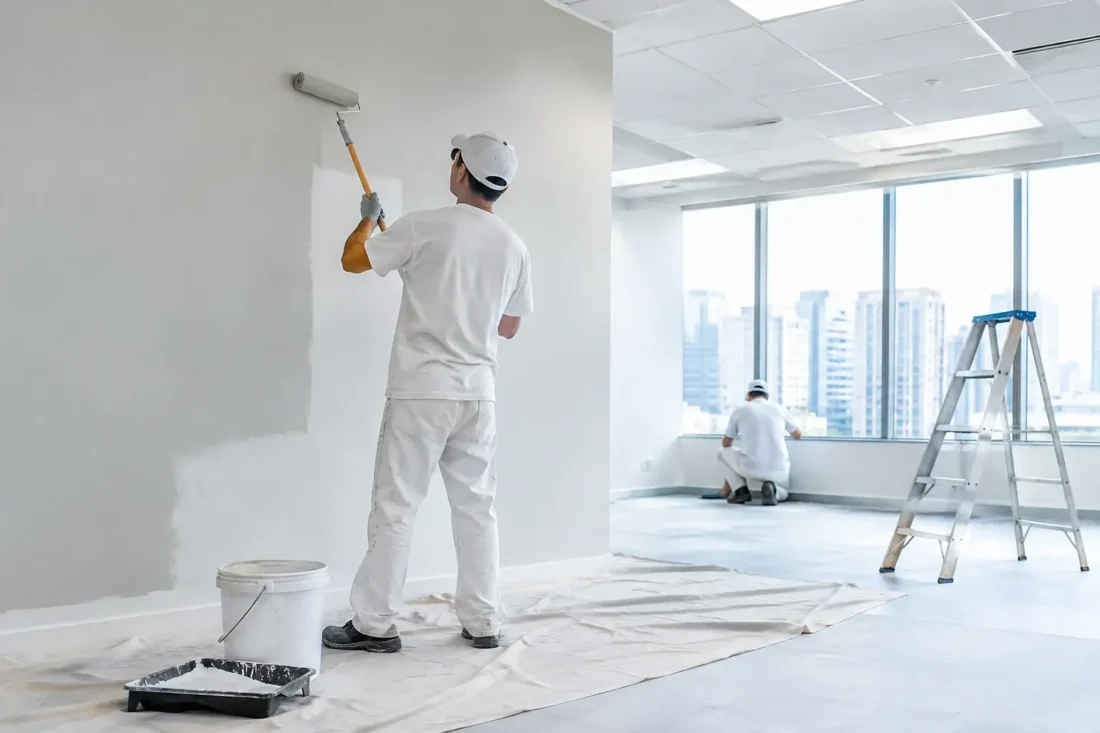
Painting of Office Spaces Before Lease Handover
A fresh coat of paint can be the difference between a straightforward landlord inspection and a costly list of rectification items. The painting of office spaces is often treated as a minor finishing task, yet it is one of the most visible parts of commercial reinstatement. Scuffed walls, unapproved feature colours, exposed patching and paint splashes around fittings can make an otherwise restored unit look incomplete.
For a tenant approaching lease expiry, the objective is not simply to make the office look presentable. It is to return the premises to the condition required under the tenancy agreement, building management rules and landlord expectations. That calls for the right scope, surface preparation, colour matching and coordination with all other reinstatement works.
When is office painting required?
The tenancy agreement is the starting point. Many commercial leases require tenants to reinstate wall finishes to their original condition, usually meaning the original approved colour and finish. This is particularly common where the outgoing tenant has installed partitions, applied corporate colours, added wall graphics or carried out repairs after removing fixtures.
Painting may also be required where partitions have been dismantled. Once a partition is removed, it commonly leaves uneven paint lines, screw holes, adhesive residue and differences in sheen between old and newly exposed wall sections. A small touch-up may not be enough if the surrounding paint has faded or if the repaired areas remain visible under office lighting.
Not every office needs a full repaint. If the original paintwork is in good condition and only a few areas have been affected, localised patching and touch-ups may satisfy the handover requirement. However, this depends on the landlord’s specification and the condition of the walls. Trying to save money with isolated repairs can be a false economy when the result is visibly inconsistent and triggers a further round of rectification.
Painting of office spaces starts with the lease
Before selecting paint or booking painters, review the reinstatement clause and any handover guidelines issued by the landlord or managing agent. These documents may specify the required colour, paint type, finish, approved working hours and inspection procedure. Some buildings also require renovation permits, work passes, lift padding arrangements or protection to common areas before work begins.
The most common requirement is reinstatement to the landlord’s standard off-white or neutral finish. Do not assume a similar shade will be accepted. Where possible, confirm the paint code or obtain a reference from the building management team. If the original colour cannot be established, submit a sample area for approval before the full application begins. This avoids repainting an entire unit because the selected tone is marginally too warm, too dark or too glossy.
The scope should also account for all paintable surfaces affected by the outgoing fit-out. These can include internal walls, columns, bulkheads, door frames, skirting, ceilings and areas behind removed cabinets or signage. A proper site inspection identifies these items before works start, rather than leaving them to be discovered during the final walk-through.
Surface preparation determines the finish
Good painting work is largely preparation work. Applying new paint over damaged surfaces may hide minor marks temporarily, but defects will remain visible once the coating dries. More seriously, poor preparation can lead to peeling, cracking or uneven texture that the landlord may reject.
Walls should be checked for holes left by picture hooks, shelving, signage, mounted screens and cable trunking. These need to be filled, levelled and sanded before painting. Adhesive from wall decals, vinyl graphics and double-sided tape must be removed fully. If residue remains, it can stain through the new coating or create raised areas that are obvious in side lighting.
Moisture damage requires separate attention. Water stains, mould marks or bubbling paint can indicate an active leak from plumbing, air-conditioning or the façade. Repainting over the symptom without rectifying the source is unlikely to last and may create a dispute at handover. The cause should be identified and addressed before the affected surface is treated and repainted.
Ceiling works require similar care. Removed light fittings, speakers, sprinklers and ceiling-mounted equipment can leave openings or discoloured panels. In many offices, replacing damaged ceiling boards is more appropriate than attempting to repair them. The correct approach depends on the ceiling system, the degree of damage and the landlord’s stated standard.
Coordinate painting with other reinstatement trades
Painting should not be planned in isolation. It is normally one of the final reinstatement activities, but it cannot begin until dusty or destructive work is substantially complete. Partition dismantling, carpet removal, electrical disconnection, air-conditioning removal and plumbing capping can all damage newly painted surfaces if the sequence is poorly managed.
A practical order of work begins with dismantling and removal, followed by electrical, plumbing and HVAC reinstatement. Repairs to walls, ceilings and flooring transitions are then completed before paint preparation and application. Final cleaning takes place after painting, with care taken not to mark finished walls during furniture removal or debris disposal.
This coordination matters most in an occupied building with restricted working hours. Commercial buildings in Singapore commonly impose night work requirements for noisy dismantling, limits on lorry access and strict rules for debris removal. A single contractor managing the full scope can schedule each trade in the correct order and keep the painting programme from being disrupted by outstanding works.
Choosing the right finish for a handover
The required finish should follow the landlord’s specification. For most office walls, a low-sheen or matt finish is preferred because it gives a clean, uniform appearance and disguises minor surface irregularities better than a high-gloss coating. High-gloss paint reflects more light and can expose patch repairs, roller marks and uneven walls.
Durability still matters. Areas around pantry entrances, corridors and meeting room doors receive more contact and may need a washable coating where permitted. Yet the best product is not automatically the right product for reinstatement. If the landlord expects a particular paint system or finish, using a premium alternative without approval can still create an avoidable issue.
Colour consistency is equally important. Paint from different batches can vary slightly, particularly when touch-ups are applied weeks after the main work. For a uniform result, painters should mix sufficient material for each continuous wall area and maintain a wet edge during application. Spot painting should be limited to genuinely small, concealed repairs.
What landlords usually notice at inspection
Landlord inspections are visual, practical and often quick. The inspector will look for obvious signs that the former fit-out has not been fully removed or that the unit has been handed back in a condition below the agreed standard. Paint defects are immediately apparent because they affect large, well-lit surfaces.
Common issues include visible patch marks, mismatched colours, unpainted areas behind removed fixtures, paint on glass or door hardware, rough filler, peeling coatings and stains that have bled through the finish. Edges around skirting, ceiling lines and electrical points also receive attention. These details may seem minor, but several small defects can lead to a rejected handover.
A pre-handover inspection is therefore worthwhile. Walk through the office with the reinstatement scope and compare each room against the lease requirement. Check walls under normal lighting and from different angles. Confirm that removed signage, data points and wall-mounted equipment have not left unpainted outlines or damage requiring a final touch-up.
Control cost without compromising acceptance
The cost of office painting depends on the area, wall condition, access restrictions, ceiling height, required coating system and whether repairs are needed. A vacant, open-plan unit with sound walls is usually faster to paint than a heavily partitioned office with extensive adhesive damage and after-hours access requirements.
The clearest way to control cost is to define the scope early. A site survey should distinguish between full-wall repainting, local touch-ups, patch repairs, ceiling restoration and specialist stain treatment. It should also identify whether furniture, loose items or retained equipment need protection or removal. Vague quotations often result in variation charges when hidden defects appear after dismantling.
Engaging a contractor experienced in lease-end works also reduces the cost of coordination. Office Reinstatement Singapore can manage painting alongside dismantling, M&E restoration, cleaning and final defect rectification, giving the tenant one accountable point of contact through to handover.
Before returning the keys, allow time for paint to dry, final cleaning to be completed and any inspection comments to be addressed. A handover-ready office is not one that merely looks freshly painted. It is one where the wall finishes, repairs and remaining reinstatement works all meet the condition your lease requires.