


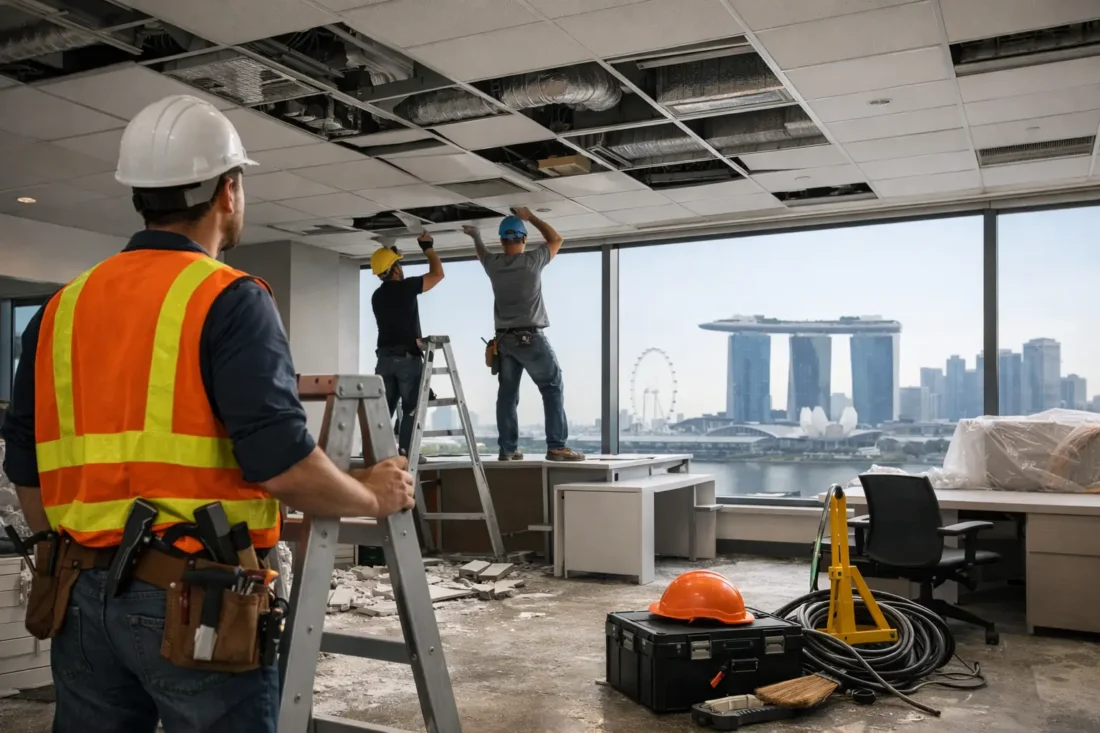
Commercial Reinstatement Works Singapore Explained
A lease expiry date can look comfortably distant until the landlord’s reinstatement requirements arrive. By then, the outgoing tenant may still be relocating staff, clearing equipment and closing operational commitments. Commercial reinstatement works Singapore businesses require are not simply a matter of removing furniture. They are a controlled return of the premises to the condition stated in the tenancy agreement, completed to the landlord’s and building management’s acceptance standards.
For an office, retail unit, clinic, warehouse or F&B premises, the cost of getting this wrong can be significant. Delayed handover may affect deposit recovery, trigger holdover charges or leave the tenant responsible for additional rectification works. The practical solution is to treat reinstatement as a managed project with a defined scope, site access plan, trade coordination and final inspection process.
What Commercial Reinstatement Works Usually Cover
The exact scope depends on the original condition of the unit, the fit-out installed during the lease and the landlord’s requirements. A bare unit that received a light office fit-out will require very different work from a retail outlet with feature ceilings, signage, plumbing points and custom joinery.
Most commercial reinstatement projects involve dismantling tenant-installed partitions, doors, glass panels, workstations, storage systems and loose furniture. Contractors then make good the areas affected by removal, including wall surfaces, floor finishes and ceilings. Where fittings have created holes, damage or uneven finishes, these need proper patching and restoration rather than a quick cosmetic repair.
Electrical reinstatement is often a major part of the work. This may include removing added power points, data cabling, light fittings, distribution boards or dedicated circuits and returning the installation to the required base-building arrangement. Plumbing works can involve removing sinks, water heaters, drainage lines or sanitary fittings installed by the tenant. HVAC works may include taking down supplementary air-conditioning units, ductwork, diffusers or control systems where these were not part of the original handover condition.
A complete scope may also include painting, ceiling-board replacement, floor tile repairs, carpet removal, signage dismantling, chemical cleaning, debris disposal and final touch-ups. For premises with a specialised fit-out, such as medical, gym, salon or food premises, the contractor must assess all alterations rather than assume that general demolition work will be sufficient.
Start With the Tenancy Agreement, Not the Demolition Date
The tenancy agreement, handover condition report and any approved fit-out drawings are the starting point. These documents establish what must be retained, removed or restored. They may also specify submission procedures, approved working hours, lift protection, insurance requirements, electrical testing or inspection arrangements.
Building management requirements matter just as much as the lease. Many commercial buildings in Singapore limit noisy works, hacking, lorry access and disposal activity to specific periods. They may require work permits, renovation deposits, site briefings, fire safety controls and protective coverings before work begins. Failing to account for these rules can stop a project midway, even when the contractor has sufficient labour and materials ready.
It is also worth clarifying the standard of “original condition”. In some cases, the landlord requires reinstatement to the condition at the start of the current lease. In others, a mutually agreed baseline or a landlord-issued reinstatement checklist applies. Where a previous tenant’s items were inherited or existing base-building elements have been altered over several years, assumptions can create disputes. A site survey and written scope help identify those grey areas early.
The Parts of Reinstatement That Cause Most Delays
Delays rarely arise from one obvious task. They usually come from several small issues that were not identified before work started. Unapproved weekend access, a concealed cable route, a damaged raised floor panel or an incomplete disposal arrangement can all affect the handover programme.
Electrical and air-conditioning work deserves particular attention. These systems often involve coordination with building management, nominated specialists or testing requirements. Removing a tenant’s installation without properly terminating circuits, isolating services or restoring ceiling areas can result in failed inspections. The same applies to plumbing connections, particularly where water supply and drainage lines have been extended from existing services.
Flooring is another common point of disagreement. If carpets, vinyl, tiles or raised flooring have been altered, the tenant may need to replace matching materials or restore an agreed finish. Exact matching is not always possible for discontinued products, so this should be discussed before final works are carried out. A practical contractor will flag such constraints early and recommend an acceptable rectification approach rather than leave them for the final inspection.
A Practical Process for Commercial Reinstatement Works Singapore Tenants Need
A well-managed reinstatement project follows a clear sequence. The first stage is a detailed site survey. This records the existing fit-out, identifies tenant-installed items and checks access constraints, service connections, ceiling conditions, floor finishes and potential safety issues. The contractor should then produce a scope that distinguishes between removal, reinstatement and final cleaning works.
The next stage is pre-work coordination. This includes confirming the landlord’s requirements, arranging building management permits, planning site protection and scheduling work around approved hours. If the premises remain operational until a late stage, the programme may need to be phased so that critical equipment, records or stock can be removed without interrupting the business unnecessarily.
During execution, the work should be coordinated across trades rather than handled as disconnected jobs. Partition dismantling may expose electrical wiring. Ceiling repairs may only be possible after air-conditioning components are removed. Painting should follow patching and surface preparation, while final cleaning belongs near the end of the programme. Using one contractor to manage these dependencies reduces the risk of one trade completing work that another must undo.
Before handover, a final check should be carried out against the approved scope and landlord checklist. This is when minor defects, paint marks, loose fittings, exposed cabling or leftover debris should be addressed. Final handover support is valuable because it provides a clear point of accountability if the landlord raises reasonable rectification comments.
How to Control Cost Without Cutting Essential Work
The lowest quotation is not always the lowest lease-exit cost. A limited quote may exclude electrical testing, disposal, permits, touch-up painting, cleaning or after-inspection rectification. These omissions can appear later as variations, particularly if the original scope was based on a brief visual visit rather than a proper survey.
A useful quotation should state the work areas, included trades, disposal arrangements, access assumptions and exclusions. It should also identify items that depend on landlord confirmation, such as the required floor finish or whether existing services must be retained. This gives the tenant a realistic basis for comparing proposals.
Savings are possible when planning begins early. Early surveys allow time to clarify ambiguities, combine removal activities, book loading access and avoid premium last-minute labour. However, some work should not be compromised. Proper electrical termination, approved disposal, safe dismantling and good-making of damaged finishes are necessary to achieve acceptance and protect the premises.
Why a Single Point of Responsibility Matters
Engaging separate demolition, electrical, air-conditioning, painting and cleaning teams may appear flexible, but it places coordination responsibility on the tenant’s representative. When something is missed, each trade can argue that it falls outside its scope. This is difficult to manage when the handover deadline is close.
An end-to-end contractor manages the full sequence, from site survey and documentation through dismantling, restoration, disposal and inspection support. Office Reinstatement Singapore takes this approach so commercial occupants have one accountable team for the works required to return a unit in a handover-ready condition.
The best time to appoint a reinstatement contractor is before the move-out date becomes urgent. A clear survey, confirmed scope and realistic programme give your business room to deal with landlord comments properly, rather than negotiating under pressure after the keys should already have been returned.