


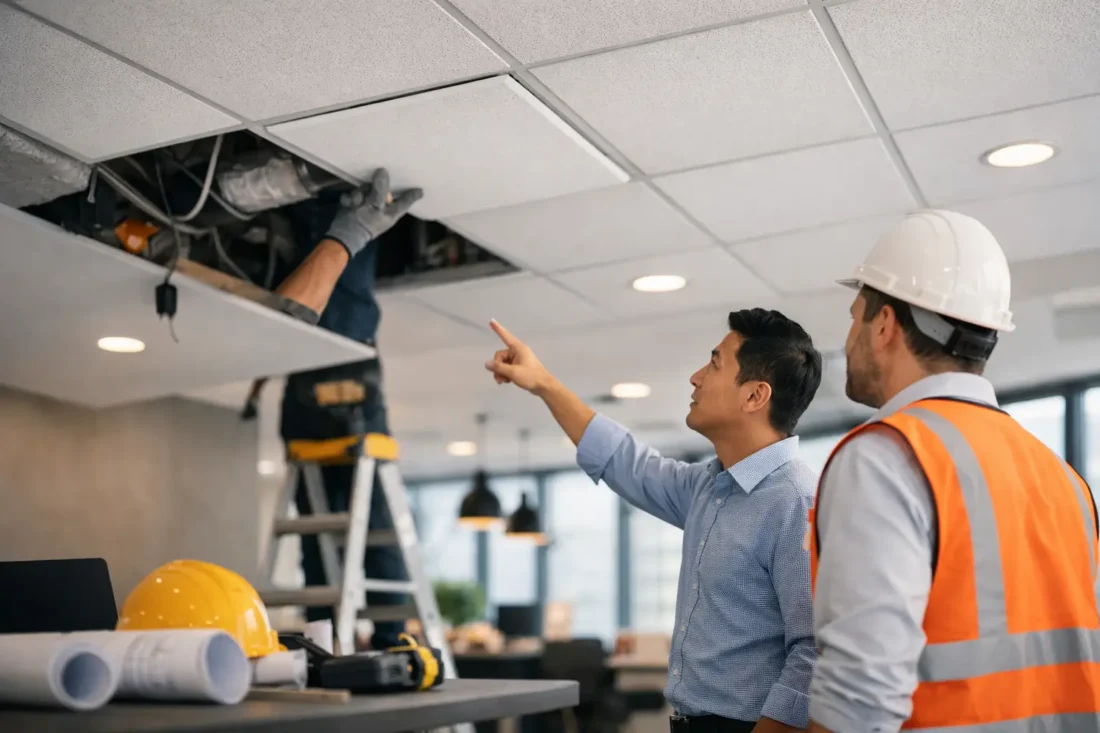
Ceiling Reinstatement Singapore: What Matters
A ceiling is easy to ignore until handover is around the corner and the landlord’s inspection starts moving upward. That is usually when tenants discover that lighting points were shifted, bulkheads were added, ceiling tiles no longer match, or M&E works left visible openings and patch marks. In ceiling reinstatement Singapore projects, these details are rarely treated as minor. They affect compliance, appearance, and whether the premises can be accepted without dispute.
For commercial tenants, ceiling reinstatement is not just a cosmetic task. It sits right at the intersection of lease obligations, building management requirements, and technical coordination with electrical, air-conditioning, fire protection, and partition removal works. If it is handled late or in isolation, costs tend to rise and defects become harder to close.
What ceiling reinstatement usually involves
The exact scope depends on what was altered during fit-out, but most projects involve restoring the ceiling to its original approved condition. That can mean dismantling non-original features such as L-boxes, decorative elements, hanging fixtures, suspended baffles, or customised lighting supports. It can also mean replacing damaged ceiling boards or tiles, patching cut-outs, repainting affected areas, and making good around services that are being removed.
In offices, the common issue is a suspended ceiling that was modified several times across different tenancy periods. Lighting points may have been repositioned, partitions may have stopped short of the slab, and air-conditioning diffusers may have been added in locations that no longer suit the landlord’s base layout. In retail and F&B settings, the scope can be more extensive because decorative ceilings, feature lighting, exhaust penetrations, and exposed services are often part of the outgoing tenant’s fit-out.
A proper reinstatement approach starts by identifying what belongs to the landlord’s original unit and what was introduced later. Without that distinction, contractors can either remove too much or leave behind non-compliant works.
Why ceiling reinstatement in Singapore often becomes a handover issue
Lease-end disputes rarely happen because a tenant forgot one ceiling tile. They happen because the finished condition does not match the lease, the landlord’s fit-out guidelines, or what building management expects to inspect. Ceiling defects are highly visible during a final walkthrough, and they often signal wider coordination problems.
If a light fitting is removed but the ceiling opening is not made good properly, that is not just a visual problem. It may indicate incomplete electrical reinstatement. If ductwork has been removed and the ceiling finish around it is uneven, the landlord may question whether other hidden services were reinstated correctly. If sprinkler heads, detectors, or access panels sit awkwardly after patching, there can be compliance concerns beyond appearance.
In Singapore commercial buildings, building management procedures can also affect the programme. Ceiling works may need to be coordinated with permit timings, after-hours access, material movement restrictions, and inspection arrangements. That matters because ceiling reinstatement is often one part of a much larger reinstatement package, and delays in one trade can hold up everything else.
Common ceiling problems found at lease end
The most straightforward projects involve replacing a few damaged boards and repainting. Many are not that simple. Over the course of a tenancy, tenants and their previous contractors may have cut into the ceiling repeatedly for lighting, data points, ducting, speakers, CCTV, or sign supports. Each intervention leaves a mark.
The usual defects include mismatched ceiling tiles, sagging grid systems, patched areas with uneven paint tone, visible screw heads, unsealed penetrations, abandoned brackets, and poor alignment at partition removal zones. Water staining can also be an issue, especially where old leaks were repaired but the aesthetic finish was never fully restored.
Another common problem is incomplete removal of tenant-installed services. Once feature lights, cameras, speakers, cabling, or diffusers come out, the remaining ceiling may reveal old openings, unsupported edges, or framing that no longer works with the original layout. These are the details that can turn a simple reinstatement into a more involved restoration exercise.
How a professional ceiling reinstatement Singapore contractor approaches the job
The best results come from treating the ceiling as part of a coordinated reinstatement programme, not as an isolated patch-and-paint task. A commercial contractor will usually begin by reviewing lease requirements, fit-out drawings if available, and site conditions. That helps establish the intended end state before dismantling starts.
From there, dismantling has to be controlled. Ceiling removal or making-good works often interact with electrical points, ducting, plumbing lines above the false ceiling, fire alarm devices, and sprinkler systems. A contractor that only handles ceiling surfaces without coordinating related trades can create avoidable defects and rework.
Material matching is another practical issue. Some older ceiling tile models are no longer readily available, and exact colour or profile matching may not be possible. In those cases, the contractor should flag the limitation early and propose the most acceptable rectification approach, whether that means replacing a wider affected area for consistency or restoring to the nearest compliant equivalent. Clear advice matters more than promises that do not hold up on site.
Finishing standards also matter. A reinstated ceiling should look intentional and uniform, not patched together under deadline pressure. That means level grid lines, neat cut-outs, properly aligned access panels, and paintwork that blends with adjacent areas.
Why coordination with other trades matters
Ceiling reinstatement is closely tied to the removal of partitions, lighting, air-conditioning components, signage, and sometimes plumbing and fire protection works. If these trades are scheduled poorly, the ceiling gets reopened multiple times. That increases labour, extends the timeline, and can leave the final finish looking compromised.
For example, if the ceiling is patched before final electrical removal is complete, new openings may need to be cut again. If partition dismantling happens after ceiling finishing, there may be exposed lines or damaged edges that require further making good. If HVAC removal is not coordinated, former diffuser or FCU locations can leave awkward voids and uneven ceiling sections.
This is why end-to-end contractors tend to deliver better lease-end outcomes. With one team managing the programme, ceiling restoration can be timed properly against dismantling, M&E reinstatement, painting, cleaning, and final touch-ups. The result is usually faster and less disruptive than trying to manage several separate specialists.
What to check before appointing a contractor
Commercial tenants should look beyond a simple quotation rate per square foot. The real question is whether the contractor understands handover risk. Ceiling reinstatement is not only about installing boards or repainting surfaces. It is about restoring the space in a way that satisfies the lease, landlord, and site conditions.
Ask whether the contractor can inspect the unit and identify likely defects before work starts. Ask how ceiling works will be coordinated with electrical and ACMV removal. Ask what happens if concealed conditions are found above the false ceiling once dismantling begins. A dependable contractor will not treat variations lightly, but neither will they ignore foreseeable risks at pricing stage.
It is also worth asking who will manage defect rectification if the landlord requests touch-ups after inspection. In practice, that support can make a major difference to how smoothly the final handover goes.
Timing, cost and the trade-offs to expect
Most tenants want ceiling reinstatement done quickly, especially when lease expiry and move-out dates are fixed. Speed is possible, but it depends on ceiling type, access restrictions, material availability, and the extent of associated M&E works. A small office with standard tiles and minimal alterations may be straightforward. A large retail unit with custom ceiling features and extensive service penetrations is a different proposition.
Cost also depends on whether the goal is localised repair or broader restoration for visual consistency. Spot replacement is cheaper, but it may leave noticeable variation if old materials are faded or discontinued. Full-area replacement costs more, yet it can reduce inspection comments and present a cleaner handover standard. There is no universal right answer – it depends on the landlord’s expectations, the lease wording, and the condition of the existing ceiling.
Where possible, tenants should avoid leaving ceiling reinstatement to the final days of occupation. Once programme pressure builds, even minor issues become expensive to fix.
A smoother route to handover
Ceiling works are one of those areas where hidden complexity shows up late. What looks like a few patch repairs can quickly involve electrical making good, service removal, repainting, and inspection follow-up. That is why a practical, compliance-led approach matters.
Office Reinstatement Singapore handles ceiling restoration as part of a full reinstatement scope, so tenants are not left coordinating separate trades or defending unfinished details during landlord inspection. If your premises need to be returned properly, the safest approach is to assess the ceiling early, define the required end state clearly, and complete the work with handover in mind from day one.
The less attention your ceiling attracts at final inspection, the better the rest of the handover usually goes.