


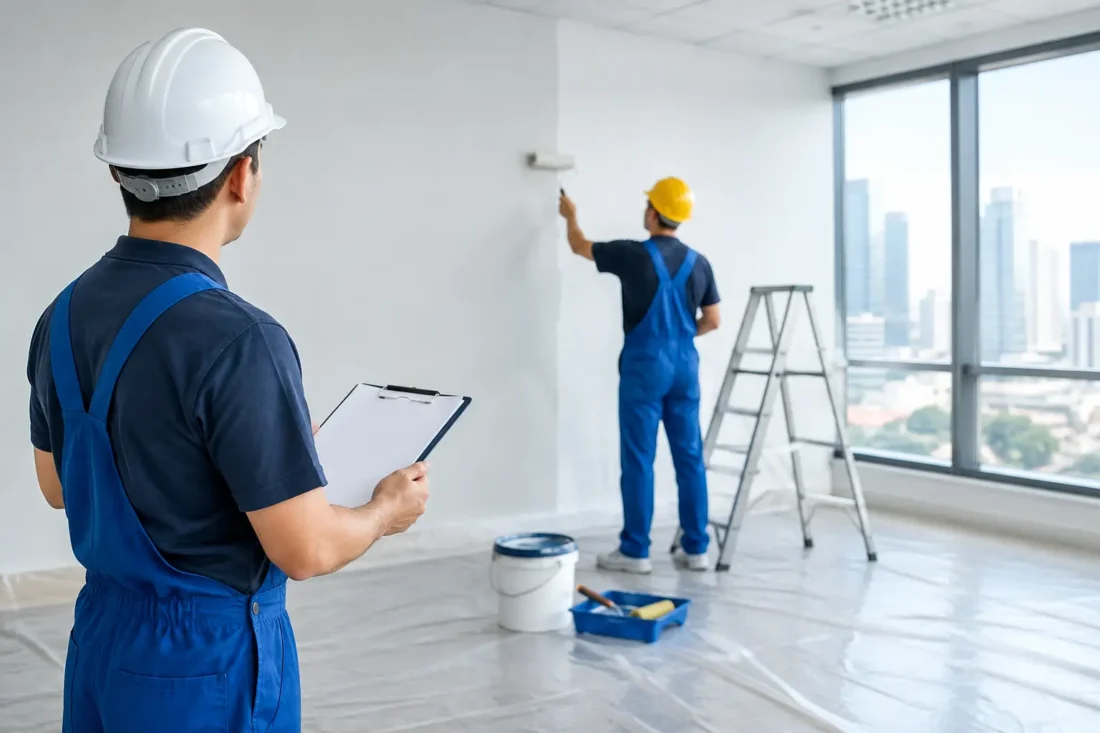
Commercial Painting Contractor for Lease Handover
A commercial painting contractor is often engaged near the end of a reinstatement project, but painting should not be treated as a final cosmetic add-on. It is one of the most visible checks during landlord inspection. Patchy repairs, the wrong paint finish, unsealed stains or paint marks on fittings can lead to rectification requests and delay the return of your deposit.
For offices, retail units and other leased business premises, commercial painting work must restore the unit to its required handover condition. That may mean returning walls to the original colour, covering marks left by removed partitions, repairing damaged ceilings, or repainting areas affected by electrical, HVAC and signage removal. The right scope depends on the tenancy agreement, the existing condition of the unit and the building management’s requirements.
Why painting affects commercial lease handover
Landlords assess a reinstated unit as a whole. Even where dismantling, flooring, electrical works and air-conditioning removal have been completed correctly, unfinished wall repairs can make the premises appear incomplete. This is where disputes commonly arise: a tenant considers the unit usable, while the landlord considers the visual standard below the required condition.
Painting also covers the evidence left behind by other trades. Removed glass partitions may leave exposed fixing points. Dismantled shelving can reveal unpainted wall sections. Old decals and signage may leave colour differences, adhesive stains or torn paint. Ceiling works can create cracks or uneven patches around access panels and trunking routes.
A proper painting scope addresses these defects before paint is applied. Applying a fresh coat over poor surface preparation may look acceptable briefly, but uneven texture, cracks and roller marks become clear under office lighting or during close inspection.
What a commercial painting contractor should inspect first
Before confirming a quotation, the contractor should inspect the premises and identify whether painting is limited to touch-ups or requires full repainting. The cheapest option is not always the most economical if isolated touch-ups create obvious differences in colour, sheen or wall texture.
The inspection should consider the original handover specification where it is available. This can include approved wall colours, ceiling finishes and any areas that must remain exposed or be returned to a particular finish. If the original specification is unavailable, the contractor should assess existing surfaces and discuss a practical matching approach before work starts.
Key areas normally reviewed include wall surfaces, columns, ceilings, bulkheads, door frames, skirting, service risers and areas behind removed furniture or built-in joinery. Wet areas, pantries and washrooms need separate attention because peeling paint, moisture stains and mould can indicate an underlying plumbing or ventilation issue. Painting over these issues without repair can result in failure at inspection.
Surface repairs come before repainting
Commercial reinstatement painting usually involves more than paint. Surfaces may need filling, sanding, crack repair, stain blocking and priming. Nail holes, screw holes and anchor points from wall-mounted screens, display racks and cabinets must be made good to a consistent finish.
Where partitions have been removed, the wall and ceiling line may require wider repairs. There may be different paint layers, uneven plaster or visible outlines from the former layout. A competent contractor will feather and prepare these areas so they do not stand out after painting.
The same principle applies to ceilings. Old water marks, cable penetrations, access-panel changes and removed light fittings can all require repair. If water staining is present, the cause should be rectified before applying a suitable sealer and finishing coat.
Full repainting or touch-up work: which is right?
Touch-up painting can be suitable when marks are minor, the original paint is known and the surrounding surface remains in good condition. It may reduce cost and programme time for a small unit with limited reinstatement work.
However, touch-up work carries a risk. Paint fades with age, and two paints with the same stated colour can look different when one area has accumulated years of light exposure, cleaning and wear. A different sheen level can be just as noticeable as a different colour. For this reason, full wall or full room repainting is often the safer option where there are multiple repaired areas.
A full repaint may also be required when the outgoing tenant has changed the unit’s colour scheme. Branded feature walls, dark colours, murals and specialist finishes generally need extra coats to return to a neutral landlord-approved colour. The number of coats should be assessed honestly. Rushing coverage over a strong existing colour can result in shadowing, poor opacity and uneven appearance.
Coordinating painting with other reinstatement works
Painting should be scheduled around the wider reinstatement programme, not carried out in isolation. If ceiling removals, electrical disconnection, air-conditioning works or carpentry dismantling are still pending, freshly painted surfaces may be damaged and need to be redone.
In most projects, heavy dismantling and hacking are completed first. Wall, ceiling and flooring repairs follow, then final painting is carried out once intrusive works are finished. Final cleaning takes place after painting, with protection removed only when the space is ready for inspection.
This sequence needs adjustment for certain sites. For example, a retail unit in a live mall may have restricted working hours, while an office tower may require lorry booking, loading-bay access, lift protection and work permits. A painting team that is not coordinated with the main reinstatement contractor can miss access windows or create avoidable rework.
For tenants managing several trades, the administrative burden can become significant. One party may repair a wall, another may paint it, and neither may accept responsibility when the final finish is rejected. A full-scope reinstatement contractor provides one point of accountability across dismantling, repairs, painting, cleaning and handover preparation.
Choosing a commercial painting contractor for reinstatement
The right contractor should understand that lease-end painting is a compliance task as well as a finishing trade. Ask how the proposed scope has been matched to your tenancy obligations, site condition and landlord requirements. A quotation should state the areas to be painted, the repair works included, the paint system or finish proposed, and whether protection and final touch-ups are covered.
It is also sensible to clarify what happens if hidden defects are found. Moisture damage behind a cabinet, damaged plaster beneath signage or extensive colour variation may not be fully visible until removal works begin. A dependable contractor will explain the likely rectification options, cost implications and effect on the programme instead of proceeding without approval.
For commercial premises, practical site management matters too. The team should be able to work within building rules, protect completed surfaces, control dust from sanding and remove paint-related waste responsibly. In occupied buildings, the contractor may need to plan around neighbouring tenants, restricted noise periods and security procedures.
Do not assess a quotation on paint quantity alone. Lower-priced proposals may exclude patch repairs, primer, ceiling work, final cleaning or attendance for a landlord inspection. These exclusions can leave the tenant arranging urgent rectification shortly before handover.
Preparing for the final inspection
Before the landlord or managing agent attends site, conduct a final walkthrough of the painted areas under normal lighting. Check corners, wall-to-ceiling junctions, behind doors, former partition lines, service-room walls and areas near removed signage. These are common locations for overlooked defects.
Look for inconsistent colour, visible filler marks, drips, rough patches, peeling edges and paint on glass, sockets, door hardware or flooring. Confirm that all protective coverings, paint containers and debris have been removed. A clean unit supports the impression that the reinstatement has been completed properly.
Where the project includes several trades, the final inspection should also confirm that no later work has damaged the completed paint finish. Minor marks from cleaning, furniture removal or electrical testing are easier to correct before the landlord visit than after a handover rejection.
Office Reinstatement Singapore coordinates painting within a complete reinstatement scope, helping commercial tenants avoid gaps between surface repair, final finishing and landlord handover. The objective is straightforward: return the premises in the required condition, with a clear scope of responsibility and no last-minute scramble to resolve visible defects.
A well-planned painting scope protects more than the appearance of an empty unit. It gives your landlord fewer reasons to request further work, helps keep the handover on schedule and allows your team to focus on the next premises rather than the one you have already vacated.