


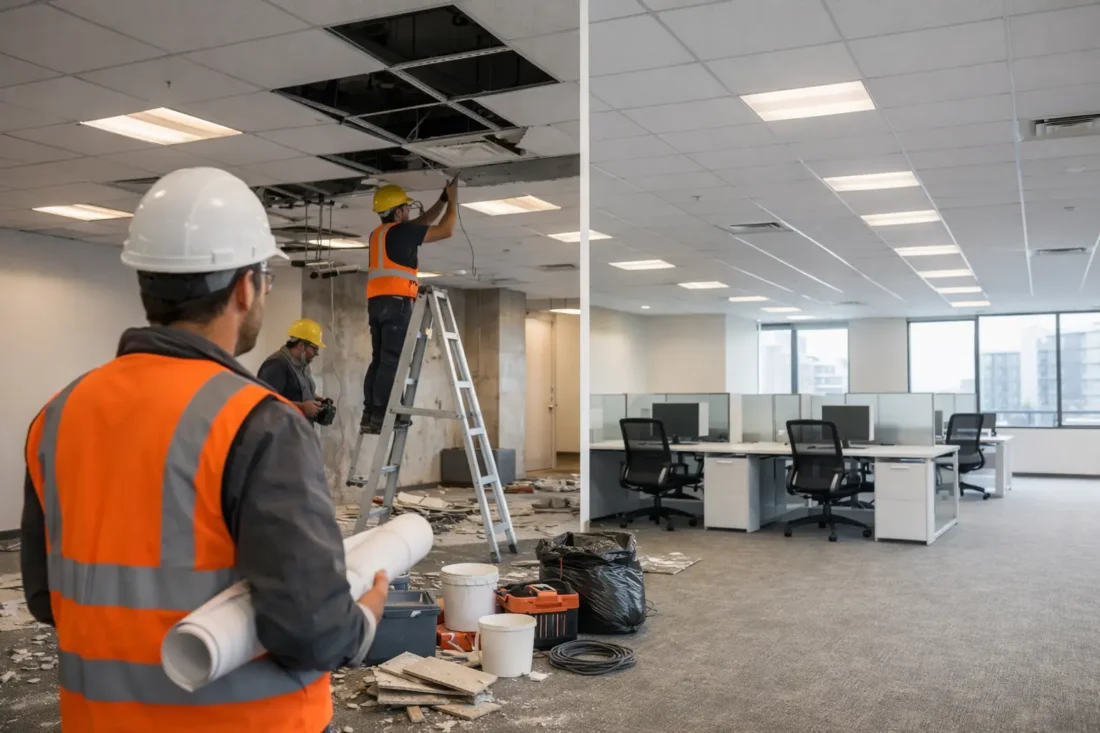
Office Reinstatement Services Before Lease End
A lease expiry date can look comfortably distant until the landlord’s reinstatement clause is reviewed. What appears to be a simple move-out often becomes a multi-trade project involving building management approvals, restricted work hours, disposal arrangements and a final inspection. Professional office reinstatement services turn that responsibility into a managed process, helping tenants return commercial premises in the required condition and avoid last-minute disputes.
For offices, retail units, clinics, gyms, restaurants and industrial spaces, the objective is not simply to empty the unit. It is to satisfy the specific condition stated in the tenancy agreement, landlord’s reinstatement guide and building management requirements. That distinction determines the scope, programme and cost of the work.
What office reinstatement services should cover
Reinstatement means removing tenant-installed works and restoring the premises to its agreed original or bare condition. The exact requirement varies by lease. Some landlords require a unit to be returned to base-build condition, while others may retain selected improvements such as ceiling grids, flooring or electrical points. Assumptions are expensive at this stage, so the tenancy agreement and original handover condition should always be checked before work begins.
A complete contractor-led scope commonly includes:
- Dismantling of partitions, meeting rooms, built-in carpentry, counters, display fixtures and tenant furniture.
- Removal or restoration of flooring, suspended ceilings, light fittings, signage, window films and decorative finishes.
- Electrical, plumbing and air-conditioning works, including safe disconnection, removal of added services and reinstatement of affected points.
- Painting, patching, cleaning, debris disposal and preparation for the landlord’s final inspection.
The work must be coordinated as one package. Removing a partition, for example, may expose damaged carpet tiles, ceiling gaps, altered electrical wiring and wall surfaces that need repainting. Appointing separate trades without a single party managing sequence and accountability can create gaps in scope and make it harder to resolve defects before handover.
Start with the lease, not the demolition
The most common reinstatement mistake is starting dismantling based on a verbal understanding of what the landlord wants. A proper project begins with a review of the lease clause, approved fit-out drawings where available, previous handover records and building management requirements.
The contractor should conduct a site survey to identify all tenant additions and assess access restrictions. In many Singapore commercial buildings, noisy works, lorry loading, lift usage and debris removal are controlled by building management. There may also be requirements for work permits, insurance documents, risk assessments, protective coverings and supervision during after-hours works.
This early review helps establish whether the unit requires full reinstatement or partial reinstatement. It also reveals practical issues that affect cost and timing, such as concealed services, after-hours working rules, limited loading access or materials that need specialist disposal. A clear scope at the beginning is the most reliable way to control variations later.
Know what “original condition” means
“Original condition” does not always mean that every surface must look brand new. It usually means the unit must be returned to the condition specified by the lease, excluding reasonable wear and tear where the agreement permits it. The landlord may also require reinstatement to a particular technical standard, not simply a visually acceptable finish.
For example, an office tenant may need to remove added data cabling but retain certain base-building electrical services. A retail operator may need to remove a shopfront sign and make good the façade without altering landlord-owned finishes. A restaurant or clinic may have more complex plumbing, exhaust, grease trap or mechanical services to address. The required outcome depends on the premises and the approved fit-out works completed during the tenancy.
A practical reinstatement programme
Time is often the biggest pressure point. Businesses need to relocate staff, transfer equipment, close accounts and hand back keys, while reinstatement works must be completed before lease expiry. Leaving the project until the final weeks increases the chance of rushed work, premium costs and delayed landlord acceptance.
A dependable programme follows a logical sequence. First, the contractor confirms the scope through site inspection and document review. Next, building management submissions and work permits are arranged. Dismantling then proceeds before repair, restoration and finishing works begin. Final cleaning and internal quality checks take place before the landlord or managing agent inspects the unit.
The order matters. Painting before ceiling, electrical or partition rectification creates repeat work. Removing furniture too late can restrict access for flooring replacement. Booking disposal without checking loading bay rules can cause avoidable delays. A single project manager should coordinate these dependencies and provide one point of contact throughout the works.
Plan for an inspection, not just completion
A unit can look finished but still fail the final inspection. Landlords and managing agents may identify overlooked cable trunking, unpatched drill holes, stained ceiling tiles, incomplete paint matching, remaining signage or poor cleaning. These small items can hold up acceptance if no one is available to rectify them promptly.
Final handover support should therefore be part of the reinstatement plan. This includes checking the premises against the agreed scope, attending the inspection where required and resolving reasonable defects raised by the landlord. It provides a clearer route to acceptance than treating the final inspection as an afterthought.
Cost control without cutting required work
The lowest quotation is not always the lowest final cost. A price that excludes permits, debris disposal, after-hours arrangements, electrical disconnection, touch-up works or inspection rectifications can lead to variations once the project is underway. Commercial tenants should compare quotations by scope, exclusions, programme and handover responsibility, rather than relying on a single total figure.
It is also sensible to separate items that are confirmed by the lease from items that remain subject to landlord instruction. This gives decision-makers a clearer view of mandatory works and possible contingencies. Where certain finishes can be retained, written confirmation should be obtained before removal. Unnecessary reinstatement wastes budget, but retaining an unauthorised item can create an equally costly handover issue.
A capable contractor can advise where savings are realistic. Reusing acceptable floor areas, retaining approved base-building items or coordinating works within standard access hours may reduce cost. However, savings should never compromise statutory safety requirements, building rules or contractual obligations.
Choosing a contractor for lease-end works
Reinstatement is a coordination exercise as much as a construction task. The right contractor should be able to manage dismantling, restoration, M&E works, finishing and disposal under one accountable scope. They should also understand how commercial buildings operate, including permit procedures, access controls and landlord inspection expectations.
Before appointing a contractor, ask how the scope will be verified against the lease, who will handle building management submissions, how defects will be managed, and whether final handover support is included. These questions reveal whether the contractor is pricing for a complete outcome or only for demolition and removal.
Office Reinstatement Singapore manages full-scope lease-end works for commercial occupants that need a compliant, handover-ready unit. The focus is practical: assess the obligation, coordinate the required trades, restore the premises properly and keep the project moving towards acceptance.
The best time to address reinstatement is while there is still room to make informed decisions. Review the lease early, confirm the required condition in writing and allow enough time for approvals, works and inspection. A controlled handover protects the business from unnecessary penalties and lets the next chapter begin without an unfinished tenancy obligation.