


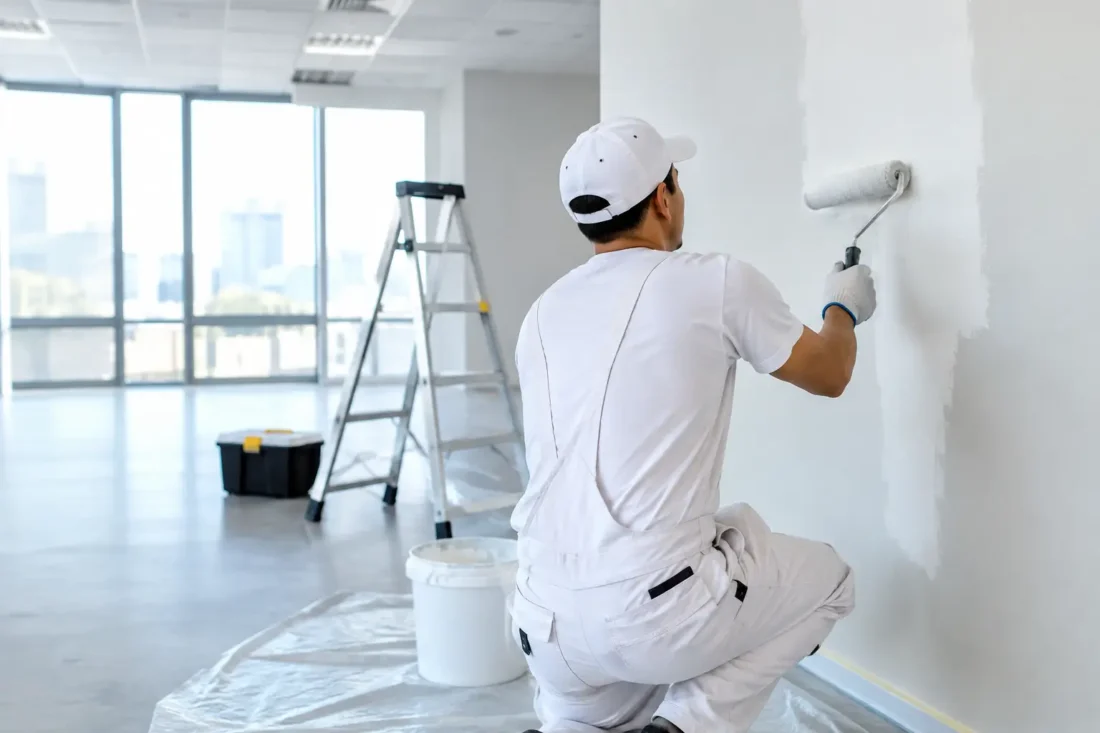
Office Painting Work for a Smooth Lease Handover
Office painting work is often treated as the final, simple item on a reinstatement checklist. In practice, it is one of the most visible parts of the landlord’s inspection. Fresh paint cannot compensate for unrepaired walls, unauthorised colour changes, exposed fixing holes or incomplete ceiling works. When a commercial unit is being returned at lease end, the painting scope must restore the premises to the agreed handover condition, not merely make it look cleaner.
For office managers and tenants, the objective is clear: complete the work to the landlord’s requirements, avoid repeated rectification visits and hand back the keys on schedule. That calls for careful preparation, the right paint specification and coordination with every other reinstatement trade.
What office painting work should cover
A proper commercial painting scope starts with an assessment of the existing condition and the tenancy reinstatement clause. The lease, original handover photographs, building management guidelines and landlord instructions should determine what has to be reinstated. Some landlords require walls and ceilings to be returned to their original colour. Others accept a clean, neutral finish, provided all tenant alterations have been removed. Assumptions at this stage are a common cause of disputes.
Office painting work generally includes surface preparation, patching, sanding, priming where required and the application of the specified finish to walls, ceilings, columns, doors, frames and other affected areas. It may also cover touch-ups after partitions, signs, cable trunking, display fixtures or equipment have been removed.
The scope should state exactly which areas are included. A broad instruction such as “repaint the office” can leave uncertainty around meeting rooms, pantry ceilings, store rooms, service corridors, internal doors and built-in joinery. Clear scope control protects the tenant from unexpected variation costs and ensures the contractor allows enough time for the work.
Painting is not a substitute for making good
Before paint is applied, the unit must be made good. This means removing screws, wall plugs, adhesive residue and mounting brackets; filling holes and cracks; repairing damaged plasterboard; and levelling uneven surfaces where practical. Marks left by removed partitions deserve particular attention. They can include unpainted strips on floors and ceilings, fixing scars, damaged skirting and different paint textures across the wall.
If these defects are painted over without preparation, they usually remain visible under inspection lighting. The result may look acceptable from a distance but fail a detailed handover inspection. Making good and painting should therefore be planned as one coordinated activity, not issued to separate contractors with no shared responsibility.
Match the specification before selecting colours
The safest approach is to confirm the required colour, finish and paint system before work begins. In many lease-end projects, landlords ask for white or an off-white shade with a matt or low-sheen finish. However, this is not universal. A building may have a base-build specification for ceilings, fire-rated surfaces, doors or common-area-facing elements.
A paint sample or small test area can be useful when the original shade is uncertain. Colour matching by sight alone is risky, particularly where an older coating has faded or been affected by sunlight. Where the landlord specifies a colour code or approved product, follow it precisely and retain the record for inspection.
The finish also matters. Matt paint can help conceal minor wall irregularities, while satin or higher-sheen coatings are easier to wipe but highlight poor surface preparation. Pantry areas, high-traffic corridors and service rooms may need a more durable coating than enclosed offices. The right choice depends on the original specification and intended handover condition, not on a tenant’s personal preference.
Sequence painting after disruptive works
Painting too early is a costly mistake. Dust from ceiling removal, electrical works or partition dismantling can settle on fresh surfaces. Later demolition can also create new cracks, dents and exposed areas that require another round of repairs.
For most reinstatement projects, painting should take place after major demolition, hacking, partition removal, electrical disconnection and removal of tenant-installed equipment. Ceiling and wall repairs should be completed first. Flooring removal may be undertaken before or after painting depending on the material and access route, but the programme must protect finished walls from scuffs caused by moving materials, ladders or disposal trolleys.
Final touch-ups should be scheduled after cleaning and before the landlord’s inspection. This allows the contractor to address small marks caused during final works without holding up the handover. It also prevents a situation where the painter has left site before a last-minute inspection issue is identified.
Common issues that lead to repainting or deductions
Landlords do not normally reject a unit because of one minor roller mark. Problems arise when the overall condition shows incomplete reinstatement or a lack of quality control. The most frequent issues are visible patch marks, uneven colour coverage, paint splashes on glass or flooring, untreated water stains, peeling coatings and unfilled holes from removed fixtures.
Water staining needs particular care. Simply applying a fresh topcoat may not stop the stain from bleeding through. The underlying source should be assessed first, especially if it relates to an air-conditioning condensate line, plumbing connection or ceiling leak. Once the cause is resolved, suitable sealing and repainting can be carried out. Covering an active defect is unlikely to satisfy building management or the landlord.
Another issue is painting over labels, access panels, fire safety signage or services that should remain identifiable. During reinstatement, regulatory labels and required markings must not be obscured. A contractor familiar with commercial premises will check these details as part of the site assessment.
Plan for access, protection and building rules
Painting a vacant office is more straightforward than painting an occupied one, but both require site management. In occupied premises, furniture, IT equipment, documents and workstations need protection. Painting may need to be phased by room or completed outside normal working hours to reduce disruption.
At lease end, access constraints are often more significant. Building management may impose work-hour restrictions, lift booking requirements, hoarding rules, loading bay arrangements and procedures for debris removal. If painting follows other reinstatement works, the programme must allow for these approvals rather than treating them as an administrative afterthought.
Protection is equally important. Floors, glass partitions, door hardware, air-conditioning grilles and electrical fittings should be covered or masked before work begins. Paint damage to retained finishes can create an avoidable rectification item, particularly in buildings with premium lift lobbies, glazed offices or specialised flooring.
Why one reinstatement contractor reduces risk
Painting is closely linked to the rest of a handover scope. A painter working alone may not know which wall holes were caused by a tenant’s signage, whether a ceiling patch will be completed by another trade or whether an electrical point is due to be removed. That creates gaps between contractors and uncertainty over who is responsible for the final result.
Using a full-scope reinstatement contractor provides a single point of coordination for dismantling, making good, ceiling and flooring restoration, electrical removal, cleaning and office painting work. The programme can be sequenced properly, with final inspections carried out only after all trades have completed their work. This is particularly valuable when the deadline is fixed and access to the premises is limited.
At Office Reinstatement Singapore, painting is managed as part of the overall restoration process, with attention to landlord requirements, site protection and handover readiness. The aim is not simply to apply a new coat of paint, but to return the unit in a condition that supports acceptance.
A practical pre-handover check
Before requesting the final inspection, walk the premises room by room under normal lighting. Check walls at an angle as well as face-on, because patch marks and roller lines are often easier to spot from the side. Inspect corners, door frames, ceiling edges, former partition lines and the areas behind removed furniture or fixtures.
Confirm that paint is dry, evenly applied and free from splashes. Ensure access panels can still be opened, required labels remain visible and no debris or masking materials have been left behind. Keep the agreed paint specification and any colour approvals available in case the landlord or managing agent asks for confirmation.
A well-planned finish gives the landlord fewer reasons to delay acceptance. Start the painting review early, coordinate it with the full reinstatement scope and leave enough time for final touch-ups before the keys are due back.