


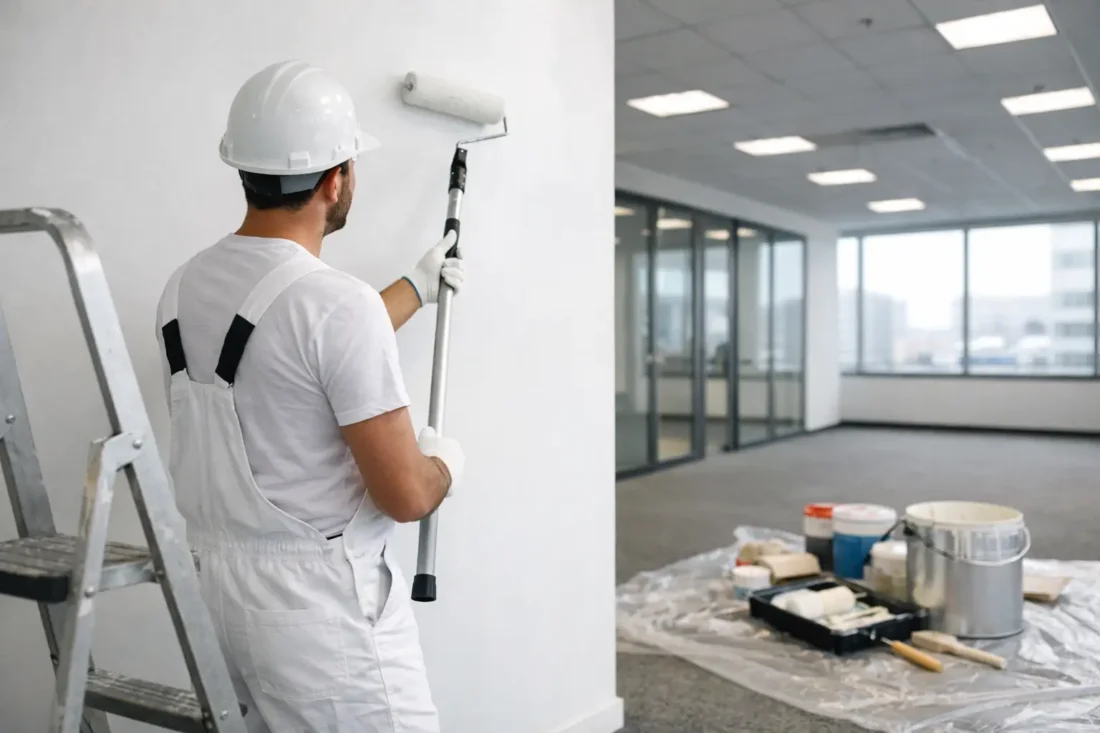
Commercial Painter for Lease Reinstatement Works
A paint finish can be the first thing a landlord notices during a lease-end inspection. Scuffed walls, unapproved feature colours, visible patchwork and poorly covered old signage marks can quickly turn an otherwise completed reinstatement into a list of rectification works. Engaging the right commercial painter is therefore not simply about making a premises look clean. It is about restoring the required condition, meeting building requirements and avoiding a delayed handover.
For offices, retail units, clinics, gyms and industrial spaces, painting is usually one part of a wider reinstatement scope. It must be planned around partition removal, electrical works, ceiling repairs, flooring restoration and final cleaning. The quality of the finish matters, but so do sequencing, access approvals, material selection and clear responsibility for defects identified at inspection.
When a Commercial Painter Is Needed
A commercial painter is needed whenever a leased unit must be returned to its original condition, or to the specific condition stated in the tenancy agreement, landlord’s reinstatement guide or approved fit-out drawings. These requirements are not always identical. Some landlords require walls to be repainted in a standard neutral colour, while others accept touch-up works where the existing paint remains sound and uniform.
The scope often becomes more substantial after a tenant’s fit-out has been dismantled. Removing mounted shelves, television brackets, partitions, decals, access-control devices and signage may leave holes, exposed cable routes, uneven surfaces and colour differences. Painting before these items have been removed usually creates avoidable rework.
A proper site assessment should establish whether the work involves full repainting, partial repainting or local repairs. It should also identify surfaces beyond standard walls, including ceilings, columns, service risers, fire-rated enclosures, roller shutters, metal doors and timber skirtings. Each surface may require different preparation and coatings.
What Landlords and Building Management Usually Check
Landlords do not assess painting in isolation. They assess whether the reinstated premises are ready to be accepted without further cost or disruption. A fresh coat of paint will not resolve a handover issue if cracks remain unfilled, unauthorised fixtures are still in place or ceiling repairs are visibly incomplete.
During inspection, common concerns include inconsistent colour, roller marks, paint splashes on flooring or switches, poorly repaired screw holes, peeling coatings, stains, and unpainted areas behind removed furniture or equipment. Building management may also impose requirements for work permits, loading arrangements, protective coverings, approved working hours and debris disposal.
The key point is that “good enough” is rarely a reliable standard at lease expiry. The required standard is the one the landlord accepts. Where the tenancy agreement specifies a colour code, paint type or finish, those details should be followed. If the requirements are unclear, obtain clarification before materials are ordered and work begins.
Preparing the Space Before Painting
Painting quality is largely determined before the first coat is applied. In a reinstatement project, preparation begins with coordinating the other trades. Partitions and built-in furniture should be removed first. Electrical points that are being reinstated should be made safe, and redundant conduits, trunking and wall-mounted equipment should be removed where required.
The painter can then assess the actual condition of the substrate. Small holes may only need filling and sanding, but larger openings left by anchors, cabling or fixtures may require patching with suitable compounds and additional drying time. Water stains, mould or recurring dampness should not simply be painted over. The underlying source must be addressed, otherwise the defect can reappear shortly after handover.
Protection is equally important in occupied buildings. Flooring, glazing, door hardware, sockets, switches and remaining fixtures should be properly covered. A contractor that treats preparation as an afterthought may leave the tenant with cleaning costs or damage claims that outweigh the apparent saving on the painting quotation.
Full Repainting or Touch-Up Work?
Touch-up work can be cost-effective when the original paint colour is known, the walls are in good condition and the affected areas are limited. It is less suitable where paint has faded over time, sunlight has altered one side of the room, or patches are spread across prominent areas. Even a correctly matched colour can look different when applied over aged paint or under different lighting.
Full repainting provides a more consistent result and is often the safer option for units with extensive fit-out removal. It also helps where former branding, dark feature walls or strong colours must be returned to a landlord-approved neutral finish. However, it adds material and labour cost, and may require more time for preparation, coats and drying.
The decision should be based on the condition of the premises and the handover requirement, not on the cheapest initial price. A failed inspection followed by urgent repainting can be more expensive than carrying out the correct scope from the outset.
Choosing the Right Coating and Finish
Commercial paint specifications should suit both the surface and the intended use of the premises. Standard office walls may require an interior emulsion with a low-sheen or matt appearance. High-traffic corridors, retail spaces and service areas may benefit from a more washable finish. Ceilings generally need a finish that minimises visible imperfections, while metalwork may require primers and protective coatings designed for the substrate.
Colour selection must be controlled carefully. If a landlord provides an approved colour, use that reference rather than relying on a visual estimate. Where no colour is specified, neutral shades are commonly used because they present the space as clean and adaptable for the next occupier. That said, assumptions should not replace written confirmation where possible.
Paint odour, drying time and ventilation also matter. In a live commercial building, works may need to take place after office hours or within restricted access windows. Low-odour products may be appropriate, but they still need to meet the required coverage and finish. The best choice depends on the programme, building conditions and landlord expectations.
How Painting Fits Into a Reinstatement Programme
Painting is typically scheduled late in the project, but it should be planned from the beginning. It follows dusty works such as dismantling, hacking, patching, electrical removal and ceiling repairs. It must also be completed before final cleaning and the joint inspection, allowing enough time for coats to dry and defects to be rectified.
A practical sequence is to inspect and document the unit, obtain building approvals, remove tenant-installed items, complete repairs, prepare surfaces, paint, carry out detailed cleaning and conduct a pre-handover check. This sequence may vary for complex units, particularly those with specialist mechanical or plumbing reinstatement works, but the principle remains the same: do not paint surfaces that another contractor is likely to damage afterwards.
For a tenant managing multiple trades separately, this coordination can become difficult. One delayed contractor can affect access, paint drying time and inspection dates. A full-scope contractor such as Office Reinstatement Singapore manages painting alongside the wider reinstatement programme, reducing gaps between trades and providing one accountable point of contact.
Questions to Ask Before Appointing a Painter
Before confirming a quotation, establish whether surface repairs, primer, paint supply, protection, touch-ups and final cleaning are included. A low quotation may cover only basic application and exclude the preparation that determines whether the result will pass inspection.
Also confirm the number of coats, the proposed paint system, working hours, access arrangements and expected completion date. For lease-end projects, ask how defects raised during the landlord inspection will be handled. A dependable contractor should be clear about the scope, exclusions and rectification process rather than leaving these points open to interpretation.
Photographs taken before, during and after the works can be useful evidence of the condition returned. They are particularly valuable where pre-existing defects were recorded at the start of the tenancy or where the landlord requires proof that unauthorised colours and tenant fixtures have been removed.
A Handover-Ready Finish Requires More Than Fresh Paint
The visible result should be even, clean and consistent, with repaired areas blended into surrounding surfaces and no paint residue on adjacent finishes. More importantly, it should form part of a premises that has been reinstated in accordance with the agreed scope.
Before returning the keys, walk through the unit from the landlord’s perspective. Check walls under normal lighting, look behind doors and former furniture positions, and inspect areas around removed fixtures. A commercial painter who understands reinstatement will treat those small details as part of the job, because they are often the difference between a smooth handover and one more costly site visit.