


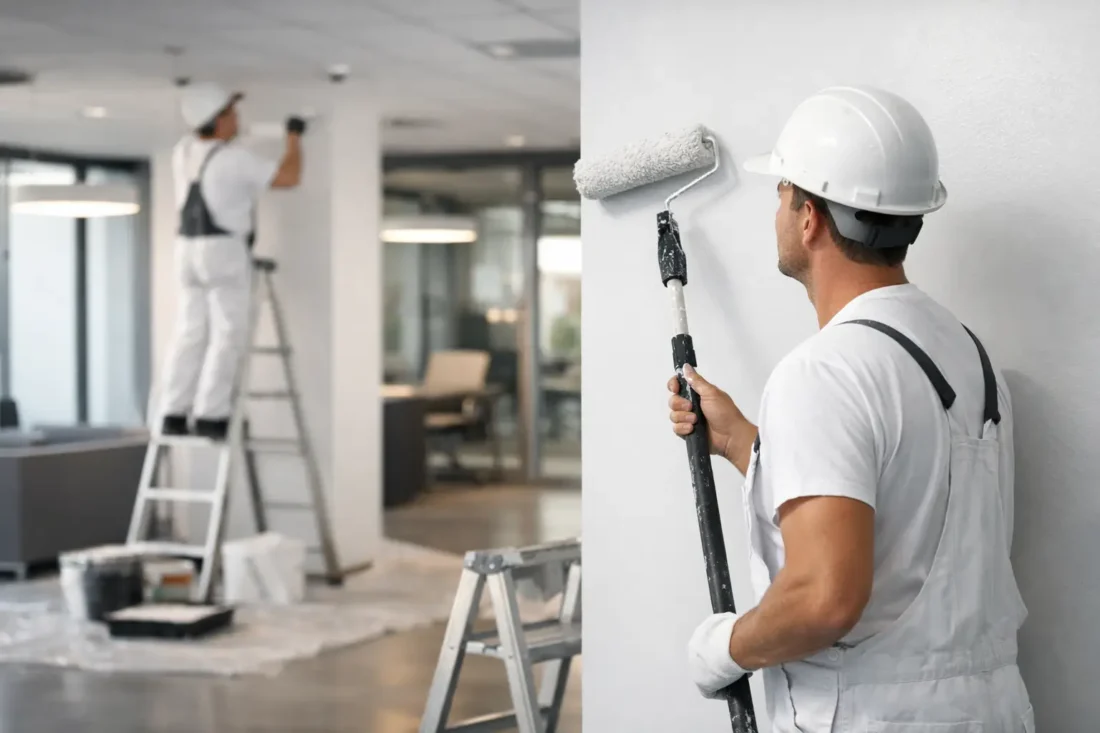
Painting Work Contractor for Commercial Handover
A fresh coat of paint can look like the simplest part of a lease-end project. In practice, appointing the right painting work contractor can determine whether a commercial unit passes inspection promptly or remains subject to rectification requests. Patchy touch-ups, uneven colour matching, paint splashes on fittings, or unapproved colour changes can hold up landlord acceptance even when the larger dismantling works are complete.
For offices, retail units, clinics, warehouses and other business premises, painting should be planned as part of the reinstatement scope, not treated as a final cosmetic task. The contractor must understand what has been altered, what condition the landlord expects at return, and how painting work needs to coordinate with ceilings, partitions, electrical points, air-conditioning works and cleaning.
What a painting work contractor should cover
Commercial painting is more than applying a finish to visible walls. Before works begin, the contractor should review the tenancy agreement, approved fit-out drawings where available, previous handover records, and building management requirements. These documents help establish whether the unit needs to be restored to a specific paint colour, finish or original condition.
A proper scope normally starts with site protection and surface preparation. Furniture that remains in the unit, glass panels, flooring, door hardware, switches and fixtures should be protected before sanding, patching or painting begins. This is particularly relevant in occupied buildings, where dust and paint odour must be controlled to avoid affecting neighbouring tenants.
Surface preparation is where quality is won or lost. Walls may have holes from shelving, artwork, displays, signboards, data points, partitions or wall-mounted equipment. A competent contractor removes loose material, fills and smooths holes, repairs cracks where appropriate, sands uneven areas and applies primer when the substrate requires it. Painting over damaged or poorly patched surfaces may appear acceptable under low light, but defects often show clearly during a landlord inspection.
The scope should also state which elements are included. This may cover internal walls, ceilings, columns, skirting, doors, frames, exposed services or external-facing areas, depending on the lease and unit condition. Not every surface should automatically be painted. For example, a landlord may require selected finishes to be retained, while a fire-rated door or specialised coating may need a particular treatment. The right approach depends on the tenancy obligations and the building’s specifications.
Start with the reinstatement requirement, not the paint colour
The first question is not which shade of white to use. It is what the landlord or managing agent will accept. Some leases require reinstatement to the original condition, while others specify that the unit must be returned in good and tenantable repair. These terms can lead to different painting requirements.
If the original paint reference is known, the contractor should work from it. If it is not available, colour matching may be necessary. A sample taken from a protected area can help, but age, sunlight exposure and past repainting can affect the result. In these cases, repainting an entire wall or room is usually safer than applying isolated touch-ups that create visible colour variation.
Finish matters as well. Matt paint can hide minor surface imperfections but may be less washable. Low-sheen or eggshell finishes can be more durable in high-contact areas, yet differences in sheen are obvious when repairs are painted only in sections. A painting work contractor should explain these practical trade-offs and recommend a finish that aligns with the reinstatement specification rather than simply selecting the cheapest available product.
For retail and food-and-beverage premises, the review may be more detailed. Grease, moisture, smoke staining and adhesive residue can prevent paint from bonding properly. For industrial spaces, there may be marks from racking, equipment or operational activity that need more substantial repairs. These conditions should be identified during the site survey so that the quotation reflects the actual work required.
Why preparation and sequencing protect the handover date
Painting should take place at the right point in the programme. If it starts too early, subsequent dismantling, electrical removal or air-conditioning works can damage newly finished surfaces. If it starts too late, there may be insufficient drying and curing time before the final inspection.
In most reinstatement projects, the sequence involves removal works first, followed by repair and making good, then painting, cleaning and final checks. The precise order can change where flooring replacement, ceiling repairs or plumbing works are involved. What matters is that one party manages the interfaces between trades.
This is why engaging separate painters after appointing separate demolition, electrical and cleaning vendors can create unnecessary risk. A painter may correctly complete the agreed walls, only for another contractor to scratch them while removing cable trunking or equipment. The tenant then has to arrange another visit, absorb the delay and explain the issue to building management.
A full-scope reinstatement contractor can programme painting around other activities and allocate responsibility when damage or defects arise. This does not mean every project needs the largest possible scope. A small office with minor wall repairs may only need a focused painting package. However, where several trades are required, coordinated project management is usually more efficient than asking the tenant to manage multiple handovers.
Questions to ask before appointing a contractor
A quotation should be specific enough to prevent disputes later. A low lump-sum price may exclude surface repairs, primer, ceiling work, protection, after-hours access, debris disposal or rectification after inspection. These items can quickly change the final cost.
Ask the contractor to confirm the affected areas, number of coats, paint system, preparation method, colour or finish assumptions, protection measures, working hours and expected programme. They should also state whether the price includes minor making-good works, removal of paint waste and post-work cleaning.
It is also sensible to clarify responsibility for defects that emerge after old fixtures are removed. A concealed wall may reveal damaged plaster, staining or unpainted sections that could not be measured fully during the initial survey. An experienced contractor will flag this possibility upfront and set out how variation works are assessed and approved.
For commercial premises in Singapore, building management procedures can be just as important as the painting itself. Contractors may need to comply with work permit applications, lift padding, loading arrangements, approved working hours, insurance requirements and site safety rules. Failure to plan these details can leave a capable painting team unable to start on the scheduled date.
Signs of a handover-ready painting finish
A completed paint job should be assessed in normal operating light, not only immediately after the roller work is finished. The contractor should inspect walls and ceilings for missed areas, uneven coverage, flashing, roller marks, drips, visible patching and paint on adjacent surfaces.
Edges around door frames, glass, sockets, skirting and ceiling lines should be clean. Former partition locations should be repaired so they do not remain as obvious outlines. Holes from removed signage or wall fixtures should be properly made good, particularly at entrance areas where landlords often focus their inspection.
The work area must also be left clean. Paint tins, masking materials, sanding dust and other debris should be cleared. If painting is part of a broader reinstatement package, final cleaning should follow after all trades have completed their works, not before.
Photographs are useful before, during and after the job. They provide a record of pre-existing conditions, agreed repair areas and final workmanship. While photographs do not replace a physical inspection, they can support clear communication if questions arise during handover.
Choose accountability over a quick coat of paint
The lowest quotation is not always the lowest-cost option. A contractor who omits preparation or applies a quick touch-up may save money on day one, but a failed inspection can lead to urgent rectification, additional access charges and potential lease-end delays. The commercial cost of keeping a unit open for longer can exceed the difference between two painting quotations.
Office Reinstatement Singapore approaches painting as one part of a complete return-to-landlord process. This means checking paintwork alongside partition removal, ceiling and flooring restoration, electrical making good, cleaning and final handover requirements, rather than treating each trade as an isolated task.
Before confirming any painter, compare the scope against the tenancy requirements line by line. A clear brief, sound preparation and one accountable team give your premises the best chance of being accepted without last-minute work – and allow your operations team to move on to the next site with confidence.