


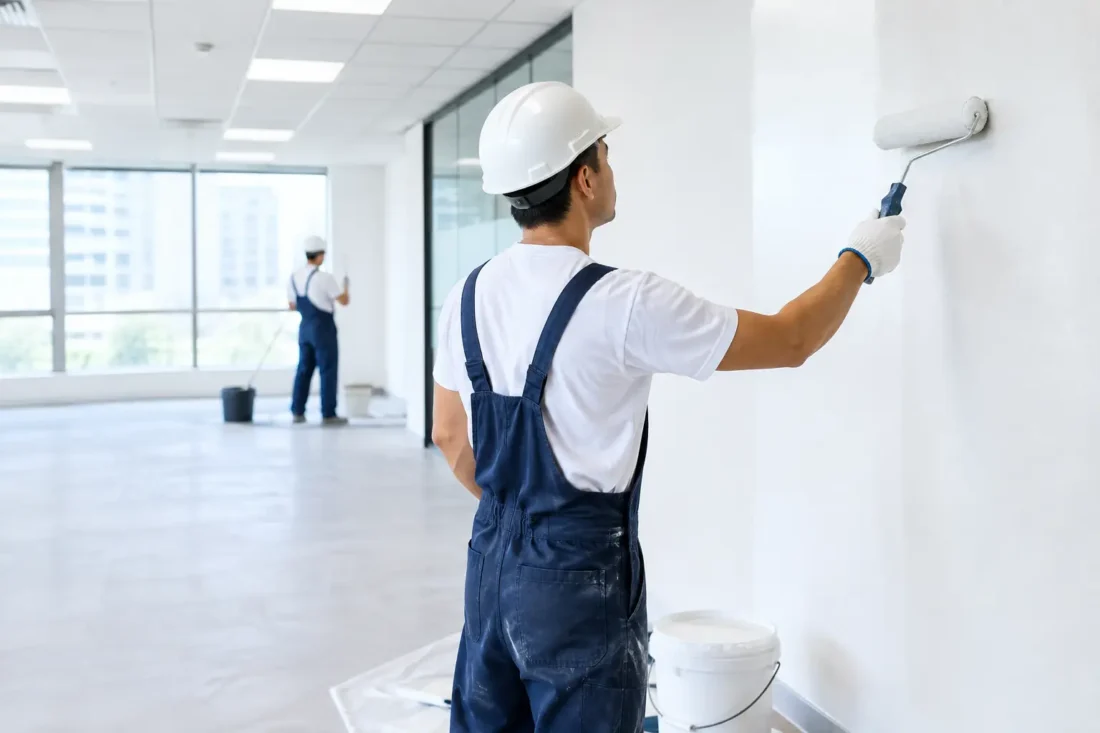
Commercial Painting for Lease-End Handover
A freshly painted unit can still fail a landlord inspection if the wrong surfaces have been painted, repairs have been missed, or the finish does not match the required handover condition. Commercial painting at lease end is not simply a cosmetic task. It is part of the reinstatement scope that helps return an office, shop, clinic or industrial unit to the condition stated in the tenancy agreement.
For commercial tenants, the priority is clear: complete the painting work properly, coordinate it with all other reinstatement trades, and hand over the premises without avoidable disputes, delays or rectification costs.
What commercial painting means at lease end
Lease-end painting usually involves restoring walls, ceilings, doors, frames and other affected finishes after the removal of tenant-installed items. Partition dismantling, electrical point removal, signage removal and furniture clearance can all leave behind patch marks, exposed fixing holes, uneven surfaces and colour differences. These defects need to be rectified before painting begins.
The exact requirement depends on the lease, the original condition report and the building management’s handover requirements. Some landlords require a full repaint in an approved colour. Others accept targeted repair and touch-up work where the existing finish is sound and the colour can be matched accurately. Assuming that a few touch-ups will be sufficient is risky, particularly where walls have faded unevenly or multiple alterations have been made over the tenancy.
A proper assessment should identify the surfaces to be painted, the specified colour and finish, the extent of wall preparation required, and whether any specialist coatings are necessary. In offices, this may include suspended ceiling tiles, plasterboard partitions and feature walls. Retail and food premises may have grease marks, moisture damage or heavy-duty finishes that require additional preparation. Warehouses and factories may require coatings suitable for high-traffic areas or exposed service zones.
Why painting must be coordinated with reinstatement works
Painting too early is one of the most common causes of unnecessary rework. If contractors remove cabling, air-conditioning equipment, display fixtures or partitions after walls have been painted, new holes and scuffs will appear. The unit then needs further patching and repainting before final inspection.
The sensible sequence is to complete noisy and invasive works first. This normally includes dismantling partitions, removing built-in furniture and signage, reinstating electrical and plumbing points, removing redundant air-conditioning works, and repairing ceilings and flooring edges. Once the affected surfaces are made good, painting can proceed as one controlled stage.
This matters even more when time is limited. Commercial moves often involve overlapping dates, access restrictions and building management permits. A single contractor managing the wider reinstatement scope can programme painting at the right point, rather than leaving the tenant to coordinate several separate trades and resolve clashes between them.
The preparation work that determines the finish
Paint will not conceal poor substrate condition. It can make uneven repairs, old tape lines and unrepaired screw holes more obvious, especially under office lighting. Good commercial painting starts with surface preparation, not the final coat.
Typical preparation works include:
- Removing hooks, vinyl graphics, adhesive residue and redundant fixings.
- Filling holes, cracks, dents and gaps left by removed partitions or services.
- Sanding repaired areas to create an even surface.
- Treating stains, mould marks or water-affected areas where the underlying cause has been resolved.
- Applying primer or sealer where repairs, colour changes or surface condition require it.
Colour matching also deserves attention. Paint ages through sunlight, cleaning and everyday use, so a newly mixed colour may not blend into an old wall even when it has the same reference code. Where the existing colour is uncertain or visibly faded, repainting the full wall or room may produce a more consistent handover result than isolated patch repairs.
Choosing the right scope for commercial painting
A full repaint is often the safest option when a tenant has occupied a unit for several years, made multiple alterations, or needs to restore a non-standard colour scheme. It provides a uniform finish and reduces the chance that a landlord rejects visible variations between old and new paint.
However, a full repaint is not automatically necessary in every unit. Targeted repair and painting may be appropriate for a newer office with limited damage, provided the landlord accepts the approach and the repaired areas are not noticeable. The key is not to choose the cheapest scope first. Choose the scope that satisfies the tenancy obligation and is most likely to pass inspection without further work.
The paint finish should also suit the surface. Matt finishes can reduce the visibility of minor wall imperfections, while washable or more durable coatings may be more suitable for corridors, retail areas and high-contact spaces. Ceiling paints, metal finishes and timber surfaces may each need different products and application methods. A contractor should confirm this before work starts rather than applying one general paint system across every surface.
Common handover issues caused by poor painting work
Landlords and managing agents do not assess paintwork in isolation. They view the unit as a whole, often during a final walkthrough when defects are easy to spot. Uneven colour, visible patching, paint on skirting or glass, and unfinished edges around reinstated electrical points can all trigger a rectification request.
Other common issues include painting over unresolved water stains, failing to repair damage behind removed signage, leaving paint splashes on flooring, and applying coats before the substrate has dried adequately. These are not minor workmanship points when the handover deadline is close. Each one can delay acceptance and expose the tenant to additional costs.
Access and protection are equally important. Floors, doors, glazing, retained furniture and building common areas must be protected during works. In occupied buildings, painting also needs to be planned around approved working hours, lift bookings, loading arrangements and disposal rules. These practical controls are part of delivering a compliant commercial project, not optional extras.
A practical commercial painting process
The work should begin with a site inspection and a review of the lease-end requirements. This establishes whether the premises needs a complete repaint, localised rectification or specialist coatings, and identifies defects caused by previous fit-out works.
Next, the contractor should schedule painting after the relevant dismantling, repair and service reinstatement works are complete. Surfaces are then prepared, protected and painted to the agreed colour and finish. Once the coating has dried, the unit should be checked for missed areas, uneven coverage, visible repair marks and paint contamination on adjacent finishes.
A final clean is necessary before inspection. Dust from sanding, paint debris and masking materials should not be left for the tenant or landlord to deal with. Where painting is included within a full reinstatement package, this final stage can be coordinated with cleaning, debris disposal and handover support so the premises is presented in proper condition.
What to confirm before appointing a contractor
Before work begins, confirm the required handover standard in writing. Check whether the landlord has specified paint colours, brands, finish types or approval procedures. Ask whether there are photographs or a condition report from the start of the tenancy, as these can help establish what must be restored.
It is also worth confirming what is included in the quotation. Painting prices can vary because one scope includes patching, primer, protection, access equipment, final cleaning and defect rectification, while another only covers applying paint to prepared walls. A clear scope avoids disagreements once the job is underway.
For tenants managing a full exit, Office Reinstatement Singapore can coordinate commercial painting alongside dismantling, M&E reinstatement, ceiling and flooring repairs, cleaning and final handover preparation. This gives the project one programme, one accountable point of contact and fewer gaps between trades.
The best time to resolve painting requirements is before the final week of a lease. A clear scope, correct sequencing and careful finishing give the landlord far less reason to send the unit back for rectification.