


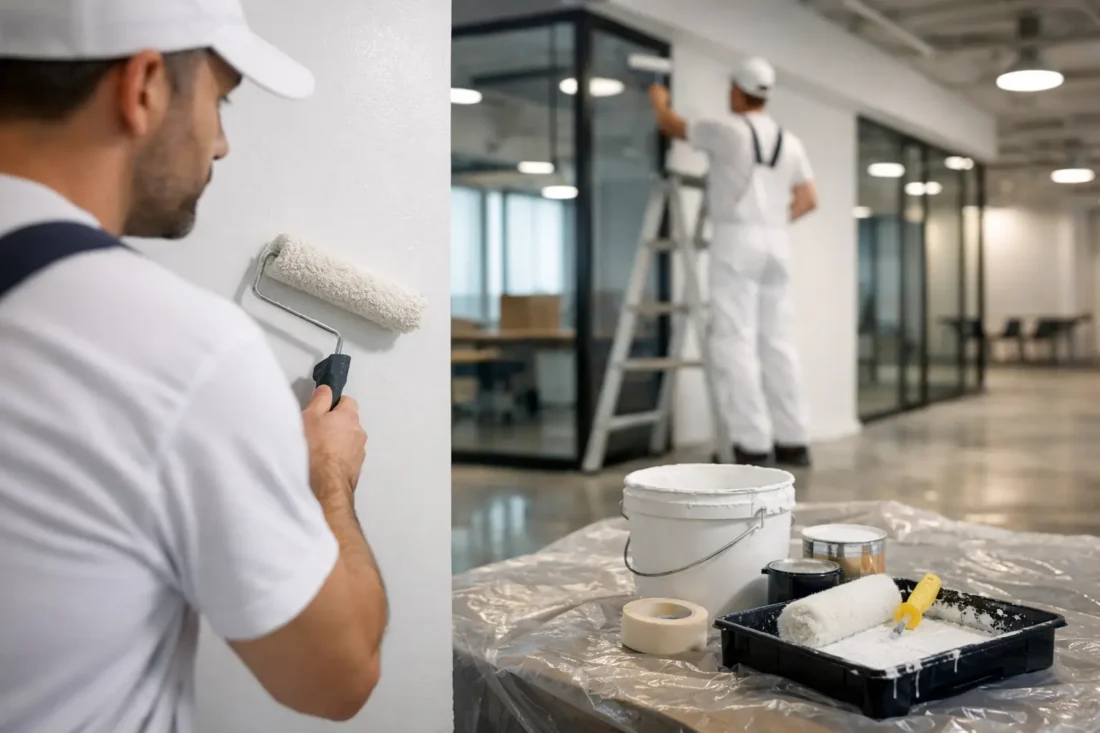
Painting Commercial Spaces Before Handover
A rushed paint job near the end of a lease often creates more problems than it solves. In painting commercial premises for handover, the issue is not simply making walls look fresh. It is making sure the space meets tenancy requirements, matches the expected original condition, and does not trigger disputes during inspection.
For offices, shops, clinics, gyms and other leased units, painting is usually one part of a wider reinstatement scope. That matters because paint finishes are affected by what has been removed before them – partitions, shelving, signage, data points, lighting, vinyl stickers and built-in fittings all leave marks behind. If painting is handled in isolation, the final result can look uneven, incomplete or obviously patched, which is exactly what landlords and managing agents tend to notice.
Why painting commercial units is not just cosmetic
Commercial painting at lease end serves a compliance purpose. Most tenancy agreements do not ask for a decorative upgrade. They require the tenant to return the premises to an agreed state, often close to the original handover condition, fair wear and tear aside. If the walls carry brand colours, feature finishes, heavy staining, exposed patch marks or unauthorised coatings, repainting becomes part of reinstatement rather than a maintenance choice.
This is where many tenants misjudge the scope. A unit may appear straightforward until furniture is cleared and defects become visible. There may be filled cable penetrations, discoloured wall sections hidden behind cabinets, adhesive marks from signage, nail holes, cracked skim coat, or paint mismatch where previous touch-ups were done badly. In practical terms, painting has to correct these conditions well enough for inspection, not merely cover them from a distance.
In Singapore commercial buildings, another factor is coordination with building management. Painting works may need access approval, protected common areas, disposal arrangements for debris, and scheduling that does not interfere with other reinstatement works. If the sequence is wrong, freshly painted walls can be damaged by follow-on dismantling or services removal.
What landlords usually expect from painting commercial spaces
Landlords rarely assess paintwork in the same way an interior designer would. Their concern is whether the premises look properly restored, neutral and acceptable for the next tenant or for further asset works. That usually means consistent coverage, a suitable colour, proper repair of damaged areas and no obvious signs of the outgoing tenant’s fit-out.
In many cases, neutral colours such as white or off-white are expected, especially where the original unit was delivered in a basic shell or standard office finish. Still, this is not universal. Some leases specify reinstatement to the original colour scheme if records exist. Others require any alterations to be removed but do not insist on full repainting if wall surfaces remain acceptable. The right approach depends on the tenancy agreement, landlord comments, and the actual condition on site.
A common mistake is assuming that a single coat will be enough to save time and cost. It may be enough in a lightly used office with minimal wall damage and no strong colour change. It is rarely enough where dark feature walls, grease, mould marks, impact damage or extensive patch repairs are involved. When the substrate condition is poor, preparation matters more than speed.
Painting commercial premises as part of reinstatement
Painting should be planned as the finishing stage of a coordinated reinstatement programme. Before any paint is applied, the underlying defects need to be addressed properly. This includes patching chased walls, levelling damaged plaster, removing residual adhesive, sanding uneven repairs and making good areas affected by dismantling works.
If ceilings are being restored, the same principle applies. Removed light fittings, diffusers, cabling and suspended features often leave openings, stains or mismatched panels. Simply painting over these defects does not return the unit to acceptable condition. The substrate has to be repaired first.
This is why many commercial tenants prefer a single contractor to manage the full scope. When dismantling, electrical removal, ceiling making good and painting are handled under one project lead, the works can be sequenced correctly. It reduces the usual handover problem where one trade blames another for damage, delays or unfinished touch-ups.
How a proper commercial painting scope is assessed
A reliable contractor will not quote painting from floor area alone and treat every unit the same. The real scope depends on condition, access, finish requirements and reinstatement obligations. A site assessment should identify whether the walls need spot repair or full skim coat, whether existing coatings are sound, whether there is staining that needs sealing, and whether high-level areas require special access.
Operational constraints also matter. In occupied buildings, there may be restricted working hours, loading bay rules, noise control requirements and permit processes. Some projects need phased works because the tenant is still moving out. Others have to be completed within a very short lease-end window. The painting method, manpower allocation and protection measures should be matched to those conditions.
For retail and F&B units, the scope can become more involved. Grease residue, moisture exposure, signboard removal and service penetrations often leave heavier making-good requirements than a standard office. In clinics, salons and gyms, wall surfaces may have more mounted equipment or branded installations to remove. Industrial and warehouse units may involve taller walls, more surface wear and practical finish expectations rather than cosmetic perfection.
Common issues that affect painting commercial handover
Patchiness is one of the most frequent causes of inspection comments. This usually happens when walls are touched up in isolated areas without repainting the full plane, leaving visible sheen differences or colour mismatch under lighting. Another issue is poor edge finishing around skirting, door frames, conduits and ceiling lines, which makes the reinstatement look rushed.
Drying time is another practical concern. When tenants leave painting too late, they compress the schedule and create risk. Wet paint, lingering odour, unfinished second coats or last-minute corrections can clash with final cleaning and inspection. If defects are only spotted on handover day, there may be little room left to rectify them without extending site possession.
There is also the question of whether every area really needs repainting. The honest answer is no. Some units only need local making good and selective repainting to comply with lease obligations. Others require a full repaint because the previous fit-out has altered the visual condition too heavily. A dependable contractor should advise based on what is necessary for acceptance, not oversell a blanket scope.
Choosing a contractor for painting commercial reinstatement
The safest choice is a contractor that understands lease-end reinstatement, not just decorative painting. The difference is significant. A decorative painter may focus on finish alone, while a reinstatement contractor looks at the whole handover requirement – defects, removals, access approvals, repair coordination, cleaning and inspection readiness.
That broader view saves time and reduces exposure to disputes. If your unit still needs partition dismantling, M&E removal, ceiling reinstatement or flooring repair, bringing in separate parties for each trade can create gaps in scope and accountability. Painting then becomes the final layer over unresolved defects, which is exactly where problems surface.
A proper contractor should also be clear about what is included. Are surface repairs included or priced separately? Is ceiling painting included? Are doors, frames and service riser areas part of the scope? Will protection, debris removal and final touch-ups before inspection be covered? These are not minor details at lease end. They affect budget, programme and handover outcome.
For businesses that want fewer moving parts, Office Reinstatement Singapore typically approaches painting as one component of a complete reinstatement workflow, so the unit is restored and prepared for landlord inspection rather than treated as a stand-alone cosmetic task.
The practical value of getting it right
Good painting at lease end protects more than appearances. It helps close out the tenancy cleanly, supports deposit recovery, and lowers the chance of the landlord raising avoidable comments. It also reduces the internal workload on office managers and operations teams who are already handling relocation, asset disposal and business continuity.
The commercial reality is simple. Repainting too little can lead to rejection. Repainting without proper preparation can still lead to rejection. Repainting too much can add cost where it is not needed. The right answer sits in the middle – a scope based on lease terms, actual site condition and a coordinated reinstatement plan.
If your premises are approaching handover, treat painting as a compliance item, not an afterthought. The cleanest projects are usually the ones where repairs, restoration and final finishes are planned early enough for proper execution, not forced into the last few days before the keys go back.