


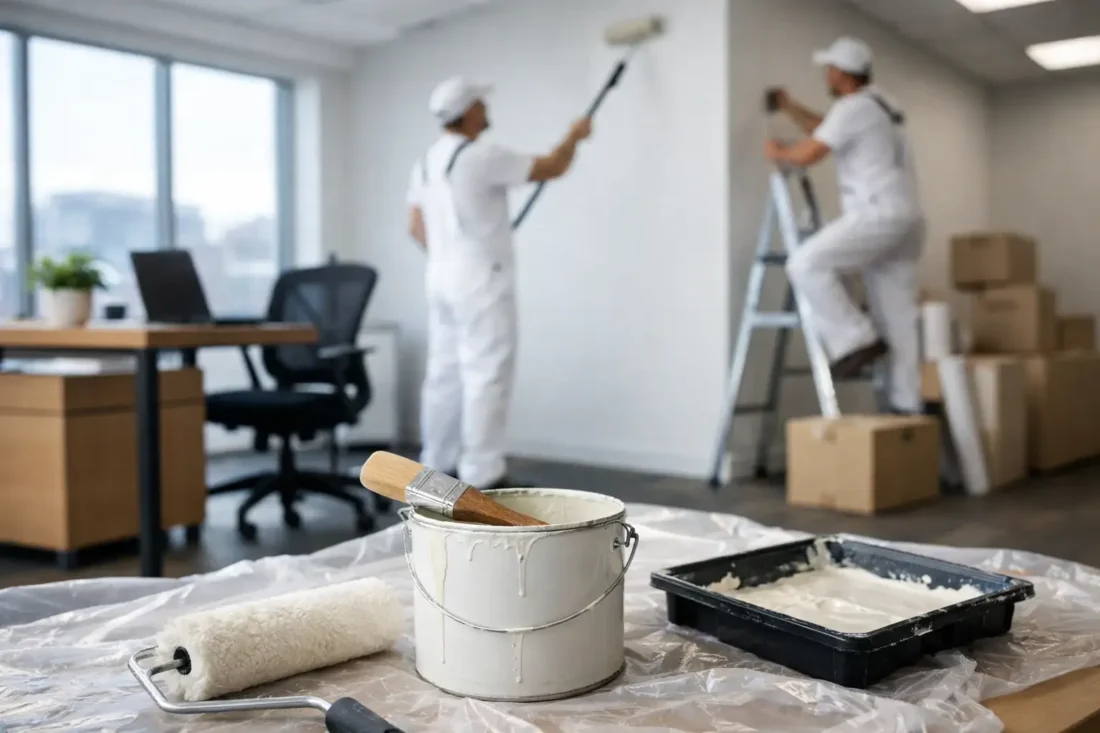
Office Painting for Lease-End Handover
A wall that looked acceptable during daily operations can suddenly become a lease-end problem under bright inspection lighting. Scuff marks, patched holes, sun-faded sections and feature colours tend to stand out once furniture is removed. That is why office painting is rarely just a cosmetic task. In many cases, it is part of getting the unit back to the condition required for landlord acceptance.
For tenants preparing to vacate, repainting needs to be considered in the wider context of reinstatement works. It affects handover standards, scheduling, access coordination and final cleaning. If it is treated as a last-minute add-on, it can create delays and unnecessary cost. If it is planned properly, it helps close out defects, present the premises in a compliant condition and reduce the risk of disputes.
Why office painting matters at lease end
In an occupied office, minor wear is easy to ignore. Once the space is emptied, every wall and ceiling surface becomes visible. Areas behind cabinets, meeting room partitions and signage often show uneven colour or adhesive damage. Touch-up jobs can also be obvious if the original paint has aged.
Most landlords do not assess painted surfaces purely on whether paint exists. They look at condition, consistency and whether the premises have been restored to an acceptable standard under the tenancy terms. That standard varies. Some leases require reinstatement to original condition. Others focus on fair wear and tear, while some building managers apply stricter expectations during pre-handover inspection.
This is where office painting becomes a practical risk-management item rather than a decorative decision. Repainting can help resolve visible defects quickly, but only if the scope matches the actual handover requirement.
When full office painting is necessary
There is no universal rule that every office must be fully repainted before handover. The right answer depends on the lease, the landlord’s comments, the age of the premises and the extent of alterations made during occupancy.
A full repaint is usually sensible where walls were painted in brand colours, where many partitions have been removed, or where there are widespread cracks, stains and patch marks. It is also common where previous fit-out works left areas of mismatched paint, or where long-term use has created visible traffic wear in corridors, reception zones and shared meeting areas.
Ceilings are often overlooked. Yet water marks, removed light fittings, air-conditioning changes and old repair patches can be picked up during inspection. If ceiling repairs form part of reinstatement, painting may be required to achieve a uniform finish.
There are also cases where full repainting is not necessary. If the premises remain close to original condition, and only a few localised defects exist, patching and touch-up works may be enough. The problem is that partial painting only works when colour matching is realistic. On older surfaces, exact matching is difficult, so a small repair can end up looking more obvious than the original defect.
What landlords usually look for
Landlords and managing agents typically focus on visible consistency, neat workmanship and absence of damage. They will notice roller marks, uneven tone, paint splatter on skirting, poorly sealed cracks and areas where old feature colours still show through. They may also reject surfaces that look unfinished after partition removal or signage dismantling.
If the lease or handover checklist specifies a neutral colour scheme, that requirement matters more than tenant preference. For this reason, paint selection should not be made in isolation. It must follow the reinstatement brief and any building management instructions.
Office painting as part of reinstatement works
Painting usually sits near the end of the reinstatement programme, but it should be planned much earlier. Before any coating begins, dismantling, hacking, carpentry removal, electrical termination and wall making-good should already be completed. Otherwise, freshly painted surfaces are likely to be damaged by later trades.
That sequencing matters on active commercial sites. If flooring restoration, ceiling closure, glass film removal and M&E works are still ongoing, painting too early creates rework. It is more efficient to complete surface preparation after all intrusive works are done, then move into final finishing in a controlled sequence.
In practical terms, office painting depends on more than paint. It depends on proper patching, crack treatment, sanding, stain sealing and surface cleaning. If those steps are rushed, the finish may look acceptable on day one and fail inspection a few days later.
Common issues found before repainting
The most frequent problems are anchor holes, tape residue, patched trunking routes, cracks at partition joints and shadow lines where fitted furniture once sat. In some units, old adhesive from vinyl graphics or acoustic panels affects paint adhesion. In others, damp-related staining around FCU areas or windows needs treatment before any topcoat is applied.
This is why a contractor should assess painted surfaces in conjunction with dismantling and repair scope. A wall is not ready for painting simply because it is exposed. It must first be restored to a paintable condition.
Choosing the right paint finish for commercial handover
For lease-end reinstatement, the objective is usually compliance and presentability, not premium interior design. In most cases, a standard neutral finish is the practical choice. The focus should be on covering previous usage marks and providing a clean, consistent appearance suitable for inspection.
That said, not all areas should be treated the same way. High-touch walls in corridors and pantry zones may benefit from more durable finishes if required by the specification. Ceilings often need different products from wall surfaces. If there were previous moisture issues, stain-blocking primers may be necessary.
The cheapest paint option is not always the most economical. Poor opacity can lead to extra coats, longer labour time and inconsistent coverage over darker colours. A more suitable system may reduce rework and shorten completion time. On tight handover programmes, that matters.
Timing, access and building rules
Painting is one of the trades most affected by access restrictions. Lift booking, loading bay permits, after-hours work rules and disposal procedures can all influence the schedule. In commercial buildings, even a straightforward repaint may need to fit within approved work hours and building management conditions.
Drying time also affects programme planning. If the unit needs final cleaning, joint inspection and defect rectification within a short period, painting cannot be squeezed in at the very end without contingency. Wet paint, lingering odour and incomplete touch-ups can interfere with final handover readiness.
This is where a single contractor handling broader reinstatement scope has an advantage. Office Reinstatement Singapore, for example, can coordinate painting alongside dismantling, repair works, disposal and final preparation so the site is managed as one programme rather than as separate disconnected jobs.
How to avoid disputes over office painting
The safest approach is to clarify expectations early. Review the tenancy agreement, any fit-out approval conditions and pre-termination comments from the landlord or managing agent. If there is uncertainty over whether full repainting is needed, it is better to identify that before works begin than argue over standards during handover week.
Site inspection is equally important. A quotation based only on floor area often misses real conditions such as patch-heavy walls, concealed damage behind fixtures or difficult access above built-in elements. A proper assessment allows the painting scope to reflect actual reinstatement needs.
Documentation helps as well. Before-and-after photos, scope confirmation and clear records of approved colours or finishes can reduce disagreement. Where inspections are involved, the issue is not just whether works were done, but whether they can be shown to meet the required brief.
Cost depends on scope, not just square footage
Many tenants ask for a painting rate per square foot or per square metre, but lease-end office painting is rarely that simple. Cost is shaped by wall condition, repair volume, number of coats, paint type, access restrictions and whether ceilings, doors or exposed services are included.
A stripped-out unit with extensive making-good may require more labour for preparation than for actual painting. Conversely, a relatively clean office with minimal alterations may be repainted quickly. The real value comes from getting the right scope first time. Under-quoting often leads to variation costs or a finish that does not pass inspection.
It is also worth considering the cost of delay. If repainting defects hold up landlord acceptance, the financial impact may be greater than the saving from choosing the lowest initial price.
What a handover-ready result should look like
At the end of the job, the space should read as complete, not recently patched. Walls and ceilings should have consistent tone, repaired areas should blend properly, and surfaces should be free from drips, visible marks and leftover damage from tenant fit-out elements.
More importantly, the painting should support the broader reinstatement objective. It should sit neatly with restored flooring, closed ceiling sections, removed signage, terminated services and final cleaning. A good result is not just fresh paint on a wall. It is a premises condition that gives the landlord fewer reasons to raise further comments.
If you are planning a move-out, treat painting as part of the handover strategy, not an isolated finishing trade. The right scope, timing and workmanship can save a surprising amount of back-and-forth when the keys are ready to go back.