


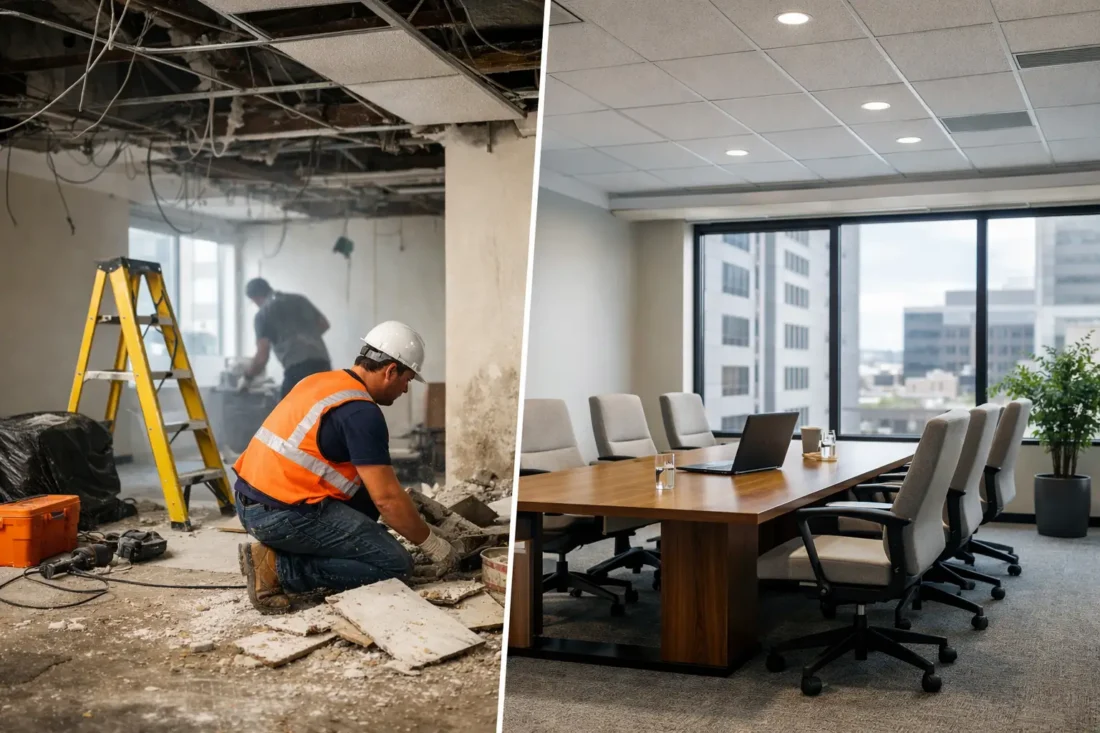
Business Restoration Without Lease-End Delays
A lease is easy to sign and much harder to finish. The pressure usually appears in the final weeks, when business restoration becomes a live operational issue rather than a line in the tenancy agreement. By that stage, most tenants are balancing move-out logistics, staff disruption, landlord expectations and a fixed deadline that rarely shifts.
For offices, shops, clinics, gyms and other commercial units, restoration work is not just a matter of making the space look tidy. It is about returning the premises to the required condition for handover. That can mean removing added partitions, reinstating ceilings and flooring, disconnecting electrical points, capping plumbing, taking down signage, patching walls and arranging final cleaning and debris disposal. If the work falls short, the consequences can be expensive.
What business restoration really means at lease end
In commercial property, business restoration usually refers to the works needed to return a leased unit to its original or landlord-required condition before the tenancy ends. The exact scope depends on the lease, any fit-out approvals, and the building management rules that apply to dismantling and disposal.
This is where many tenants run into trouble. They assume restoration means a basic strip-out, when in practice it often includes multiple trades and compliance steps. A landlord may expect removal of internal rooms, restoration of floor finishes, repainting, making good wall and ceiling surfaces, removal of data cabling, and safe disconnection of mechanical and electrical services. In some cases, inspection standards are stricter than expected, especially where previous alterations were extensive.
The gap between assumption and obligation is what causes delays. If work starts too late or key items are missed, the tenant can face additional rent, deposit deductions, penalties or disputes over rectification.
Why business restoration goes wrong
Most lease-end problems are not caused by one major failure. They come from a series of small misjudgements.
One common issue is underestimating the full scope. A business may engage one contractor to remove partitions, another to handle electrical works and a separate cleaning team, only to discover that no one has taken responsibility for patching damaged ceiling grids or reinstating exposed pipework. Each contractor completes only part of the requirement, while the tenant is left to coordinate the gaps.
Timing is another problem. Restoration often competes with relocation, IT migration, stock clearance and internal approvals. If the programme is compressed, even straightforward work becomes risky. Material lead times, permit applications, after-hours access restrictions and disposal arrangements can all affect completion.
There is also the compliance issue. Commercial buildings do not usually allow uncontrolled hacking, dismantling or waste removal. Building management may require method statements, work permits, lift protection, loading bay bookings, insurance documentation and approved working hours. Missing these steps can slow the project before any physical work begins.
The scope is broader than most tenants expect
A proper restoration project is rarely a single-trade job. Even a modest office fit-out may involve dismantling partitions and built-in furniture, removing pantry fittings, reinstating ceiling tiles, restoring vinyl or carpet finishes, isolating electrical points, removing lights and trunking, patching walls, painting, cleaning and hauling away debris.
Retail and F&B units can be even more involved. Signage removal, grease-related cleaning, plumbing disconnection, exhaust or HVAC removal, floor repair and service terminations often need careful sequencing. In medical, wellness or industrial spaces, there may be extra requirements linked to specialist equipment, heavier fittings or stricter safety controls.
That is why business restoration is best treated as a managed project rather than a simple removal exercise. The technical work matters, but so does coordination. If one trade finishes late, another cannot proceed. If making-good works are done before final removals, surfaces may be damaged again. A smooth handover depends on order as much as workmanship.
Start with the tenancy terms, not the demolition plan
The most practical starting point is the lease itself. Before anyone touches the site, the restoration scope should be checked against tenancy clauses, landlord correspondence, approved fit-out drawings and any variation records. If a tenant installed non-original items years ago, those additions still matter now.
This early review helps answer the questions that affect budget and timeline. What must be removed? What can remain? Does the landlord require the unit to be returned to bare condition, or only to a standard state? Are there building rules on noise, disposal or access timing? Is there a pre-handover inspection process?
Without this groundwork, quotations can be misleadingly low because they do not reflect the real obligation. A cheaper price is not a saving if it excludes rectification later.
Site assessment should be practical, not superficial
A proper site visit should identify visible works and likely hidden issues. Ceiling voids, floor conditions under raised platforms, non-compliant electrical extensions and concealed piping can all affect the final scope. This is also the stage to confirm lift access, protection requirements, disposal routes and whether works must be staged around neighbouring occupants.
For tenants, this matters because surprises usually cost more near the deadline. Early identification gives room to plan and reduce variation claims.
Why a single contractor often reduces risk
When the restoration scope cuts across dismantling, electrical, plumbing, ceiling, flooring, painting, cleaning and disposal, one point of coordination usually makes the project easier to control. That does not mean every project must be handled the same way, but in most lease-end situations the operational benefit is clear.
A single contractor can sequence trades properly, align the work with landlord requirements and manage documentation in one place. That reduces the chance of disputes between separate vendors about who caused damage, who is responsible for making good, or why handover is incomplete.
For commercial tenants, the bigger advantage is accountability. If the handover inspection flags defects, there is no confusion over who needs to return and rectify them. The project remains under one responsible party.
This is especially useful in Singapore, where building management processes, disposal rules and access controls can be strict. A contractor that is used to commercial reinstatement work will usually anticipate these constraints before they become costly delays.
Cost matters, but scope clarity matters more
Every tenant wants an affordable restoration cost, and that is reasonable. The mistake is treating price as the only comparison point.
A low quote may exclude disposal, permit coordination, after-hours work, patching, repainting or final cleaning. It may also assume that the tenant will arrange specialist disconnections separately. By contrast, a more detailed proposal may look higher at first glance but be more accurate and easier to manage.
The better question is whether the scope is complete enough to support handover. If the answer is no, the headline figure is not the real cost.
Programme certainty has financial value
Delays are expensive even when direct penalties do not apply. Extended occupation, additional storage, postponed opening at the new site, extra supervision time and repeated landlord inspections all carry cost. A restoration contractor should therefore be assessed on programme control as much as workmanship.
Clear scheduling, realistic durations and prompt rectification support often save more than aggressive underquoting.
What a handover-ready approach looks like
Good restoration work does not stop at physical completion. The end point is landlord acceptance.
That means the site should be presented in a condition that supports inspection, with rubbish removed, surfaces cleaned, defects addressed and major reinstatement items completed to the expected standard. If there are touch-ups or minor comments, those should be resolved quickly rather than argued over.
A handover-ready approach is practical and no-nonsense. It focuses on closing the job properly, not merely declaring the works finished. For tenants with little time left on the lease, that distinction matters.
This is also where experience makes a difference. Contractors that regularly manage end-of-lease reinstatement understand the typical sticking points – exposed services, uneven patching, mismatched paint, damaged floor transitions, uncleared ceiling penetrations, incomplete disconnects. Catching these before inspection saves time and friction.
Office Reinstatement Singapore operates on that basis: complete scope coverage, coordinated execution and support through the final handover stage, so tenants are not left chasing multiple trades at the last minute.
Plan earlier than feels necessary
The safest time to prepare for restoration is usually earlier than most businesses think. Once the move-out date is confirmed, the reinstatement review should begin. Waiting until the final month compresses everything – quotation, approvals, scheduling, execution and rectification.
Early planning does not commit a tenant to immediate work. It simply gives room to define the scope properly, compare realistic proposals and book a programme that fits the lease expiry date. That reduces the chance of rushed decisions and avoidable extras.
Business restoration is not glamorous work, but it is one of the last chances to protect budget, timeline and landlord relations at the end of a tenancy. Handled well, it closes the lease cleanly and lets your team focus on the next premises instead of the last one.