


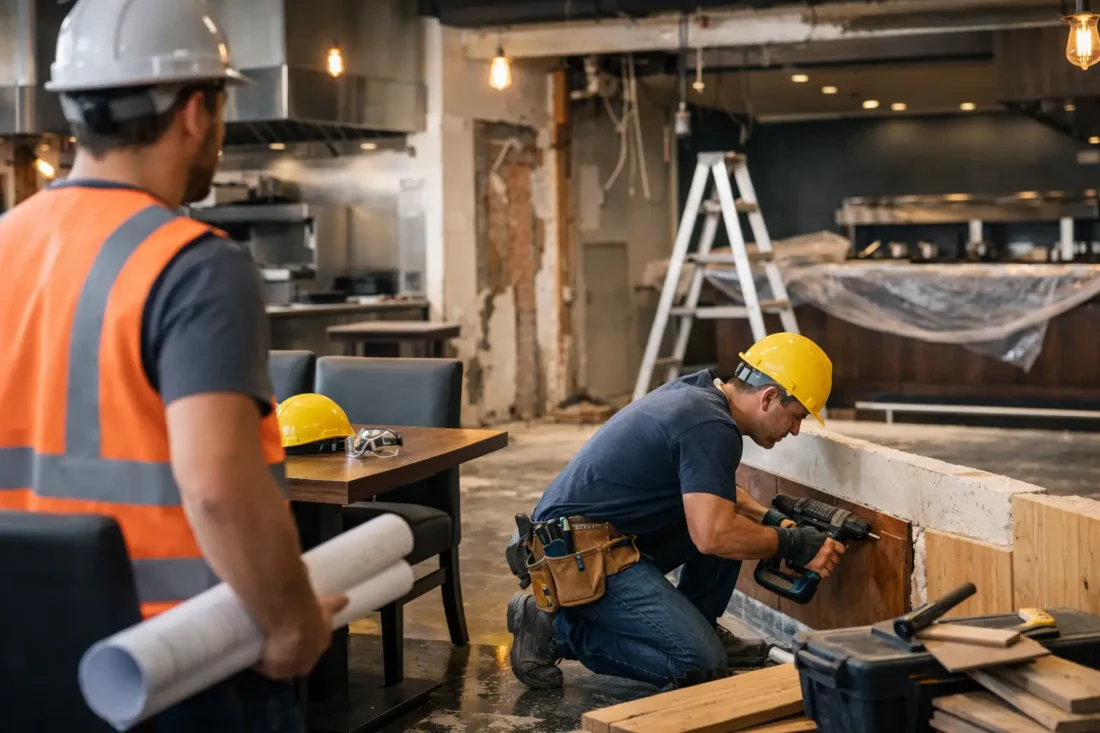
Restaurant Reinstatement Works Explained
A restaurant rarely leaves behind a simple empty unit. By the time a tenancy ends, the space usually contains exhaust ducting, grease traps, kitchen plumbing, petrol lines, cold room fittings, floor traps, dining area partitions, signage and custom electrical works. That is why restaurant reinstatement works need tighter planning than many other commercial handovers. The goal is not just to strip out equipment. It is to return the premises to the condition required by the lease, building management and landlord, without delay or unnecessary cost.
For restaurant operators, this matters because food and beverage fit-outs are heavily modified spaces. A basic office handover may involve ceiling repairs, floor restoration and lighting removal. A restaurant often adds mechanical extraction systems, kitchen drainage, fire safety interfaces, waterproofing details and high-load power points. Missing just one reinstatement item can hold up inspection, trigger deductions or lead to disputes over defects and non-compliance.
What restaurant reinstatement works usually include
The exact scope depends on the original condition of the unit and the tenancy agreement. Some landlords require a bare shell return. Others only require removal of tenant-added works and making good affected surfaces. The right starting point is always the approved fit-out drawings, lease clauses and any handover conditions issued by the landlord or managing agent.
In practice, restaurant reinstatement works often cover dismantling the dining area and back-of-house additions, removing signage, restoring walls, ceilings and flooring, disconnecting and removing kitchen plumbing and electrical points, taking out non-original air-conditioning works, dismantling exhaust ducts and hood systems, and making good all disturbed areas. If the unit has grease traps, cold rooms, raised platforms, counters or built-in storage, these may also need to be removed.
The phrase that causes the most confusion is “make good”. It does not simply mean patching visible damage. It usually means restoring the affected area so that it matches the landlord’s required condition for handover. That may involve repainting entire wall sections, re-levelling floors after hacking, capping services correctly, restoring ceiling grids or replacing damaged tiles rather than patching around them.
Kitchen systems need special attention
The kitchen is usually the highest-risk part of the reinstatement. Extraction systems are often routed through shared building infrastructure and may need coordinated shutdowns, access approvals and careful dismantling. Plumbing works can also be more involved than expected, especially where additional floor traps, water supply lines or drainage points were installed during fit-out.
Petrol, where present, requires proper isolation and removal by qualified parties. Electrical works should include safe termination, circuit tracing and removal of tenant-installed distribution points where required. If these trades are handled separately without coordination, the project can quickly run into delays, duplicated work and defects during final inspection.
Why restaurant reinstatement works often run into problems
The main issue is assumption. Many tenants assume reinstatement is simply demolition, so they appoint ad hoc subcontractors to remove visible fixtures and leave the rest for later. That approach usually creates gaps. For example, a hood may be removed but the ceiling opening is left exposed. A service counter may be hacked out but the floor finish is not restored. A grease trap may be disconnected but not properly removed or capped.
Another common problem is relying on memory instead of documentation. Restaurant spaces change over time. Additional sockets get installed, plumbing gets rerouted and partitions get altered after the initial fit-out. Without checking approved plans and lease obligations, it is easy to miss items that the landlord still regards as tenant additions.
Timing is another pressure point. Lease-end dates are fixed, but reinstatement schedules often start late because operators are still trading, clearing equipment or negotiating dilapidation items. Once the restaurant closes, there is usually a short window to remove everything, restore the unit and pass inspection. If the contractor has not planned permits, debris disposal, lift protection, working hours and trade sequencing in advance, the handover date can slip quickly.
How a proper reinstatement process should work
A dependable contractor starts with a site review, lease check and scope confirmation. This is where the practical questions get answered. What was original to the unit? Which services must stay? What must be removed fully rather than disconnected? Are there building management rules on noisy works, waste disposal, after-hours access or M&E isolation?
Once the scope is clear, the project should be sequenced trade by trade. Loose furniture and movable equipment come out first. Built-in joinery, counters, signage, non-structural partitions and decorative finishes follow. Mechanical and electrical removals are then coordinated with making-good works so the ceiling, walls and floors can be restored in the right order.
This sequencing matters. If flooring is repaired before heavy dismantling is complete, it may be damaged again. If painting is done before service penetrations are patched, the finish will need rework. A single contractor managing the full scope usually prevents these avoidable overlaps.
Inspection planning should not be left to the end
One of the most practical parts of restaurant reinstatement works is pre-handover checking. Before the landlord or building management team walks the site, the contractor should carry out an internal inspection against the agreed scope. This should cover visible finishes, service terminations, cleanliness, debris clearance and any items likely to be flagged during handover.
That final check often makes the difference between one inspection and several rounds of rectification. It is also where experience shows. A contractor familiar with commercial handovers knows the sort of points landlords raise – exposed conduits, unfinished capping, mismatched paint, ceiling stains, unsealed openings, leftover anchors and uncleared waste.
Cost depends on more than unit size
Restaurant tenants often ask for a rate based on square footage alone. That can be misleading. A small unit with a full commercial kitchen, extensive exhaust works and multiple plumbing alterations may cost more to reinstate than a larger but simpler retail space.
The real cost drivers are the amount of built-in work to be removed, the complexity of M&E systems, access restrictions, disposal volumes, after-hours requirements and the standard of restoration expected by the landlord. If hacking and floor make-good are extensive, costs will rise. If the lease requires return to bare shell condition, the scope will usually be broader than a standard make-good package.
A clear quotation should state what is included, what assumptions are being made and what documents the pricing is based on. That protects both sides. It also reduces variation claims later when hidden service routes or unrecorded fit-out additions are uncovered during dismantling.
Choosing a contractor for restaurant reinstatement works
The safest choice is a contractor that can manage dismantling, electrical, plumbing, ceiling, flooring, painting, debris disposal and handover support under one scope. Restaurant projects create enough coordination issues without the tenant having to chase separate trades.
Look for operational clarity rather than sales language. Ask how the contractor confirms lease requirements, how they handle M&E shutdowns, how they plan disposal, who supervises the works and what happens if the landlord requests touch-ups before acceptance. A contractor that answers these questions directly is usually better prepared than one that speaks only about low pricing.
For businesses that want fewer moving parts at lease end, Office Reinstatement Singapore takes the practical route – assess the scope properly, execute across trades, and prepare the unit for a smoother handover.
When to start planning
The best time is before the restaurant stops operating, not after. A pre-termination site assessment gives tenants time to review the lease, compare the current unit against original conditions and decide what equipment or fittings will be removed by specialist vendors versus the reinstatement contractor.
This early step also helps with budgeting. If there are likely to be landlord discussions around retained items or partial reinstatement, those conversations should happen before works begin. Waiting until the last week of the lease usually limits options and increases pressure on everyone involved.
Restaurant reinstatement is one of those jobs that looks straightforward from the dining area and becomes technical the moment the ceiling panels come down. A controlled process, clear scope and proper trade coordination will always cost less than a rushed handover followed by rectifications, disputes and extended possession. If your lease is ending soon, the smartest move is to treat reinstatement as a compliance project from day one, not a demolition job at the finish line.