


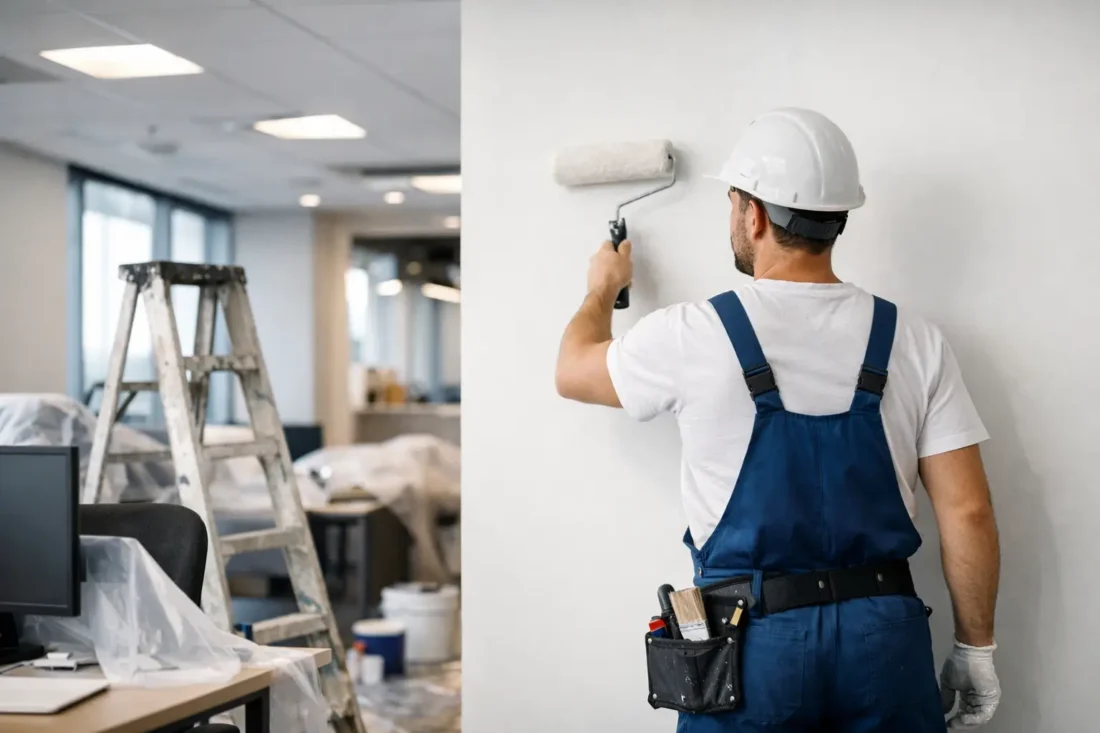
Painting Worker for Office Reinstatement
A rushed paint job is one of the fastest ways to create trouble at lease end. Landlords and building managers notice patchy touch-ups, uneven colour matching and poor surface preparation immediately. When a painting worker is brought in as part of a proper reinstatement plan, the result is not just a fresher-looking unit – it is a space that stands a better chance of passing inspection without argument.
For commercial tenants, painting is rarely a standalone task. It sits alongside dismantling, M&E reinstatement, ceiling restoration, flooring repairs and cleaning. That is why the quality of the painting work matters, but so does the way it is sequenced, supervised and aligned with the original tenancy condition.
What a painting worker actually does in reinstatement
In a lease-end setting, a painting worker is responsible for more than applying a new coat of paint. The work usually starts with assessing the existing wall and ceiling condition, identifying cracks, screw holes, joint lines, stains and uneven patches caused by fit-out alterations or day-to-day use.
Surface preparation is where many problems are either solved or created. A proper reinstatement scope may involve scraping loose paint, sanding rough areas, skimming damaged sections, sealing repaired surfaces and applying primer where necessary. If the unit had signage, mounted shelves, partitions or feature walls, those removed areas often need extra attention to avoid obvious repair marks showing through the final finish.
The painting itself must also match the reinstatement requirement. Sometimes that means returning walls to a standard white or off-white finish. In other cases, the landlord may expect a close match to the original approved colour. The right approach depends on the lease, the building’s handover standard and the condition of the surrounding surfaces.
Why painting matters at handover
Painting tends to look simple from the outside, which is why some tenants leave it until the final days of a move. That usually leads to unnecessary risk. Poor paintwork can trigger rectification requests, delay inspections and create disputes over whether the unit has been restored to original condition.
For offices and retail units, visual condition carries weight because it is immediately visible during inspection. A landlord may not test every concealed service in the first walkthrough, but walls, columns and ceilings are seen straight away. If those surfaces look incomplete, damaged or inconsistent, it can affect the overall impression of the reinstatement works.
There is also a practical issue. Painting needs to happen at the correct point in the programme. If it is done too early, follow-on works can damage the finish. If it is done too late, there may not be enough drying time before inspection. In occupied buildings, access hours, lift booking arrangements and disposal rules can also affect scheduling.
When a painting worker is needed as part of wider reinstatement
A painting worker is commonly required after partitions are removed, electrical points are relocated, ceiling works are completed or branding features are dismantled. In these cases, the paintwork is not cosmetic only. It forms part of making prior alterations disappear so the premises can be handed back in an acceptable condition.
This is especially relevant in commercial units that have gone through several rounds of tenant fit-out. Walls may have multiple paint layers, hidden patch repairs and old fixing points. One section can look sound until adjacent elements are removed, exposing uneven surfaces. That is why experienced contractors treat painting as a finishing trade connected to demolition, repairs and coordination – not just a last-minute touch-up exercise.
In Singapore, this matters because many commercial reinstatement projects are carried out under tight lease deadlines and building management controls. The painting scope must fit around those constraints without holding up the rest of the handover.
What good painting work looks like
Good reinstatement painting is clean, consistent and compliant with the expected handover standard. The finish should cover repair marks properly, with no flashing, roller lines, visible shade differences or obvious patching under normal lighting. Ceiling and wall transitions should be neat, and paint should not spill onto glass, flooring, trunking or exposed services.
Just as important, the finish has to be appropriate for the unit. There is no benefit in over-specifying a premium decorative treatment if the landlord only requires a standard reinstated condition. On the other hand, using the cheapest possible method can backfire if the repaired areas remain visible and the unit fails inspection. The right standard is the one that meets the tenancy requirement without waste.
Common issues that cause repainting and delays
The most common problem is poor preparation. Fresh paint cannot hide badly patched walls, uneven plaster lines or stains bleeding through from previous damage. Another frequent issue is partial painting that does not blend with older sections. What looks acceptable in isolation can become obvious under office lighting or daylight at the inspection stage.
Colour matching is another area where tenants run into trouble. If one wall is repainted and the adjacent walls are left aged or discoloured, the difference may be obvious even when the nominal colour is the same. In some cases, full-wall or full-room repainting is the more practical choice because it avoids a patchwork appearance.
Timing also matters. If painting is carried out before dusty hacking or ceiling rectification, the finished surfaces may need to be redone. If the programme does not allow enough curing and ventilation time, the unit may still smell strongly of fresh paint during handover, which is not ideal for final inspection.
Choosing a painting worker for commercial premises
For lease-end projects, the better question is not whether an individual painting worker can paint a wall. It is whether the painting scope is being managed by a contractor who understands reinstatement obligations, access restrictions and handover expectations.
Commercial tenants usually benefit from working with a reinstatement contractor that includes painting within a full project scope. That reduces coordination gaps. The same team can assess wall damage after dismantling, carry out repairs, schedule painting after dusty works and make final touch-ups before inspection. It also creates clearer accountability if rectification is needed.
When reviewing a contractor, ask practical questions. Will the painting be based on the landlord’s required finish? Are surface repairs included? Will protection be provided for existing floors or retained elements? Is the work sequenced around other reinstatement trades? These points matter more than broad promises about quality.
Why integrated project management reduces risk
Painting often looks like one line item in a quotation, but it depends heavily on what happens before it. If partition removal leaves damaged slab soffits, if electrical dismantling exposes chased wall sections, or if signage removal leaves adhesive marks and anchor holes, the painting team cannot deliver a proper finish without those conditions being addressed.
That is where integrated reinstatement management becomes valuable. Instead of having separate parties argue over who should patch, sand, prime and repaint each affected area, one contractor manages the sequence and scope. This usually saves time and avoids duplicated attendance on site.
For businesses vacating offices, shops, clinics or other commercial units, the goal is not simply to repaint. The goal is to hand back a compliant unit with minimal dispute. A coordinated painting scope supports that outcome because it is tied to the broader reinstatement process, not treated as an afterthought.
Cost, speed and compliance – the real balance
Most tenants want painting completed quickly and affordably. That is reasonable, especially when move-out budgets are already under pressure. But the cheapest option is not always the least expensive once delays, rectifications or landlord deductions are factored in.
A sensible painting scope balances speed, finish standard and actual lease requirements. If only localised repairs are needed, a targeted approach may be enough. If the premises show extensive wear, multiple patch repairs or inconsistent old coatings, broader repainting may be more efficient and more defensible at handover.
This is the practical value of using an experienced reinstatement team such as Office Reinstatement Singapore. The painting work is assessed in the context of the full return condition, so decisions are made based on compliance and handover readiness rather than guesswork.
A good painting result should not draw attention to itself. It should simply make the unit look properly restored, professionally handled and ready for inspection. When lease deadlines are close and landlord expectations are firm, that kind of quiet competence makes a real difference.