


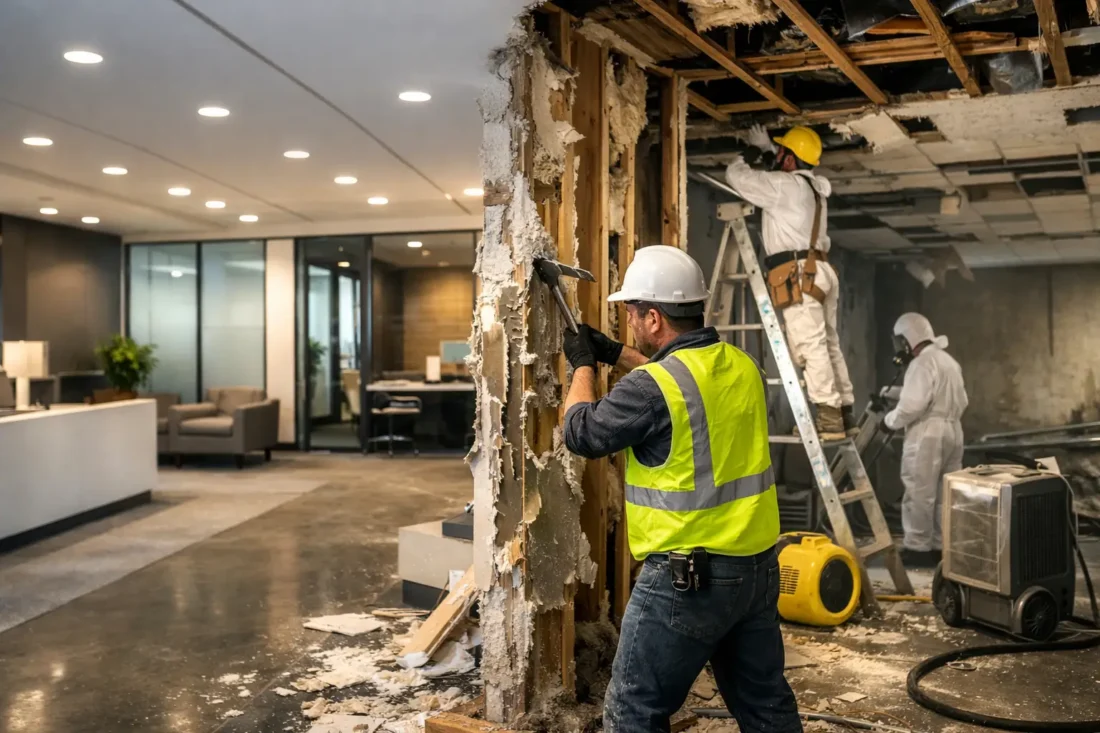
Commercial Unit Restoration Guide
Lease expiry rarely becomes a problem because of one major issue. More often, handover goes wrong because small reinstatement items were missed, approvals were not lined up early, or different trades were managed separately with no clear sequence. This commercial unit restoration guide is written for tenants and facilities teams who need the unit returned properly, on time, and without unnecessary disputes.
Commercial restoration at lease end is not simply about making a space look tidy. It is about returning the premises to the condition required under the tenancy agreement, landlord fit-out rules, and building management procedures. That can mean dismantling partitions, removing data points, restoring ceilings, making good floor finishes, disconnecting plumbing, removing signage, patching walls, repainting, clearing debris, and preparing the site for inspection. The exact scope depends on what was added during occupation and what the landlord expects to see at handover.
What a commercial unit restoration guide should help you decide
The first question is not which contractor to appoint. It is what you are actually obliged to reinstate.
Many tenants assume the original condition is obvious. It often is not. A unit may have changed hands several times, previous occupiers may have left works behind, and landlord expectations may differ from what your internal team remembers from move-in. If you start demolition before verifying the required end state, you risk paying twice – once to remove items, and again to rebuild or rectify based on revised instructions.
A proper restoration plan starts with three checks. Review the tenancy agreement and any reinstatement clauses. Compare the current unit condition with available handover records, fit-out approvals, or original layout drawings. Then confirm any building management requirements for work permits, disposal timing, access hours, lift protection, and noisy works. These three pieces shape the entire project.
Scope in a commercial unit restoration guide
Most commercial units need a combination of dismantling, making good, and final presentation works. The practical issue is that these trades are connected. If one item is delayed, several others follow.
Partitions, ceilings and flooring
Partition dismantling is usually straightforward until hidden services are involved. Glass rooms, gypsum walls, feature panels and built-in counters may contain electrical lines, data cabling, or air-conditioning modifications. Removing them without planning can leave ceiling voids exposed, flooring scarred, and wall surfaces damaged beyond simple patching.
Ceiling restoration often follows partition removal. If tracks, bulkheads, light fittings or diffusers were added, the ceiling must be closed up and finished to match the required condition. Flooring has the same issue. Carpet tiles, vinyl, laminate, raised floors and tiled areas may need partial replacement or full restoration, depending on what remains underneath and how visible the difference will be.
Electrical, plumbing and HVAC reinstatement
These are the trades that most often affect compliance and inspection outcomes. Additional power points, isolated circuits, data points, water supply lines, drainage connections, and split-unit systems are rarely meant to stay unless the landlord approves retention.
Electrical reinstatement may involve removing added wiring, isolating sub-circuits, terminating points safely, restoring distribution board labelling, and making good walls or trunking routes. Plumbing reinstatement can include capping water points, removing pantry sinks, disconnecting appliances, and ensuring no leakage risk remains after removal. HVAC removal is not only about taking equipment out. It may also involve ducting removal, diffuser replacement, chilled water coordination, or reinstating ceiling finishes after mechanical works are completed.
Finishes, signage and clearance
Painting sounds minor, but it is often one of the final items that determines whether a unit looks handover-ready. Patch repairs from dismantling, discoloured wall sections, exposed anchor points and uneven coatings are easy for landlords to spot. The same applies to signage removal. External signs, vinyl stickers, illuminated boxes and reception branding often leave staining, holes, adhesive marks or damaged cladding.
Furniture dismantling and debris disposal also need proper control. Building management in many commercial properties will only allow disposal during approved time windows, with strict loading and protection procedures. If clearance is not coordinated properly, finished restoration works can be delayed simply because waste cannot be removed on schedule.
Why timing matters more than many tenants expect
The safest time to plan reinstatement is not the final two weeks of the lease. It is usually several weeks earlier, especially if approvals, after-hours works or specialist removals are required.
Commercial restoration projects are rarely delayed by one trade taking too long. They are delayed by dependencies. You cannot close the ceiling before electrical removals are complete. You should not paint before patching and sanding are done. Final cleaning should happen after dusty works finish, not before. Landlord inspections may also need to be booked in advance, and any defects raised at inspection will require time for rectification.
In Singapore, building access controls, permit approvals and disposal rules can tighten the schedule further. Retail centres, office towers and mixed-use developments often have different restrictions on work hours, noisy activities and goods lift usage. If your team only starts coordinating these items after the site has been vacated, the programme can compress very quickly.
Cost control starts with clarity, not the cheapest quote
A low quote is attractive until omissions surface halfway through the job. Restoration pricing is only reliable when the scope is defined properly.
The common problem with comparing quotations is that different contractors may price different assumptions. One may include dismantling but not disposal. Another may allow for painting but exclude colour matching or patch repairs. A third may price electrical point removal but not the reinstatement of ceiling boards or floor finishes affected by that removal. On paper, one quote looks cheaper. In practice, it may simply be incomplete.
A sensible review looks at inclusions, exclusions, permit support, debris disposal, protection works, testing where required, and handover attendance. It should also consider whether the contractor can manage multiple trades under one programme. If not, your internal team becomes the project manager, which adds coordination risk and often increases total cost.
How to avoid landlord disputes during restoration
Most disputes do not begin with major structural disagreement. They begin when expectations were not documented clearly enough.
Photographs taken before works start can help establish what was present. Marked-up plans can clarify what will be removed and what will remain. Written confirmation from the landlord or managing agent can prevent avoidable rework later. If there are items you believe should stay, such as approved flooring, retained light fittings or inherited installations, get that position confirmed before dismantling begins.
It also helps to think beyond physical works. Handover disputes can arise from incomplete cleaning, uncleared refuse, damaged common areas, unauthorised disposal routes, or failure to close permits properly. Restoration is not finished when the last worker leaves. It is finished when the unit is accepted.
Choosing the right contractor for commercial unit restoration
This is where a commercial unit restoration guide becomes practical. You are not only looking for someone who can strip out a space. You need a contractor who understands tenancy obligations, sequencing, compliance and handover risk.
A suitable contractor should be able to inspect the unit, identify the likely reinstatement scope, flag approval requirements early, and explain the trade sequence in plain terms. They should also be comfortable managing dismantling, electrical, plumbing, air-conditioning, finishing works, waste disposal and final touch-ups as one coordinated job. That single point of accountability matters when timelines are tight.
It also matters during inspection. If defects are raised, a contractor who has managed the full scope can usually trace and rectify the issue faster than a group of separate trades arguing over responsibility. That is one reason many tenants prefer an end-to-end model. Office Reinstatement Singapore positions its service around exactly that practical need – one team managing the restoration through to landlord handover.
A workable restoration process from start to finish
Begin with a site review against the tenancy agreement and any available original condition records. Confirm the required end state before any stripping begins. Once scope is agreed, line up permits, access timing, removal sequence and disposal arrangements.
The physical works should then move in the right order: dismantling first, service removals second, making good after that, and finishing works near the end. Final cleaning comes last, followed by internal checks before landlord inspection. If defects are identified, they should be closed out quickly while access and labour are still available.
That process sounds simple, but it only stays simple when one party is driving it properly. The more fragmented the project becomes, the more likely it is that gaps appear between trades and handover drifts beyond the lease deadline.
If you are approaching lease expiry, treat restoration as a compliance project rather than a cosmetic one. The best results usually come from early scope confirmation, realistic programming and a contractor who can carry the job from strip-out to acceptance. A calm handover is rarely an accident – it is usually the result of preparation that started before the pressure did.