


Does Reinstatement Include Electrical Removal?
A surprising number of lease-end disputes start with one simple assumption: the tenant thinks switching off power points and removing loose fittings is enough, while the landlord expects a full electrical rollback. If you are asking does reinstatement include electrical removal, the practical answer is usually yes – but only to the extent required to return the premises to its original approved condition.
That distinction matters. In commercial reinstatement, electrical removal is not just about taking out wires or light fittings. It can involve isolating and dismantling added circuits, removing distribution points, making safe all terminations, restoring ceiling and wall finishes after removal, and ensuring the retained electrical system still complies with building and landlord requirements. What is included depends on your lease, your fit-out history, and what was there before you moved in.
Does reinstatement include electrical removal in most cases?
In most offices, shops and commercial units, reinstatement does include electrical removal where the tenant installed electrical works as part of its fit-out. If you added lighting tracks, extra power points, dedicated sockets for equipment, illuminated signage, data points with associated containment, isolated power supplies for server racks, or wiring for partitions and workstations, those items are often part of the reinstatement scope.
The reason is straightforward. Reinstatement is meant to return the unit to the handover condition stated in the tenancy documents or the landlord’s fit-out guide. If the electrical installation was a tenant addition, it is rarely assumed to stay unless the landlord has agreed in writing to retain it.
That said, not every electrical item has to be stripped out. Some landlords prefer certain improvements to remain, especially if they are neutral, useful and compliant. A well-positioned lighting layout, standard sockets, or an upgraded distribution board may be accepted. The key issue is not whether the installation is good quality. The issue is whether the landlord wants the premises returned to the original state.
What electrical removal usually covers
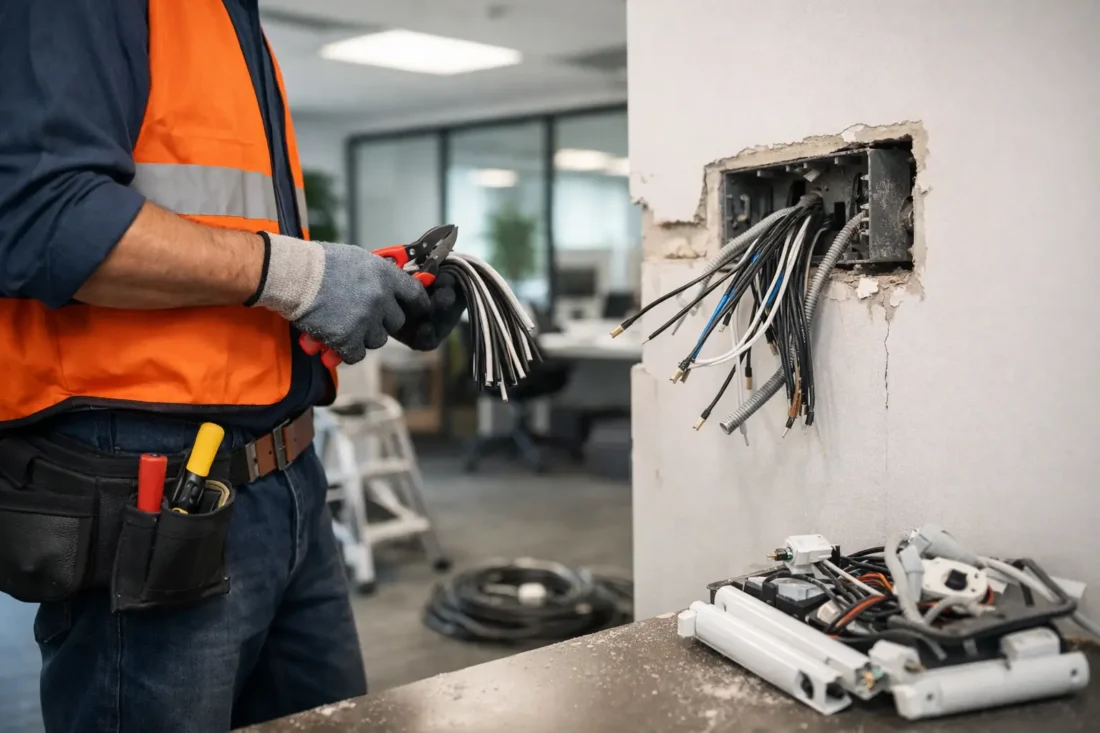
Electrical reinstatement work tends to be broader than many tenants expect. It often starts with identifying all additions made during the tenancy. That includes visible fittings such as lights, switches and socket outlets, but also concealed cabling above ceilings, inside partitions, below raised floors and within trunking.
A proper scope will usually include safe isolation before dismantling. This is essential because electrical removal should never be treated as a simple strip-out trade. Once isolated, fittings and associated wiring can be removed, and any redundant containment can be taken out if it was part of the tenant’s fit-out.
If the unit had dedicated systems installed for business operations, those may also need removal. Examples include power supplies for pantry equipment, retail display lighting, backlit signs, UPS connections, server room feeds, access control wiring and emergency lighting added during occupation. In some premises, electrical works are tied to HVAC controls, fire alarm interfaces or mechanical systems, which means removal must be coordinated rather than handled in isolation.
Just as important is making good after the electrical removal. If sockets are removed from partition walls, there may be patching and repainting. If lighting points are removed from the ceiling, the ceiling may need repair or tile replacement. If floor boxes are no longer required, flooring reinstatement may also be needed. This is why end-of-lease projects are best managed as a full reinstatement package rather than as separate trade jobs.
What is usually not included automatically
When tenants ask whether reinstatement includes electrical removal, they are often really asking whether every electrical item in the unit will be removed by default. The answer is no. Scope always needs to be checked carefully.
For example, the incoming electrical supply to the unit, landlord-owned systems, base building fire alarm devices, central building controls and shared services are generally not removed. These belong to the building or serve common systems. Touching them without approval can create compliance problems and delay handover.
Similarly, if a previous tenant’s installation was already present when you took over the unit and your tenancy agreement made you responsible only for your own additions, full removal may not be required. The opposite can also happen. Some leases make the current tenant responsible for delivering the unit in the landlord’s required condition regardless of who installed what before.
This is why the original handover record, fit-out approvals, as-built drawings and landlord correspondence matter so much. Without them, scope becomes guesswork, and guesswork is expensive near lease expiry.
Why leases and landlord requirements matter more than assumptions
The biggest mistake in lease-end electrical reinstatement is relying on verbal assumptions. A facilities team may believe certain lights can stay because they improve the unit. A landlord’s representative may reject that view during inspection because the tenancy requires full reinstatement unless retention is approved in writing.
Commercial leases often use broad wording such as return the premises to original condition, remove all tenant’s fixtures and fittings, or reinstate as directed by the landlord. Those phrases can capture a wide range of electrical works. On top of that, building management may impose separate requirements for permit applications, power shutdown arrangements, after-hours work, testing, and disposal.
In Singapore, this coordination piece matters because many commercial buildings have strict house rules around electrical works, especially where shutdowns, ceiling access, riser works or common area loading are involved. A contractor handling reinstatement properly will review both lease obligations and building procedures before confirming the electrical removal scope.
Common areas of confusion at handover
Lighting is one of the most disputed items. Tenants often assume replacing decorative lights with basic fittings is enough. In reality, the landlord may require complete removal of the tenant’s lighting layout and reinstatement of the original point arrangement.
Power points create similar issues. Added sockets along partitions or workstations may seem harmless, but if they were not part of the original unit they may need to be removed, together with the wiring route that served them. Leaving dead wiring above the ceiling is also a common rejection point.
Data and low-voltage systems are another grey area. Although they are not always part of the licensed electrical scope, they are still frequently bundled into reinstatement because they involve containment, penetrations and visible points. Access control systems, CCTV cabling, card readers and alarm accessories may all need removal if they were tenant-installed.
Signage should not be overlooked either. Electrical removal often includes disconnecting and removing illuminated signs, light boxes and branded feature lighting, then making good the affected surfaces. If the sign was mounted at the shopfront or unit entrance, approvals may be needed for access and removal timing.
How to confirm whether electrical removal is required
The safest approach is to treat electrical removal as a scope review exercise, not a yes-or-no question. Start with your tenancy agreement and any reinstatement clause. Then compare that against the unit’s original condition, approved fit-out plans and any variation works carried out during the lease.
A site inspection should follow. This is where hidden additions are identified – ceiling cabling, floor trunking, isolated circuits, extra distribution points and electrical feeds serving equipment that may already have been removed. The inspection should also check what must remain untouched, including landlord systems and active building services.
Once that review is complete, the contractor can define a proper scope: what will be removed, what will be retained, what approvals are needed, what making-good works are linked to the removal, and what testing or sign-off may be required before handover.
This approach protects budget as well. If you leave the electrical scope vague until the final week, variation costs are far more likely. If the landlord raises additional removal requirements after your main strip-out is finished, you may also face delays and duplicated making-good work.
Why a single contractor matters for electrical reinstatement
Electrical removal rarely stands alone. It affects ceilings, partitions, flooring, painting, signage, data points and final cleaning. If different trades are managed separately, handover defects can fall through the gaps. One party removes light fittings, another patches the ceiling poorly, and the landlord rejects the unit.
That is why commercial tenants usually benefit from an end-to-end reinstatement contractor that can coordinate all connected trades under one programme. Office Reinstatement Singapore handles this as an integrated process, so electrical dismantling, making good, debris disposal and handover preparation are aligned from the start rather than treated as separate jobs.
The real value is not just convenience. It is risk control. Electrical works must be safe, documented where necessary, and completed in the right sequence to avoid damage to finishes or conflicts with other reinstatement activities.
The practical answer
So, does reinstatement include electrical removal? In most commercial lease-end projects, yes – where the electrical items were installed or altered by the tenant and must be removed to restore the premises to its original or landlord-required condition.
But the exact scope depends on what was added, what the lease says, what the landlord will accept, and which systems belong to the building. If you clarify that early, electrical removal becomes a manageable work item. If you assume, it can become the reason your handover slips.
Before your lease runs down to the final few weeks, get the electrical scope checked properly. A clear answer on day one is worth far more than a rushed rectification after inspection.