


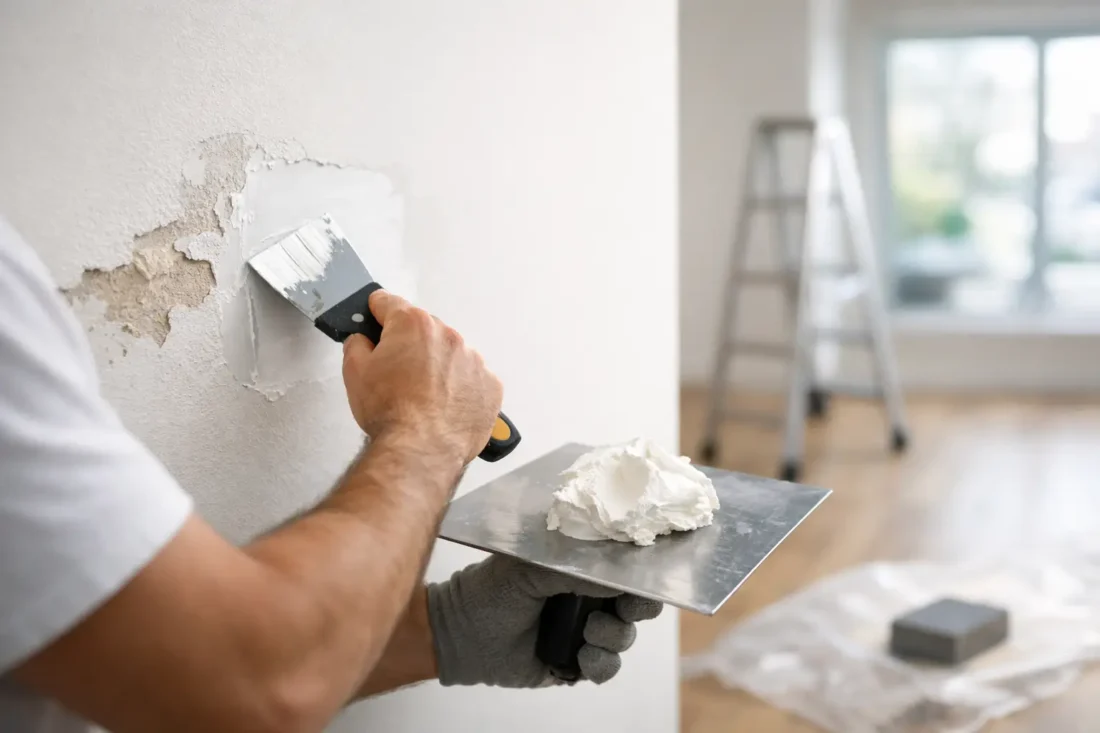
Repair Wall Finishes Before Handover Properly
A wall that looks “mostly fine” during move-out is often the reason a handover gets held up. Small dents behind removed signage, patchy paint where partitions once stood, chipped corners near workstations, and uneven skim coats around old cable routes can all trigger landlord comments. If you need to repair wall finishes before handover, the standard is not whether the damage seems minor to your team. The standard is whether the wall presents as properly reinstated, consistent with tenancy requirements, and acceptable at inspection.
For commercial tenants, this matters because wall rectification is rarely judged in isolation. It affects the overall impression of the reinstatement, and it can lead landlords or building management to question the quality of other works as well. A rushed wall repair may save a day now, but it can cost more if access has to be rebooked, painters must return, or the unit cannot be handed back on schedule.
Why wall finish repairs matter before handover
At lease end, walls often carry the history of the fit-out. There may be drill holes from shelving, adhesive marks from branding, damage from dismantled partitions, mismatched paint tones from previous touch-ups, and cracks exposed after fixtures are removed. In offices and retail units, these issues are common. What causes problems is leaving them partially repaired.
Most landlords are not simply checking whether obvious damage has been covered. They are looking at finish quality, surface consistency and whether the space has been returned to an acceptable base condition. If one section of wall has visible patching, roller marks, uneven sanding or colour mismatch under lighting, it may be treated as incomplete reinstatement.
This is especially relevant in commercial buildings where handover inspections are formal and documentation-driven. Where a tenancy agreement refers to reinstatement to original or bare condition, wall finishes become part of compliance, not just appearance.
Common wall issues found at lease-end handover
When teams prepare to repair wall finishes before handover, they often focus on paint. Paint matters, but it is usually the final layer over a larger problem. The real issue is the condition of the substrate underneath.
Damage after dismantling and removals
Partition removal can leave joint lines, anchor point damage and exposed sections where adjacent finishes do not align. Signage removal often leaves adhesive residue, pulled paint or gouges in plaster. Electrical and data point removal may expose chasing lines, trunking marks or patched openings that need proper making good before painting begins.
Wear from business operations
High-traffic walls near reception areas, corridors, pantries and stock rooms often suffer impact damage. In retail and F&B units, service areas may have grease staining, moisture damage or repeated patch repairs from operational changes. Warehouses and industrial spaces may show more substantial abrasion and cracking around loading routes.
Poor previous patching
One of the most common reasons a handover fails is not major damage, but visible low-quality rectification. If filler has shrunk, sanding has been uneven, or the repaired section flashes under light after painting, the wall may still be rejected. This is why isolated touch-ups are not always enough.
How to repair wall finishes before handover properly
The right approach depends on the wall type, the extent of damage and the landlord’s expected finish standard. There is no single method that suits every unit, which is why a proper site assessment matters.
Start with the tenancy and original condition
Before any rectification work starts, check what the lease, handover guide or landlord comments actually require. Some units need repainting to a neutral tone across full wall spans. Others need reinstatement to original specifications, which may include a particular finish type, board condition or wall system.
If your unit was taken over in bare condition and fitted out later, the requirement may be broader than cosmetic touch-up. If it was handed over already painted and partitioned, expectations may differ. The point is simple – repair work should be aligned to documented obligations, not assumptions.
Remove defects fully, not cosmetically
A proper wall repair starts by removing loose material, failed filler, adhesive residue and unstable paint edges. Covering defects without preparing the surface usually leads to cracking, bubbling or visible edges after repainting. For walls damaged by hacking, chasing or fixture removal, the base needs to be rebuilt to a sound and even condition.
This may involve crack treatment, filling, plastering, skim coating or local board replacement, depending on the construction. The goal is to restore a flat, stable surface that can accept paint evenly.
Match the finish across the whole area
This is where many handover jobs go wrong. Even if the damaged spot has been filled, the surrounding wall may still show a visible boundary. Under office lighting, patched sections can stand out because of texture differences, sheen inconsistency or poor blending.
In some cases, local touch-up is sufficient. In others, the entire wall face should be repainted to avoid flashing and colour mismatch. If repairs are spread across multiple areas, repainting only the patched spots often creates a checkerboard effect that looks unfinished.
Don’t ignore corners, reveals and junctions
Landlord inspections often pick up the details that tenants overlook. External corners chipped by furniture movement, rough door frame edges after access control removal, and messy wall-to-ceiling junctions after cable dismantling can all attract comments. These are small elements, but they signal whether the reinstatement has been completed properly.
A commercial contractor should treat wall repairs as part of the full reinstatement sequence, not as isolated paint work.
When patch repair is enough and when full repainting is smarter
There is a trade-off between cost control and handover risk. Patch repairs may be suitable where damage is genuinely minor, the paint is recent, and the finish can be matched cleanly. This is more likely in low-traffic offices with plain painted walls and limited modifications.
Full repainting is usually the safer option where there are multiple repair points, aged paint, sun-faded areas, different paint batches, or landlord expectations for a uniform finish. It may appear more expensive upfront, but it often reduces the risk of rejected workmanship, repeat mobilisation and delay costs.
The same applies to walls affected by removed partitions or extensive M&E alterations. Where the wall has been disturbed in several places, trying to save money through selective touch-ups can be false economy.
Coordination matters as much as workmanship
Wall finish repairs are tied to the rest of the reinstatement programme. If painting is done before electrical points are removed, the wall may need to be opened again. If dismantling works continue after final coats, fresh damage can occur. If cleaning starts before paint fully cures, surfaces may be marked.
This is why lease-end projects benefit from a coordinated sequence. Making good should follow dismantling and services removal, then proceed to surface preparation, finishing and final cleaning. The inspection standard improves when one contractor manages the workflow across trades instead of leaving separate parties to work around each other.
For many tenants, that is the practical value of an end-to-end reinstatement contractor such as Office Reinstatement Singapore. The objective is not simply to repaint a wall. It is to deliver a handover-ready unit without gaps between trades or disputes over who caused what damage.
What commercial tenants should check before inspection
Before landlord inspection, walk the unit as if you are looking for reasons to reject it. Stand at different angles and under different lighting. Repairs that disappear head-on may show clearly from the side. Check old signage areas, former partition lines, workstation walls, meeting room perimeters and service zones.
Look for uneven texture, patch outlines, pinholes, sanding marks, hairline cracks, roller lap marks and inconsistent colour. Also check whether removed fixtures have left rough edges around sockets, data points, piping penetrations or alarm devices. If defects are visible before inspection, they are easier and cheaper to rectify immediately than after formal comments are issued.
It also helps to confirm whether the wall condition aligns with the agreed handover scope. A wall that is neatly patched may still be non-compliant if the landlord expects full reinstatement to original finish or complete repainting.
The practical risk of leaving wall repairs too late
Wall finishes are often pushed to the end because they seem straightforward. In reality, they are one of the easiest items to underestimate. Drying time, surface preparation, colour matching and access coordination can all affect programme. If repairs are left until the final days, there is little room to correct rejected work.
This is particularly relevant where building management controls work hours, lift access, debris disposal timing or permit windows. A delay of one or two days can become a lease issue if the premises are not accepted by the required handover date.
The safest approach is to inspect wall conditions early, define the repair scope properly, and complete rectification with enough buffer for review. That protects both compliance and schedule.
If you are preparing to vacate a commercial unit, treat wall finish repairs as a handover item, not a cosmetic afterthought. A clean, even, properly reinstated wall does more than improve appearance – it helps close the project without unnecessary comments, repeat works or avoidable penalties.