


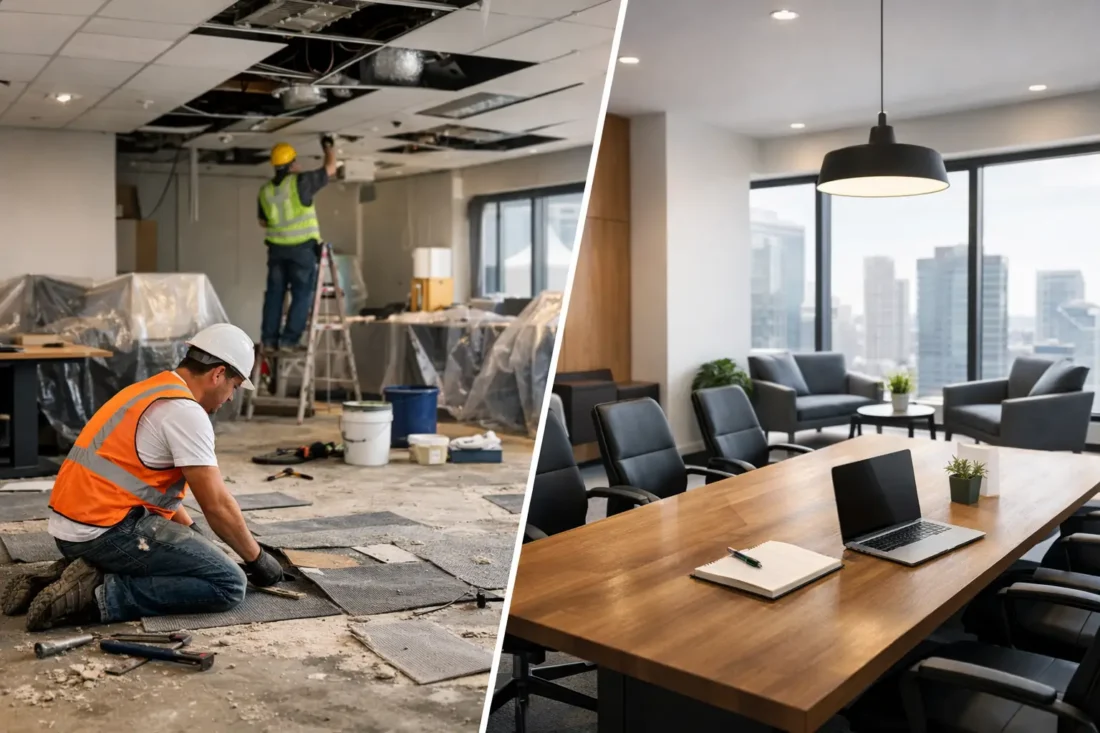
Office Restoration Without Lease-End Stress
A lease can look straightforward until the handover clause starts driving the programme. That is when office restoration becomes less about patching walls and more about meeting landlord expectations, building rules and a fixed deadline without disrupting your business exit.
For most commercial tenants, the risk is not the visible work. It is the missed detail. A removed glass partition that leaves damaged flooring. Electrical points that do not match the original layout. Ceiling works completed, but access panels, sprinklers or detectors not properly addressed. These are the issues that delay inspections, trigger disputes and create avoidable costs at the end of a tenancy.
What office restoration actually involves
Office restoration is the process of returning a leased workspace to the condition required under the tenancy agreement, landlord guidelines and building management rules. In practice, that usually means removing tenant-added fittings and reinstating the unit to its original or agreed handover state.
The exact scope depends on how much the office was altered during the lease. A lightly fitted unit may only need minor patching, repainting and cleaning. A heavily customised office may require partition dismantling, flooring removal, ceiling restoration, electrical rewiring, plumbing capping, air-conditioning dismantling, signage removal and debris disposal.
This is why a quick visual estimate is rarely enough. Two offices of the same size can have very different restoration requirements depending on layout changes, M&E works and landlord conditions.
Why lease-end restoration goes wrong
The most common problem is assuming that restoration means cosmetic work only. It does not. Landlords and building managers usually assess the unit against technical and contractual requirements, not just appearance.
A second issue is fragmented coordination. One contractor removes partitions, another handles paint, someone else disconnects air-conditioning, and nobody takes responsibility for the final condition of the unit. When defects show up during inspection, the tenant is left chasing multiple parties while the handover date gets closer.
Timing is another pressure point. Office exits often happen alongside relocation, staff movement, IT shutdown and furniture disposal. Restoration works then get pushed to the final days of the lease, leaving little room for touch-ups, reinspection or permit delays.
The areas landlords usually scrutinise
Walls and partitions are an obvious starting point, but they are rarely the whole story. If partitions were installed after takeover, they may need to be dismantled fully, with all fixing points made good. Flooring beneath those partitions may also need repair or replacement so that the restored area matches the original finish as closely as required.
Ceilings often create hidden issues. Once lighting, cabling or partitions are removed, exposed marks, cut-outs and uneven panels become visible. If air diffusers, detectors or sprinkler heads were relocated during fit-out, those areas may also need reinstatement to satisfy building management.
Electrical and data works are another common source of rejection. Added power points, trunking, switches and wiring may need removal, isolation or reinstatement. What matters is not just safe disconnection, but whether the final arrangement complies with the agreed original setup.
If the office included pantry works, attached plumbing, water points or drainage modifications, these also need proper capping and reinstatement. The same applies to FCU removal, ducting changes and supplementary air-conditioning systems where these were installed by the tenant.
Then there are the finishing items that tenants often leave too late – signage removal, glass sticker removal, repainting, deep cleaning and disposal of leftover furniture or materials. These may sound minor, but they directly affect inspection outcomes.
Office restoration is a compliance exercise, not just a building job
A practical office restoration plan starts with documents, not tools. The tenancy agreement, fit-out approval drawings, landlord reinstatement requirements and any building management conditions should all be reviewed before work begins. Without that step, it is easy to restore the wrong things or miss required approvals.
This matters even more in buildings with strict access control, permit procedures, after-hours work windows or lift protection requirements. In Singapore, commercial buildings often have specific rules for dismantling works, waste removal and contractor attendance. If these are not built into the programme early, otherwise simple jobs can lose days.
That is why experienced reinstatement contractors spend time clarifying the scope upfront. The goal is not to create unnecessary work. It is to define exactly what has to be removed, restored, patched, tested and cleaned so the handover can proceed without surprises.
How to plan office restoration properly
The safest approach is to start early, ideally well before the final month of the lease. A site assessment should identify all tenant additions, compare the current condition against lease obligations and note any areas likely to attract inspection comments.
From there, the scope should be broken into trades and sequenced logically. Dismantling usually comes first, followed by M&E reinstatement, surface repairs, painting, finishing and final cleaning. This order matters. If painting is done before ceiling rectification or electrical removal is complete, rework is likely.
Budgeting also benefits from a proper assessment. Too many tenants rely on a rough figure, only to find that debris disposal, permit coordination or repair works were not included. A clear quotation should state what is covered, what assumptions have been made and what would count as variation work.
When a single contractor makes more sense
For simple units, a small team may be enough. But once an office includes partitions, flooring, ceilings, electrical works, air-conditioning changes and handover coordination, using separate contractors creates unnecessary risk.
A single contractor managing the full office restoration scope provides clearer accountability. There is one programme, one site lead and one point of contact for updates, access coordination and defect rectification. That reduces the chance of trades blaming one another when inspection issues arise.
It also helps with sequencing. Ceiling patching cannot be treated as separate from lighting removal. Flooring repair cannot be treated as separate from partition dismantling. End-to-end management keeps these dependencies under control.
What a handover-ready restoration should include
A proper reinstatement outcome is more than completed works. It should leave the unit ready for landlord inspection, with visible defects addressed and obvious compliance gaps closed.
That usually means the contractor has not only removed additions and restored finishes, but also cleared debris, cleaned the unit and checked the site against the agreed scope before inspection. In better-managed projects, there is also support for landlord walkthroughs and follow-up touch-ups if minor comments are raised.
This is where practical experience matters. Contractors who regularly handle lease-end projects understand that the last five per cent of the job often determines whether handover is smooth or delayed.
Trade-offs tenants should think about
Not every office needs full restoration to the same standard. Some landlords may accept an as-is condition for selected items, especially if the incoming tenant can use them. Others will insist on strict reinstatement regardless of condition. It depends on the lease terms, building practice and what has been agreed in writing.
Speed versus cost is another real trade-off. An accelerated programme with night works, additional manpower or urgent waste disposal may be necessary if the lease end is close. That can be the right decision if it avoids holdover costs or penalties, but it should be planned deliberately rather than left to panic.
There is also the question of patch repair versus full replacement. In some cases, localised repairs are enough. In others, mismatched finishes will not pass inspection and a broader replacement is more cost-effective than repeated defect rectification.
Choosing the right office restoration partner
The right contractor should be able to explain the scope clearly, identify likely inspection issues early and manage multiple trades without overcomplicating the process. Look for practical signs of control: site assessment, detailed quotation, programme planning, permit awareness, debris disposal arrangements and a clear handover process.
It also helps to work with a team that understands lease-end pressure from the tenant’s side. You do not need vague promises. You need a contractor who can restore the premises efficiently, align with landlord requirements and keep the project moving to the handover date.
Office Reinstatement Singapore is built around that model – full-scope reinstatement works managed from dismantling to final handover support, with compliance and speed treated as part of the service, not an afterthought.
If your office exit is approaching, the best time to clarify the restoration scope is before the calendar becomes the problem. A clean handover usually starts with one practical decision: getting the right scope, the right sequence and the right team in place early.