


Commercial Reinstatement Singapore Explained
Lease expiry tends to focus the mind very quickly. One week you are planning a move, the next you are comparing quotations, checking tenancy clauses, and realising how much work sits behind proper commercial reinstatement Singapore projects. For most tenants, the risk is not just cost. It is missed handover dates, landlord disputes, and paying for rectification after everyone thought the job was done.
That is why reinstatement should be treated as a controlled project, not a last-minute dismantling exercise. Offices, retail units, clinics, warehouses and F&B spaces all come with different fit-out histories, approval requirements and technical trades. The scope can look straightforward on paper, but once dismantling starts, hidden services, non-compliant alterations and wear to base building finishes often surface.
What commercial reinstatement Singapore usually involves
At its core, reinstatement means returning a leased unit to the condition required under the tenancy agreement, landlord instructions, or approved handover standard. That does not always mean restoring every detail to the day the keys were first collected. In practice, it means removing tenant-added works and making good the premises so the landlord can accept possession without further claims.
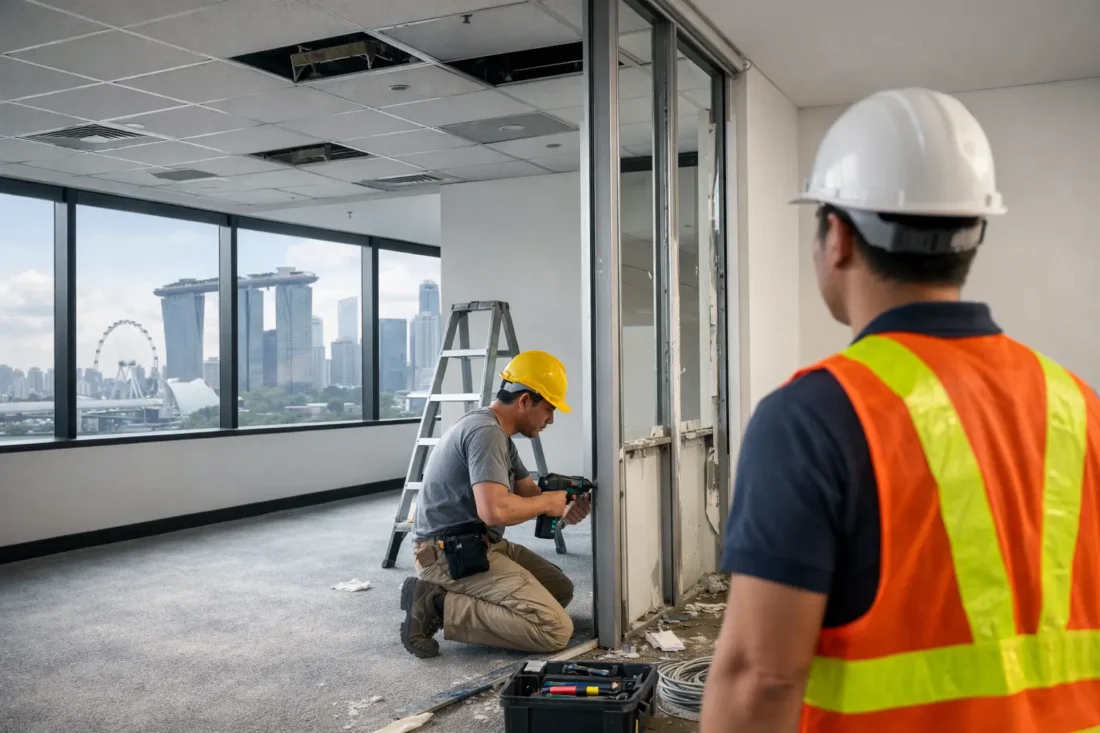
For an office, that may include dismantling partitions, removing meeting rooms, restoring ceiling grids, replacing damaged carpet tiles, disconnecting power points added during fit-out, and repainting affected areas. For retail and F&B spaces, the scope can be more complex because signage, grease lines, water points, floor finishes, raised platforms and exhaust systems are often involved. Industrial units may require removal of racking, production equipment bases, extra lighting, compressed air lines and mechanical installations.
The point is simple. Reinstatement is rarely one trade. It is usually a coordinated package covering demolition, carpentry dismantling, electrical work, plumbing, air-conditioning, patching, painting, cleaning and debris disposal. When tenants split that work across too many parties, accountability becomes harder to manage.
Why lease clauses matter more than assumptions
One of the most expensive mistakes in commercial reinstatement Singapore work is assuming that a previous tenant, landlord representative or building manager gave a verbal indication that something could stay. If it is not reflected in the tenancy terms or formally accepted during pre-handover discussions, it may still need to be removed.
This is where a proper scope review earns its keep. The reinstatement requirement should be checked against the lease, fit-out drawings if available, landlord comments, and site conditions. A unit that has been occupied for several years often contains layers of modifications carried out in phases. Some were approved, some may have been informal, and some may have been inherited from an earlier occupant.
It depends on the building and landlord, but common grey areas include floor finishes, internal glass rooms, upgraded lighting, data cabling, pantry works and air-conditioning alterations. A practical contractor will identify these early and clarify what must go, what can remain, and what must be made good before handover.
The real pressure points during reinstatement
Most tenants are not worried about demolition itself. They are worried about timing, compliance and surprise costs. Those concerns are justified.
Time pressure is usually the first issue. Lease-end dates do not move simply because relocation took longer than expected. Access hours may also be restricted by building management, especially in offices, malls and mixed-use developments. Noise control, hoarding requirements, lift protection, permit applications and disposal timing can all affect the work sequence.
Compliance is the second issue. Electrical disconnection, sprinkler-related ceiling works, air-conditioning removal and plumbing capping must be done properly. A cheap quotation that ignores method statements, permits or protection measures may look attractive at the start and become expensive later. If the landlord rejects the handover, the tenant still carries the risk.
The third pressure point is hidden rectification. Once partitions or built-ins are removed, damage to walls, slab, ceilings or existing services may appear. That does not always mean the contractor did something wrong. It often means the original fit-out concealed the condition. A realistic project approach allows for site-based adjustments instead of pretending every unit is identical.
How a proper reinstatement process should run
A dependable reinstatement contractor starts with a site inspection and scope confirmation. That means more than measuring the unit. It means understanding what was added, what must be removed, what building rules apply, and what handover standard the landlord expects.
After that, the quotation should spell out the trade coverage clearly. Vague wording creates disputes later. If ceiling making-good is included, the extent should be stated. If electrical points are to be removed and terminated safely, that should be stated too. If disposal, final cleaning, touch-up painting or submission support are excluded, that should also be clear.
Once the scope is confirmed, work planning becomes critical. Commercial premises often need reinstatement completed within a narrow window, and sequencing affects both speed and finish quality. Dismantling usually comes first, followed by service removal, surface repairs, restoration of floors, walls and ceilings, then painting and final cleaning. If the sequence is wrong, finished areas can be damaged by later-stage works.
The final step is handover support. This matters more than many tenants realise. A contractor should not treat practical completion as the end of the job if landlord inspection is still pending. Small touch-ups, clarification during inspection, and quick rectification can make the difference between acceptance and another round of delays.
Choosing a contractor for commercial reinstatement Singapore
The right contractor is not simply the cheapest or the biggest. The better test is whether the company can manage the full scope with clear responsibility from start to finish.
That means looking at trade coordination, experience with leased commercial units, familiarity with building management procedures and willingness to work against a documented scope. If one contractor handles dismantling, another handles electrical, and someone else comes later for painting, the tenant ends up coordinating interfaces at the very moment they need less operational burden, not more.
A full-scope provider is often the more commercially sensible choice because the programme, protection works, disposal and finishing standards can be managed under one project lead. That reduces finger-pointing and improves speed. It does not mean every project is simple. It means there is one accountable party managing complexity.
It is also worth checking how the contractor handles variation risk. Some changes are unavoidable once works begin, especially in older units or heavily customised spaces. The issue is not whether variations exist. The issue is whether they are explained properly, priced transparently and approved before extra work proceeds.
Common scope items tenants overlook
Some of the most common reinstatement omissions are not major structural items. They are the small details that trigger landlord comments during inspection.
Signage removal often leaves façade marks, damaged backing surfaces or exposed wiring. Data and telephone cabling may be abandoned above ceiling level when they should be removed. Pantry and wash area works can leave pipe penetrations, capped points, stained wall finishes or floor level differences. Ceiling works may look acceptable from below but still contain unsealed openings, mismatched tiles or incomplete service terminations above.
Furniture and loose items can also create delays if disposal was not planned upfront. The same goes for raised flooring, vinyl skirting, display shelving, wall graphics and glass frosting. None of these items is especially dramatic, but together they can affect whether the premises are truly handover-ready.
Why end-to-end execution reduces lease-end risk
A tenant vacating a commercial unit already has enough to manage – relocation, IT migration, staff disruption, stock movement and operational continuity. Reinstatement should not become a separate coordination problem.
That is why end-to-end execution works well for lease-end projects. One team can inspect the site, define the scope, plan permits and access, carry out dismantling and making-good, clear debris, complete final cleaning and support handover. The result is not only convenience. It is lower execution risk.
For businesses that need a practical contractor rather than a patchwork of subcontractors, that model is often the most efficient route. Office Reinstatement Singapore operates in that way because commercial tenants usually need certainty more than they need complexity.
The best time to act is before your move-out schedule becomes compressed. When the scope is checked early, the programme is realistic, and the handover standard is understood from the start, reinstatement becomes a managed close-out exercise rather than a costly scramble. That gives your team room to leave the premises properly, satisfy landlord requirements, and move on without unfinished issues following you into the next lease.